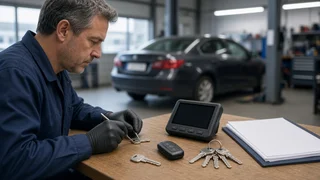
Getting a Spare Car Key Made
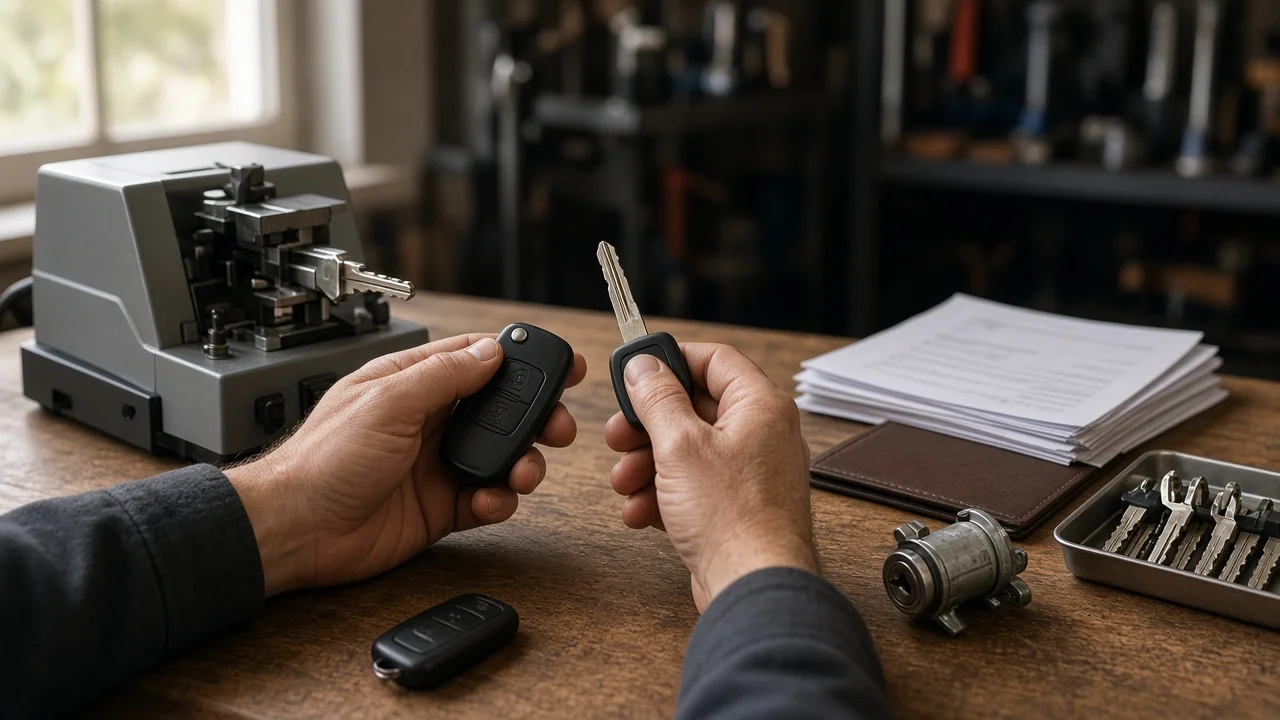
The short answer
You can usually get a spare car key from a dealership, an automotive locksmith, or, for simpler keys, a hardware store or key-copy service. Which option works depends mainly on your key type. A plain metal key can often be copied almost anywhere that cuts keys. A key with a built-in chip, a remote fob or a push-button-start smart key must also be programmed to your vehicle, which narrows your choices to providers with the right equipment for your make, model and model year.
Two conditions change the answer more than any others. First, getting a spare while you still have a working key is generally simpler than replacing a key after all keys are lost. Second, some vehicles can only have new keys programmed with dealer-level tools, while others can be handled by a locksmith or, in some cases, by the owner.
Identify your key type first
Key type determines where you can go and what the job involves. A transponder is a small chip inside the key head that the car's immobilizer, an anti-theft system, must recognize before the engine will run. A key can be cut perfectly and still fail to start the car if this chip is not programmed.
Key type | What it looks like | What a spare requires; Traditional metal key | All-metal or plain plastic head, no buttons | Cutting only; Transponder key | Plastic head, no buttons, chip inside | Cutting plus chip programming; Remote-head key or flip key | Key blade with lock and unlock buttons on the head | Cutting, chip programming and remote programming; Smart key or proximity fob | Fob with no exposed blade, used with push-button start | Programming to the vehicle; any hidden emergency blade may also need cutting; Laser-cut or high-security key | Blade with a groove milled along the side rather than notches on the edge | Specialized cutting equipment, plus programming if a chip is present
If you are unsure which type you have, your owner's manual usually describes the keys supplied with the vehicle. A dealer or locksmith can also identify the type from the vehicle identification number (VIN) or by examining the key.
Where to get a spare key made
Dealership: Can typically supply original-equipment (OEM) keys and program them for your vehicle. This is often the most dependable option for newer or less common models, and sometimes the only one when programming requires manufacturer tools. Automotive locksmith: Many cut and program transponder keys, remotes and smart keys, and some offer mobile service. Coverage varies by make and model year, so confirm before booking. Hardware stores and key-copy kiosks: Often suitable for traditional metal keys and some transponder keys. Support for remotes and smart keys is more limited. Online key or fob purchase: You may find blank keys or fobs for sale, but they still need to be cut and programmed by someone with the right equipment, and not every provider will program parts bought elsewhere.
What to check before you buy
Exact compatibility: Keys and fobs are specific to make, model, model year and sometimes trim. A fob that looks identical may use a different frequency or chip. Match the part number or FCC ID (a code printed on most remotes) to your existing key, or have the provider confirm by VIN. Programming capability: Ask whether the provider can program a key for your specific vehicle, not just cut it. OEM or aftermarket: Original-equipment keys are made for your vehicle's maker. Aftermarket keys can work, but quality and compatibility vary, so ask what happens if the key fails to program. What is included: Confirm whether the quote covers the key or fob, cutting, chip programming and remote programming, or whether these are charged separately. Warranty or returns: Ask how long the key is covered and whether unused or incompatible keys can be returned. Whether your existing keys are needed: Some programming procedures require one or more working keys to be present.
Proof of ownership you will likely need
Because a working key gives access to the vehicle, dealers and reputable locksmiths commonly ask you to prove that you own it before making a programmed key. Expect to bring a valid photo ID and the vehicle registration or title, with the name matching your ID and the VIN matching the vehicle. Exact requirements vary by provider and state, so ask what to bring when you book. A provider that makes a programmed key without checking ownership is a reason for caution.
Programming a spare key yourself
Some vehicles have an owner programming procedure, often requiring two already-working keys, that lets you add a new key without special tools. Whether your vehicle supports this depends on the make, model and model year, so check the owner's manual before buying a blank key or fob for self-programming. You will still need the blade cut if the key has one.
Gaps in this guide
No verified pricing, turnaround times or model-specific compatibility data were available for this article. Costs and programming requirements vary widely by vehicle and key type, so get a quote from more than one provider and confirm compatibility for your exact vehicle before paying.
Suggested next step
Identify your key type, note your VIN, and gather your ID and registration or title. Then contact a dealership and at least one automotive locksmith, confirm each can program a key for your exact vehicle, and compare what each quote includes.