Get a New Car Key Made: Options, Process and What to Bring
You can usually get a new car key made by a dealership or a qualified automotive locksmith, and some older or simpler keys can be handled at a hardware store or through self-programming. The best route depends on what kind of key your vehicle uses, whether you still have at least one working key, and how much the make, model year and security system restrict who can program a replacement. Expect to prove you own the vehicle before anyone cuts or programs a key.
The short answer
Identify your key type: plain mechanical, transponder, remote head or flip key, or a keyless smart fob. Gather proof of ownership: a government-issued photo ID plus the vehicle title or current registration, along with the VIN (vehicle identification number). Choose a provider: an automotive locksmith is often faster and can come to you; a dealer has factory access for every model it sells; DIY is realistic only for some vehicles and key types. If a key was lost or stolen, ask for it to be erased from the car's immobilizer memory so it can no longer start the engine. If you still have one working key, consider getting a spare now; replacing a key is generally simpler when a working key is available.
Why modern car keys are more than a cut piece of metal
Older vehicles used purely mechanical keys: if the blade was cut correctly, it turned the ignition and the engine started. Beginning in the 1990s, and broadly across the market by the 2000s, many manufacturers added engine immobilizers. An immobilizer is an anti-theft system that only allows the engine to run when it recognizes an electronic code from a chip in the key. That chip is called a transponder, and it needs no battery because the car's ignition area powers it wirelessly when the key is nearby.
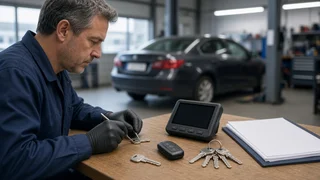
Because of this, making a new key often involves two separate jobs: cutting the blade (if the key has one) and programming the electronics so the car accepts the new key. A key that is cut perfectly but not programmed may unlock the doors and turn in the ignition, yet the engine will not start or will shut off immediately. Whether a given vehicle has an immobilizer, and how it is programmed, varies by manufacturer, model year and sometimes trim, so check your owner's manual or ask the provider with your VIN in hand.
Common car key types
Key type | What it is | What a replacement typically involves; Mechanical key | Metal blade with no electronics, found mainly on older vehicles | Cutting only; often possible at a locksmith or hardware store; Transponder key | Blade with a chip in the plastic head that the immobilizer must recognize | Cutting plus programming the chip to the vehicle; Laser-cut or high-security key | Thicker blade with a groove milled into the surface instead of notches on the edge | Specialized cutting equipment plus transponder programming; Remote head or flip key | Transponder key with lock and unlock buttons built in; the blade may fold into the head | Cutting, immobilizer programming and separate remote programming; Smart key or proximity fob | Fob that lets you unlock and start with a push button while it stays in your pocket; usually has a hidden emergency blade | Programming with diagnostic equipment, plus cutting the emergency blade; Phone-as-key or digital key | Smartphone app or card that acts as the key on some newer vehicles | Typically managed through the manufacturer's app, account or dealer rather than a locksmith
Dealer, locksmith or DIY: how the options differ
Dealership
A franchised dealer for your brand can access factory key codes and programming tools for the vehicles it sells, which makes it the most reliable choice for newer models, unusual security systems or cases where an independent shop's equipment does not yet support your vehicle. The trade-offs are that you usually need to bring the car to the dealer, a key blank or fob may need to be ordered, and if every key is lost the car may have to be towed there. Dealers generally supply original-equipment keys.
Automotive locksmith
An automotive locksmith specializes in vehicle locks and keys, and many operate mobile vans equipped to cut and program keys on site. That makes a locksmith especially useful when you are locked out, have lost every key, or want to avoid towing. Many locksmiths can cut a key from the VIN-derived key code or by decoding the door lock, then program it through the vehicle's diagnostic port. Capabilities vary from shop to shop: some vehicles, particularly newer or premium models, may require security access or software that not every locksmith has. Locksmiths may offer original-equipment or aftermarket keys, so ask which you are getting.
Hardware stores and self-service kiosks
Some retail key counters and kiosks can copy mechanical keys and certain transponder keys by cloning the existing chip. This generally requires a working original to copy, and coverage depends on the vehicle and the store's equipment. It is not an option when all keys are lost or for most smart fobs.
Do-it-yourself programming
Certain vehicles allow owners to program an additional key or remote using a sequence of ignition turns and button presses described in the owner's manual, usually only when one or two working keys are already present. Many newer vehicles do not offer this, and keys or fobs bought online can be the wrong frequency, chip type or part number, or may have been previously locked to another vehicle. If you go this route, confirm compatibility using your VIN or the part number on your existing key, and know that you may still need a professional to cut the blade.
Proof of ownership: what to bring
Reputable dealers and locksmiths will not make a key for a vehicle without verifying that you are the owner or are authorized to act for the owner. This protects you, because a key is effectively permission to drive the car away. A provider who asks for documents is behaving responsibly, not creating an obstacle.
Government-issued photo ID whose name matches the vehicle records; Vehicle title or current registration showing your name and the VIN; The VIN itself, visible on the lower windshield on the driver's side and on the driver's door jamb; For leased or financed vehicles, registration usually works; ask in advance if the title is held by a lender; For a vehicle owned by someone else or a business, written authorization from the owner, as the provider may require it
If your registration is inside the locked car, tell the locksmith when you call. Some will unlock the vehicle first and check the documents before cutting or programming a key. Requirements differ between businesses and states, so confirm what they will accept before they head out.
How the process usually works
Identification: the provider confirms the make, model, year and key type, usually from the VIN, and verifies ownership. Key code or decoding: the cut is obtained from a manufacturer key code tied to the VIN, by reading an existing key, or by decoding a lock on the vehicle. Cutting: the blade or emergency blade is cut on a code-cutting or laser-cutting machine. Programming: a diagnostic tool connects to the vehicle, usually through the OBD-II port under the dashboard, to add the new transponder or smart key to the immobilizer. Some vehicles require a security PIN or online authorization from the manufacturer for this step. Remote setup: lock and unlock buttons may need separate programming from the immobilizer chip. Testing: the engine start, door locks, trunk release and any push-button start function are checked before you pay.
If you have lost every key
Losing every key is the hardest scenario because there is nothing to copy and, on some vehicles, programming a new key requires at least one existing key or extra security steps. A mobile automotive locksmith is often the most practical first call, since the alternative may be towing the car to a dealer. Be prepared for the job to take longer, and on certain models the provider may need to order parts or reset or replace security components. Once a new key is working, ask for all lost keys to be removed from the immobilizer's memory so they cannot start the car if they turn up in the wrong hands.
Choosing a locksmith for a new car key
Confirm they handle automotive work specifically, and your make, model and year in particular. Ask for a total quote that covers the service call, the key or fob, cutting and programming, rather than a low starting rate that grows on site. Ask whether the key is original equipment or aftermarket, and whether any warranty applies to the key and the programming. Check that the business has a verifiable name and reviews; be cautious with callers who will not give a company name. In states that license locksmiths, ask for the license number. Expect them to ask for ID and vehicle documents; be wary of anyone who does not.
Ways to reduce cost and hassle
Get a spare made while you still have a working key; adding a key is generally easier than starting with none. Check whether your auto insurance policy, extended warranty, credit card benefits or roadside assistance plan covers key replacement or lockout service. Compare a dealer quote with one or two automotive locksmith quotes, especially for remote head keys and smart fobs. If only the fob shell or battery has failed, a new case or battery may solve the problem without a full replacement key. Keep a record of your VIN and key part number somewhere outside the car.
Bottom line
Getting a new car key made is routine for most vehicles, but it is rarely just a matter of cutting metal. Identify your key type, have your ID, registration or title, and VIN ready, and choose between a dealer and an automotive locksmith based on your vehicle's security system and whether you can bring the car in. If any key is missing, have it erased from the car's memory once the replacement works.