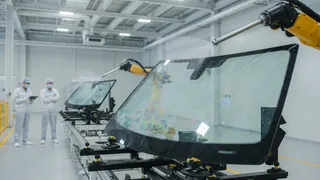
How automotive glass is made
Automotive glass is far more than a simple window. Understanding how automotive glass is made reveals why a windshield behaves differently from a household pane. The process fuses careful material selection, extreme heat, rapid shaping, and engineered layering to balance optical clarity, weather sealing, and occupant protection. From raw silica batch to final fitment, each stage controls thickness, curvature, and edge quality. This overview explains the essential manufacturing journey and the material choices that make vehicle glazing a distinct branch of glass engineering.
Essential answer
Automotive glass is manufactured through a high-temperature float or press-forming process that shapes a flat ribbon or softened sheet into curved glazing. The essential distinction is between laminated windshields and tempered side or rear glass. Laminated construction bonds two glass plies with a plastic interlayer, while tempered glass receives rapid cooling that builds surface stress. These methods answer why windshields crack in a web pattern while side windows shatter into small granules, and why only laminated glass is typically placed ahead of occupants.
The manufacturing goal is a transparent part that matches a vehicle body opening with tight tolerances. After forming, each piece is cut, ground, polished, and inspected for distortion, inclusions, and edge defects. Automotive glass must also present a stable sealing surface and predictable mounting points for adhesives and trim. Because the final shape interacts with the roof, cowl, and pillar flanges, production quality directly influences wind noise, water intrusion, and airbag deployment through the windshield opening.