GEICO RV Insurance: What to Check Before You Buy

The short answer
GEICO markets RV insurance in the US, but no current prices, coverage terms, discounts or state-by-state availability could be verified for this guide. Whether a GEICO policy fits you depends on your state, the type of RV, how you use it, and how the policy is underwritten. Treat any quote as the real answer, and use the checks below to judge whether it covers what you need.
What changes the answer
Four factors most often decide what an RV policy covers and costs, regardless of the insurer.
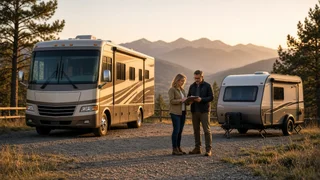
RV type: motorized RVs (Class A, B and C motorhomes) are driven on their own and usually need their own policy with liability coverage. Towable RVs (travel trailers, fifth wheels, pop-ups) are pulled by another vehicle and are insured differently. Use: occasional recreational trips, seasonal stays, and full-time living are rated and covered differently. Full-time use often requires specific coverage that resembles homeowners insurance. State: minimum liability requirements and the coverage options an insurer can offer vary by state. Underwriter: some insurers write RV policies themselves, and others place them with partner companies. Ask who underwrites the policy, because that company sets the terms and may handle claims.
Motorhomes versus towables
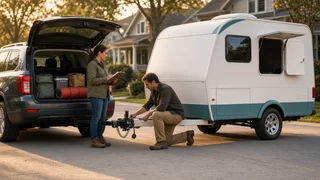
For a motorhome, expect a policy built much like auto insurance, with liability, collision, comprehensive and other driving-related coverages. For a towable, liability while towing generally comes from the tow vehicle's auto policy, but that policy typically does not pay to repair or replace the trailer itself. Damage to the trailer and its contents usually needs separate coverage. Before buying, check how your current auto policy treats a trailer you tow.
Coverages to ask about
Coverage names and availability differ between insurers and states. Use this list as a checklist when requesting a GEICO quote, and confirm each item in writing rather than assuming it is included.
Coverage | What it does | Why it matters for an RV; Liability (bodily injury and property damage) | Pays for injuries and damage you cause to others | Required for motorized RVs in most states; larger vehicles can cause costlier accidents; Collision | Pays for damage to your RV from a crash | Repairs on large RVs can be expensive and require specialized shops; Comprehensive | Pays for non-collision damage such as theft, fire, storms or falling objects | RVs are often stored outdoors for long periods; Uninsured/underinsured motorist | Covers you when an at-fault driver lacks enough insurance | Protects occupants as well as the vehicle; Medical payments or personal injury protection | Pays medical costs for you and passengers | Required in some states; Personal belongings | Covers items kept inside the RV | Standard auto policies usually exclude personal property; Attached accessories | Covers awnings, satellite dishes, solar panels and similar add-ons | These may be excluded or capped unless declared; Campsite or vacation liability | Covers injuries to others at your site while the RV is parked | Auto liability may apply only while driving; Full-timer coverage | Adds home-style liability and protection for people who live in the RV | Needed if the RV is your primary residence; Emergency expense | Helps with lodging and travel if a covered loss leaves you stranded far from home | A breakdown or loss can leave you without a place to stay; Roadside assistance and towing | Arranges help after a breakdown | Large RVs need heavy-duty towing that basic plans may not cover
How your RV is valued after a total loss
The valuation method often matters more than the premium. Actual cash value pays what the RV was worth at the time of loss, after depreciation, which can fall well below what you owe or what a replacement costs. Agreed value pays an amount you and the insurer set when the policy starts. Total loss replacement, where offered, pays toward a comparable new RV, usually only within a limited age or ownership period. Ask which method a GEICO policy uses, what conditions apply, and whether you can choose.
Claims: what to confirm before you need them
Which company handles claims if a partner underwrites the policy. Whether you can choose an RV-qualified repair shop, and how estimates are approved. Whether separate deductibles apply to collision, comprehensive and personal belongings. Whether parked-season or storage-only coverage changes what is covered. What documentation you need. Keeping dated photos, receipts and an inventory of contents and accessories makes any claim easier to support.
Information to have ready for a quote
VIN, model year, make, model and RV class or trailer type. Purchase price or current value, plus any loan or lease details. Aftermarket equipment and modifications. Where the RV is stored and how many months per year it is used. Whether you live in it full time. Drivers who will operate it, and for a towable, the tow vehicle and its current policy.
Comparing a GEICO quote with others
Compare quotes with matching limits, deductibles, valuation method and optional coverages. A lower premium may reflect actual cash value instead of agreed value, or missing contents and campsite liability coverage. If you already have auto or home insurance, ask whether combining policies changes the price, but check that the combined coverage still meets your RV's needs.
What this guide could not confirm
No verified evidence was available on GEICO's current RV premiums, discounts, coverage limits, underwriting partners, claim handling or customer satisfaction, or on which options are sold in which states. Confirm these details directly with GEICO during the quote process and review the policy documents before you buy.