Failed Automatic Transmission Torque Converter
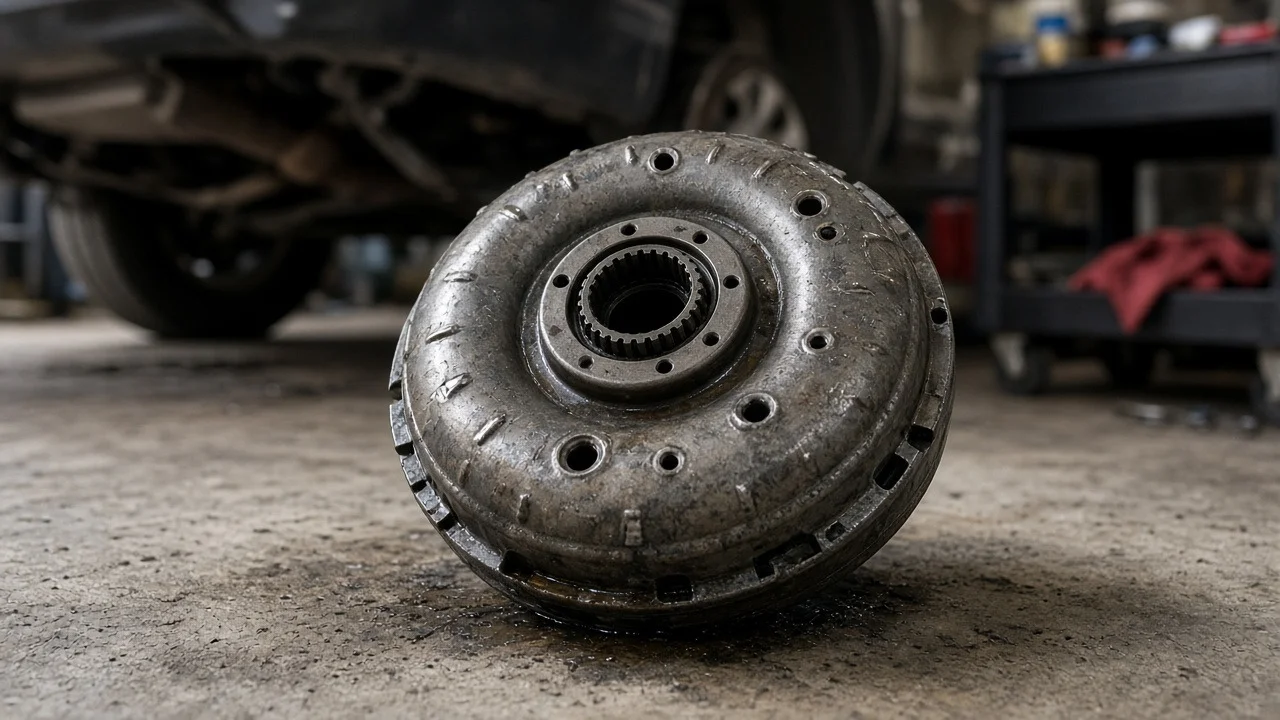
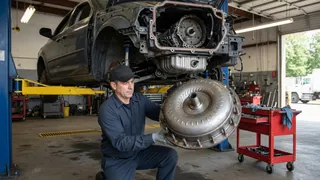
A torque converter is the fluid coupling between the engine and an automatic transmission, and when it fails the symptoms often look like the transmission itself is breaking down. Owners may notice shuddering, slipping, delayed engagement, unusual noises, rising fluid temperature, or contaminated transmission fluid. The phrase "failed automatic transmission torque converter" describes a converter that no longer performs lockup, torque multiplication, or fluid transfer correctly. Understanding the converter's role helps separate an internal converter fault from valve body wear, low fluid, or electronic control problems.
Essential answer
The essential point is that a failed torque converter disrupts the hydraulic connection that lets the vehicle creep, accelerate, and enter highway-speed lockup. A converter contains an impeller driven by the engine, a turbine connected to the transmission input shaft, and a stator that redirects fluid. When the lockup clutch slips or the stator's one-way clutch fails, fluid coupling becomes inefficient. That can feel like a slipping gear, a shudder under light throttle, or a stall when coming to a stop, even if the gearbox internals are still sound.
The answer also has an important qualification: the torque converter shares fluid, sensors, and control logic with the rest of the automatic transmission. Diagnostic codes may identify converter clutch circuit problems or performance faults, but they describe observed conditions, not a verified broken part. Transmission type, fitment, shift behavior, and service history all matter. Confirming a converter failure usually requires comparing fluid condition, stall-speed behavior, lockup engagement, and fault data rather than assuming the converter is the root cause from one noise or vibration.