How a Torque Converter Works in an Automatic Transmission
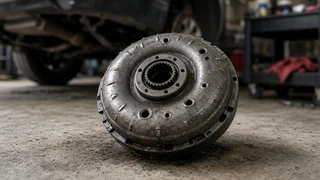
A torque converter is the fluid coupling that connects an automatic transmission to the engine. Unlike a manual clutch, it never needs a pedal or direct friction plate contact, yet it must transmit power smoothly from idle through highway speed. In an automatic transmission, the torque converter also multiplies engine torque during launch and drives the transmission’s hydraulic pump. Understanding its operation clarifies shift behavior, fluid condition, and why automatic vehicles creep forward in Drive.
Essential answer
The torque converter replaces the mechanical clutch used with a manual gearbox. It sits between the engine flexplate and the transmission input shaft, using moving transmission fluid to transfer engine rotation. When the engine spins, the converter’s impeller pushes fluid into the turbine, and that fluid movement turns the transmission. At idle, the coupling is intentionally loose enough for the engine to run while the vehicle remains stationary with the brakes applied.
Its second major duty is torque multiplication. A stator redirects fluid returning from the turbine so the converter can deliver more twisting force than the engine alone produces, especially when accelerating from rest. As road speed rises and the turbine approaches impeller speed, the stator begins to rotate with the fluid, and the unit behaves more like a simple fluid coupling. A lockup clutch then engages to eliminate most slip during steady cruising.
How it works
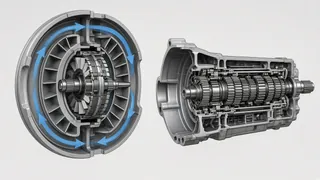
The main components are the impeller, turbine, and stator. The impeller is attached to the engine and acts like a centrifugal pump, flinging transmission fluid outward. That energized fluid strikes the turbine blades, which are connected to the transmission input shaft. After passing through the turbine, the fluid returns toward the impeller. Without guidance, this return flow would fight the impeller, but the stator redirects it and helps create the torque multiplication effect.
A one-way clutch holds the stator still at low speed and allows it to freewheel once the fluid flow pattern changes. This transition is what changes the converter from a torque multiplier into a smoother coupler. The lockup clutch, controlled by the transmission’s hydraulic or electronic system, then mechanically connects the impeller and turbine during light-throttle cruising. That lockup reduces slipping and heat, improving fuel economy and making engine speed feel more directly linked to road speed.
Strengths, limitations and suitability
The biggest advantage is smoothness. The converter absorbs engine pulses and driveline shock, allowing comfortable launches and relaxed stop-and-go driving. It also supports torque multiplication, which helps a vehicle with a relatively small engine move away cleanly and can reduce the need for aggressive gearing. Automatic transmission cooling and fluid circulation depend on this design, so the converter is integral to normal hydraulic operation rather than being a separate accessory.
The main compromise is slip, which creates heat and uses a small amount of energy whenever the converter is unlocked. That is why shift behavior can feel less direct than a manual transmission and why fuel economy historically suffered. Modern lockup strategies reduce this loss, but the converter still depends on the correct fluid specification. A converter that suits relaxed commuting may not feel as responsive in a performance application, where a higher stall speed trades some smoothness for stronger launch characteristics.
Procedure
Checking transmission fluid is the most practical routine inspection related to the torque converter. The engine is usually warmed up and running, with the transmission in Park or Neutral according to the manufacturer’s procedure. The fluid level should be within the marked range, and the fluid should typically appear translucent rather than dark or burnt. Low fluid can reduce converter efficiency, while overheated fluid may indicate excessive slip or restricted cooling.
When a torque converter is replaced or a transmission is removed, installation order matters. The converter must be fully seated onto the transmission pump drive before the transmission is bolted to the engine. For service where the converter has been drained, adding fluid, starting the engine, shifting through the gears briefly, and rechecking the level helps remove air from the circuit. Exact fill volumes and procedures vary by vehicle, so manufacturer guidance should be followed.
Diagnosing a problem
A shudder during light acceleration or lockup engagement often points to converter clutch slip or degraded fluid. If the shudder changes with throttle or appears at a specific speed, the converter’s lockup strategy and fluid condition are useful first checks. Diagnostic codes related to the transmission can show whether the control system is commanding lockup, but a code alone does not prove the converter is faulty. The same symptom can sometimes come from engine misfire or driveline issues.
Overheating, discolored fluid, or a whine from the bellhousing area may indicate converter or pump trouble. A stall-speed test can help separate engine and transmission problems, but it should only be performed when the manufacturer allows it and with the wheels chocked and brakes firmly applied. If the vehicle stalls when coming to a stop or fails to move in gear, the problem may be the converter, pump, valve body, or low fluid. Stopping use and obtaining a professional diagnosis is appropriate when these severe symptoms appear.