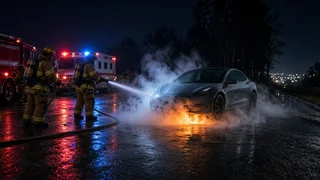
EV vs Gas Car Fires: How the Risks Really Compare
Fire is a real but uncommon risk for any modern car, and comparing EV and gas car fires means asking two separate questions: how often fires happen, and how they behave once they start. Analyses of available data have generally suggested that gasoline vehicles catch fire more often than battery electric vehicles. That data is limited, collected in different ways and complicated by fleet age, since the EV fleet is younger on average and older vehicles tend to have more fire-prone faults. An EV battery fire, though uncommon, is usually harder to put out, can reignite long after it seems extinguished and calls for a different emergency response. For most buyers, fire risk alone should not decide between an electric and a gasoline car. Knowing how each type of fire starts and how to react is more useful than choosing a powertrain to avoid one.
Why Cars Catch Fire at All
Every vehicle fire needs an ignition source, combustible material and oxygen. An ignition source is anything that supplies enough heat to start burning, such as an electrical short, a hot exhaust component or a chemical reaction. Combustible material is whatever can burn: fuel, oil, plastics, upholstery, wiring insulation and, in an EV, the battery cells themselves. Gasoline and electric cars share many of these materials. The main difference lies in where the stored energy sits and how it releases heat when something goes wrong.
How Gasoline Car Fires Typically Start
A gasoline car carries a tank of highly flammable liquid fuel and runs an engine that produces heat continuously. Common causes include fuel or oil leaks reaching hot engine or exhaust parts, electrical faults in the 12-volt system, overheating engines, failed components covered by safety recalls and collision damage that ruptures fuel lines. Parking over dry grass or brush can also be a problem, because the exhaust system and catalytic converter get hot enough to ignite vegetation underneath the car.
Once gasoline vapor ignites, a fire can spread quickly through the engine bay and passenger compartment. Firefighters are thoroughly trained for these fires. They can usually extinguish them with standard methods, and the fire tends to stay out once it is put out.
How Electric Car Fires Typically Start
Most serious EV fires involve the high-voltage lithium-ion battery pack. The key process is thermal runaway: one damaged or defective cell overheats, releases flammable gases and heat, and that heat pushes neighboring cells into the same reaction. The chain can keep going even without outside oxygen, because the cells generate their own heat and gases.
Typical triggers include physical damage to the battery from a crash or road debris, manufacturing defects in cells, charging-system faults and prolonged submersion in water. Saltwater flooding is a particular concern because it can cause internal corrosion and short circuits. EVs also have conventional 12-volt electrical systems, cabin materials and tires that can burn for ordinary reasons unrelated to the battery.
Battery fires behave differently from fuel fires. They often produce dense, toxic smoke and may vent jets of flame. They can take far more water and time to control, because responders must cool the cells rather than simply smother flames. They can also reignite hours or even days later as damaged cells continue to heat up. For that reason, an EV that has burned or suffered serious battery damage needs special handling during towing and storage.
Side-by-Side Comparison
Factor | Gasoline vehicle | Electric vehicle; Main stored energy | Liquid fuel in a tank | Lithium-ion battery pack; General fire frequency | Generally reported as higher, though data quality varies | Generally reported as lower, with a younger fleet complicating comparisons; Common causes | Fuel and oil leaks, hot exhaust, electrical faults, overheating | Battery damage or defects, charging faults, flood damage, 12-volt electrical faults; How the fire develops | Can spread quickly once fuel vapor ignites | May start slowly with smoke and hissing, then escalate through thermal runaway; Difficulty extinguishing | Usually handled with standard firefighting methods | Often requires prolonged cooling with large volumes of water; Reignition risk | Low once fully extinguished | Significant; can reignite hours or days later; Responder considerations | Fuel spill and vapor hazards | High-voltage electrical isolation, toxic gases, stranded energy in damaged cells
Hybrids and plug-in hybrids carry both a fuel system and a high-voltage battery, so they can face either type of fire. Battery size, chemistry and placement vary by manufacturer, model year and generation, so risks differ even among vehicles with the same powertrain.
Warning Signs to Take Seriously
Smoke from under the hood, under the floor or around the wheels; A smell of fuel, burning plastic, hot oil or a sharp chemical odor; Hissing, popping or crackling sounds, especially from beneath an EV; Dashboard warnings for battery temperature, high-voltage system faults or engine overheating; Visible fluid leaks or sudden loss of electrical functions; Any damage to the underside of an EV after hitting debris, a curb or a pothole
What to Do If Your Car Catches Fire
The response is largely the same for both vehicle types, and safe evacuation always comes before saving the car.
Signal, pull over as soon as it is safe and stop away from buildings, other vehicles and dry vegetation. Shift into park, switch the vehicle off and get everyone out immediately. Leave belongings behind. Move well away from the vehicle, stay upwind of the smoke and keep people and traffic back. Do not return for any reason. Call 911 and tell the dispatcher whether the vehicle is electric, hybrid or gasoline, since this changes how emergency services respond. Do not open the hood or try to reach the battery. Opening the hood feeds air to the fire, and an EV battery fire cannot be put out with a handheld extinguisher. When responders arrive, share what you saw and heard, and mention any recent crash, flood exposure or charging issues.
Do Fire Extinguishers Help?
In the US, portable extinguishers are rated by the classes of fire they handle: Class A for ordinary combustibles such as fabric and plastic, Class B for flammable liquids such as gasoline and oil, and Class C for energized electrical equipment. A multipurpose ABC-rated extinguisher suits a vehicle. It may stop a very small fire caught in its earliest stage, such as smoldering wiring in the cabin or a minor fuel flare-up, but only if you can use it from a safe position with a clear escape route.
An extinguisher will not stop thermal runaway inside an EV battery pack, and it is no match for an established fuel fire. If the fire is growing, is coming from the battery area or the engine bay is fully involved, leave and let firefighters handle it.
Why EV Fires Need a Different Professional Response
Firefighters approaching a burning or damaged EV must account for the high-voltage system. Electrical isolation means disconnecting or cutting the high-voltage circuits according to the manufacturer's emergency procedures, so responders are not exposed to live components. High-voltage cabling is typically orange. Drivers and bystanders should never touch, cut or move it.
Even after the flames are out, damaged cells may still hold energy. Tow operators and storage yards often keep fire-damaged or severely crashed EVs apart from other vehicles and buildings for this reason. If your EV has been in a serious collision or flood, tell the tow company and insurer that it is electric, even if there was no fire.
Reducing Fire Risk in Either Type of Car
Check for open safety recalls on your exact make, model and model year, and get recall repairs done promptly. Keep up with scheduled maintenance, including inspections for fuel, oil and coolant leaks on gasoline cars. Have any electrical faults, burning smells or warning lights diagnosed rather than ignored. Avoid aftermarket wiring modifications unless a qualified installer does the work. For EVs, use properly installed charging equipment, avoid damaged cords and adapters, and follow the manufacturer's charging guidance. Have an EV inspected after any significant impact to the underside or exposure to floodwater. Do not park a hot car over dry grass or brush.
Which Is Safer for You?
If your main concern is how likely a fire is, the available evidence does not suggest that EVs are more dangerous than gasoline cars. Most analyses point the other way, though fleet age and data limitations make exact comparisons unreliable. If your concern is how hard a fire is to control once it starts, EV battery fires are more demanding for responders and carry a reignition risk that gasoline fires generally do not.
In practice, fire risk is rarely the deciding factor between the two. Choose the vehicle that fits your driving, charging access and budget, then review its recall history, keep it maintained and learn the evacuation steps above. If you live somewhere prone to flooding, or you often park in enclosed spaces, an EV warrants extra attention to flood exposure, battery damage and charging setup. The same habits that cut fire risk in a gasoline car still apply: prompt maintenance and quick action on warning signs.