Electric Car Fires: Causes and Emergency Response
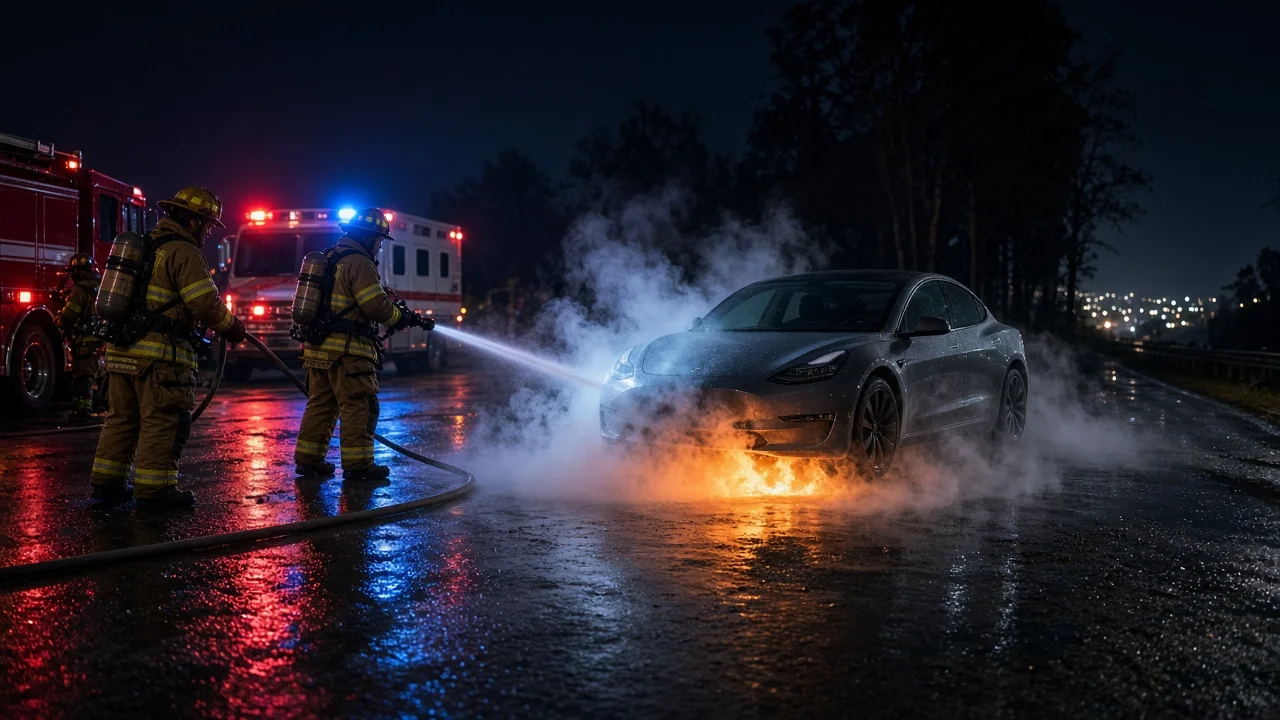
The Short Answer
Electric car fires usually start in or around the high-voltage lithium-ion battery pack, most often after physical damage, a manufacturing defect, an electrical fault or exposure to water, especially saltwater. Once a battery cell overheats, it can trigger a chain reaction called thermal runaway, which makes these fires harder to put out and more likely to reignite than a typical gasoline vehicle fire. For a driver, the response is simple and does not change by brand: stop, get everyone out, move well away, call 911 and tell the dispatcher the vehicle is electric. Do not try to fight a battery fire yourself.
This guide covers battery electric vehicles in the US. Plug-in hybrids and conventional hybrids also carry lithium-ion batteries, so much of the battery-related guidance applies to them as well, but they add the fuel-fire risks of a gasoline engine. Battery chemistry, pack design and safety systems vary by manufacturer, model and model year, so specific behavior can differ from one vehicle to another.
What About How Often Electric Cars Catch Fire?
No verified figures were supplied for this article, so it does not state fire rates or compare how often electric and gasoline vehicles burn. Published comparisons exist, but they rely on different data sources and counting methods, and they should be read with their methodology in mind. What is well established is that EV fires behave differently once they start, which is why the emergency response differs.
Why Electric Cars Catch Fire
A lithium-ion battery stores a large amount of energy in many individual cells packed closely together. A fire typically begins when one cell overheats past the point where it can stay stable. That cell releases heat and flammable gases, which can heat neighboring cells until they fail too. This self-sustaining process is thermal runaway. The common triggers are:
Crash or impact damage: a collision, road debris or a hard strike to the underside can deform or puncture the battery pack, sometimes without obvious outside signs. Manufacturing defects: flaws inside a cell, such as contamination or damaged internal separators, can cause an internal short circuit. Defects of this type have been the subject of manufacturer recalls. Water intrusion: flooding, particularly with saltwater, can corrode components and create short circuits in the high-voltage system, and fires can appear days or weeks after the exposure. Charging and electrical faults: damaged cables, faulty or improperly installed charging equipment, and faults in the vehicle's high-voltage wiring or battery management system can generate excess heat. External heat: a fire that starts elsewhere, such as in a garage or a neighboring vehicle, can heat the battery enough to start thermal runaway.
How an EV Battery Fire Differs From a Gasoline Car Fire
Factor | Electric vehicle battery fire | Gasoline vehicle fire; Main fuel source | Stored chemical energy in battery cells, which can keep producing heat on their own | Gasoline, oil, plastics and other combustibles; Extinguishing | Difficult; the battery is sealed and cooling must reach the cells, so firefighters may need large amounts of water and extended time | Usually handled with standard firefighting methods; Reignition risk | Significant; damaged cells can reignite hours or days later | Lower once the fire is fully out; Warning signs | Hissing, popping or crackling sounds, white or gray vapor, unusual smells | Fuel smell, smoke from the engine area; Gases | Toxic and flammable gases are released as cells fail | Toxic smoke from burning fuel and materials
The vapor that escapes from a failing battery is flammable and toxic. It can look like white smoke or steam, and it can ignite suddenly. That is one reason distance matters more than speed in getting things out of the car.
Warning Signs to Watch For
A battery or high-voltage warning on the dashboard, especially one telling you to stop the vehicle. Smoke or vapor from under the car, around the wheels or near the charging port. Hissing, popping or crackling sounds that are not normal for the vehicle. A sharp chemical or unusual sweet smell inside or around the car. Unusual heat coming from the floor or underside of the vehicle.
Any of these signs, particularly after an impact, flooding or a charging problem, is a reason to treat the vehicle as a potential fire hazard and follow the steps below.
What to Do If Your Electric Car Is Smoking or on Fire
Pull over as soon as it is safe, away from buildings, other vehicles, fuel pumps and anything flammable. Put the vehicle in park and switch it off. Get everyone out immediately. Do not stop to collect belongings. If the car is charging, leave it and move away. Do not handle the cable if there is smoke, flame or visible damage. Move well away from the vehicle and stay upwind to avoid the smoke and gases. Keep others back. Call 911. Tell the dispatcher the vehicle is electric or hybrid and, if you know it, the make and model, so responders can plan for a battery fire. Do not attempt to put out a battery fire with a handheld extinguisher, and do not open the hood or frunk. Do not return to the vehicle, even if the flames appear to be gone.
If a door will not open because of a power loss, most EVs have a manual door release. Its location and operation vary by model, so it is worth finding it in the owner's manual before you ever need it.
After the Fire Is Out
A battery that has been through a fire or serious damage can still hold energy, sometimes called stranded energy, and can reignite later. Fire departments often monitor the vehicle before releasing it. Tow and storage operators should be told that it is an electric vehicle, and a damaged EV is generally kept outdoors and isolated from buildings and other vehicles rather than parked in a garage. Contact your insurer and the manufacturer, and do not try to drive, charge or repair the vehicle yourself.
Reducing the Risk
Check for open recalls using your vehicle identification number and complete any battery-related recall promptly. Follow any interim instructions a recall gives, such as limiting charge level or parking outside. Have the vehicle inspected after any significant impact to the underside, even if it seems to drive normally. Treat any EV that has been in floodwater, especially saltwater, as a fire risk. Park it outdoors away from structures and have it inspected before using it. Use charging equipment designed for your vehicle, have home charging installed by a qualified electrician, and replace damaged cables or adapters. Do not ignore battery or high-voltage warning messages.
Bottom Line
Electric car fires are mostly tied to battery damage, defects, water exposure or electrical faults, and they are dangerous because thermal runaway sustains itself, releases toxic gases and can restart after the flames are out. The right response is the same for any EV: get out, get away, call 911 and identify the vehicle as electric. Specific risk levels and safety features depend on the model and model year, and this article does not include verified fire-rate statistics.