EV Reduction Gearbox
An EV reduction gearbox translates the electric motor's high rotational speed into the wheel torque that moves the vehicle. Unlike a conventional multi-speed transmission, this single-speed unit uses a fixed gear ratio to keep the motor within its efficient operating range. Understanding its design, fluid specification, fitment, and typical failure symptoms helps owners interpret shift behavior, diagnostic codes, and service history more accurately. Because the motor produces broad torque from a standstill, the reduction gearbox is simpler than an automatic or manual gearbox, yet its internal bearings and lubrication still demand proper care.
Essential answer
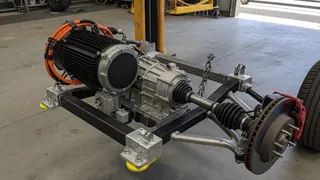
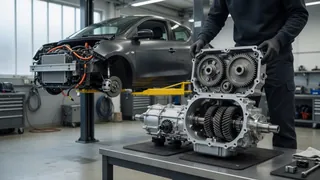
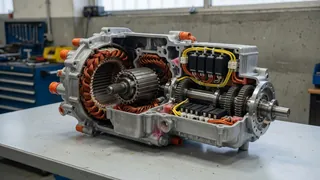
The essential answer is that an EV reduction gearbox is a compact, fixed-ratio gear set placed between the electric drive motor and the axle shafts. Its job is to reduce the motor’s high rpm to a more useful wheel speed while multiplying torque. Many electric motors spin well above typical engine speeds, so this single-speed transmission type avoids the complexity of multiple gears. The housing often integrates the differential, and the assembly may be called a gear reduction unit or transaxle. Fitment is specific to the platform, so a unit from one EV generally will not bolt into another without matching case dimensions, mounting points, and output flanges.
A direct answer must also qualify what the component is not. It is not a conventional continuously variable or stepped automatic transmission, and it normally has no driver-selectable gears or shift behavior in the traditional sense. Diagnostic codes related to this assembly usually point to speed sensor disagreements, oil temperature faults, or isolation faults rather than gear ratio errors. Fluid specification matters because the lubricant must handle high input speeds and protect both helical gears and bearings. Service history should show occasional oil level or condition checks, though many units are sealed for life under normal duty. Interpreting a fault code requires confirming the vehicle platform, since manufacturer-dependent definitions vary.