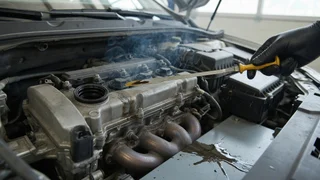
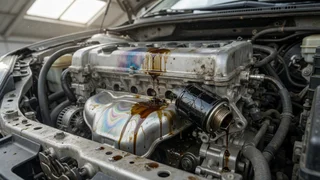
Engine Damage From Low Oil: What Happens, Warning Signs and What to Do
The Short Answer
Running an engine low on oil can cause anything from accelerated wear to complete engine failure. How much harm is done depends mainly on two things: how far the level has dropped and whether the oil pump can still deliver steady pressure. An engine that is slightly below the full mark but still inside the safe range on the dipstick is usually not being harmed. An engine low enough that the pump draws air, or that oil pressure drops, can suffer serious bearing, camshaft or turbocharger damage within a short time. Driving with the oil pressure warning light on is the most dangerous situation of all.
Low oil level and low oil pressure are related but different problems. Low level means there is less oil in the sump than the engine was designed to carry. Low pressure means oil is not reaching the moving parts with enough force. Low level often leads to low pressure, but pressure can also fail from a worn pump, a clogged pickup screen or the wrong oil, even when the level is correct.
Why Oil Level Matters
Engine oil does more than lubricate. It keeps metal surfaces separated by a thin pressurized film, carries heat away from pistons and bearings, holds soot and debris in suspension until the filter catches it, and in many modern engines acts as hydraulic fluid for components such as variable valve timing actuators, hydraulic lifters and timing chain tensioners.
When the oil level is low, the same amount of heat and contamination is spread through less oil. The oil runs hotter, breaks down faster and loses its protective additives sooner. The pickup tube in the oil pan can also be uncovered during hard cornering, braking or acceleration, letting the pump draw air instead of oil. That brief loss of supply is called oil starvation, and it is where most low oil engine damage begins.
How Damage Progresses
Low oil damage is usually progressive rather than sudden, although it can end suddenly. The stages below describe a general pattern; actual timing varies widely by engine design, oil condition, driving style and how low the level gets.
Slightly low: the oil works harder and ages faster, but the engine is generally still protected while the level stays within the marked range. Noticeably low: oil temperature rises, additives deplete sooner, and sludge or varnish can build up faster. Wear increases even without obvious symptoms. Intermittent starvation: the pickup draws air during turns, stops or steep grades. Pressure flickers, lifters may tick, and bearings experience moments of metal-to-metal contact. Sustained low pressure: bearing surfaces overheat and wear rapidly. Knocking noises often appear at this stage, and the damage is usually permanent. Failure: a bearing can spin or seize, a connecting rod can break, or the engine can lock up entirely. At this point repair typically means a rebuild or replacement engine.
Parts Most Vulnerable to Low Oil
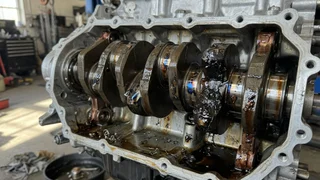
Main and connecting rod bearings are usually the first critical parts to suffer. They rely on a pressurized oil film to keep the crankshaft from touching the bearing surface. Once that film breaks down, the soft bearing material wears or smears quickly, clearances open up, and a deep knocking sound develops under load.
The camshafts, lifters and rocker arms sit at the top of the engine, farthest from the pump, so they are among the last places to receive oil. Low oil often shows up first as ticking or clattering from the valvetrain, and lobes or followers can wear down if the condition continues.
Turbochargers are especially sensitive on engines that have them. The turbo shaft spins at very high speed on a thin oil supply and runs extremely hot. Oil starvation can ruin turbo bearings quickly, and a failing turbo can then contaminate the rest of the engine with debris.
Timing chains and their hydraulic tensioners, along with variable valve timing systems, depend on oil pressure to operate correctly. Low oil can cause chain rattle on startup, timing-related warning lights, rough running and, in severe cases, stretched chains or jumped timing. Piston rings and cylinder walls can also scuff when splash lubrication and cooling are reduced, which tends to raise oil consumption further and worsen the original problem.
Warning Signs of Low Oil
Sign | What it often indicates | Urgency; Oil level warning or message | Level has dropped below the sensor threshold | Check and top up soon; Oil pressure warning light (red oil can) | Pressure is too low to protect the engine | Stop safely as soon as possible; Ticking or tapping from the top of the engine | Valvetrain or lifters not getting enough oil | Check level before driving further; Deep knocking that rises with engine speed | Possible bearing damage | Stop driving and have it inspected; Burning oil smell or blue smoke | Leak onto hot parts or oil burning in cylinders | Inspect soon; Higher than usual engine temperature | Reduced cooling from oil, or a related cooling problem | Investigate promptly; Oil spots under the car | External leak | Find and repair the source
Not every vehicle has an oil level sensor. Many rely only on an oil pressure light, which typically comes on only after the level has dropped far enough to affect pressure. By then, some damage may already have occurred, so the warning light should be treated as a last line of defense rather than a reminder to check the oil.
What to Do If the Oil Light Comes On
If the red oil pressure light comes on while driving, pull over where it is safe and shut the engine off. Continuing to drive is the most common way a recoverable problem becomes a destroyed engine. Let the engine sit for a few minutes so oil drains back to the pan, then check the level with the dipstick on level ground, or use the electronic level check if your vehicle has no dipstick. If the level is low, add the oil type specified for your engine until it reaches the correct range. Avoid overfilling, which can cause its own problems. Restart the engine and confirm the light goes out quickly. If it stays on or flickers, or if you hear knocking or heavy ticking, do not drive the car; have it towed for inspection. If the level was correct but the pressure light was on, the cause is likely mechanical, such as a pump, pickup, sensor or filter issue, and the car should be diagnosed before further driving. After any low oil event, look for the cause: a leak, burning oil, or simply a missed oil change. Topping up treats the symptom, not the reason.
Can Low Oil Damage Be Reversed?
Mechanical wear cannot be undone by adding oil or using additives. If the engine was only briefly low and never lost pressure, there may be no lasting harm, and a prompt oil and filter change is a reasonable precaution. If the engine ran with low pressure, made knocking noises or overheated, damage is likely. A technician can assess the situation by listening to the engine, checking oil pressure with a mechanical gauge, and inspecting the old oil and filter for metal particles. Bearing damage generally requires disassembly to repair, and severe cases make engine replacement more practical than rebuilding.
Products marketed as engine restorers or stop-knock treatments may temporarily quiet some noises, but they do not restore worn bearing surfaces. They are not a substitute for diagnosis.
Why Engines Run Low on Oil
External leaks from gaskets, seals, the drain plug or the oil filter. Normal oil consumption, which varies by engine design and increases with age and wear. Worn piston rings or valve seals that allow oil to burn in the combustion chamber. Turbocharger seal wear on turbocharged engines. Positive crankcase ventilation (PCV) problems that pull oil into the intake. Extended or skipped oil changes, especially on engines known to consume oil between services.
Some engines are designed or known to use a measurable amount of oil between changes, and manufacturers often consider a certain consumption rate acceptable. That rate differs by model, generation and powertrain, so the owner's manual or a dealer is the place to confirm what is normal for a particular vehicle.
Preventing Low Oil Engine Damage
Regular level checks are the simplest protection. Checking the oil every few fuel stops, and before long trips, catches slow consumption and leaks before they become dangerous. On many cars the gap between the minimum and maximum dipstick marks represents roughly a quart, but this varies, so the owner's manual is the reliable reference for your engine's fill quantity and safe range.
Using the correct lubricant specification also matters. Manufacturers specify a viscosity grade and often a performance standard or manufacturer approval code. Modern engines with tight tolerances, turbochargers or variable valve timing can be sensitive to oil that does not meet those requirements. Equipment identification, meaning confirming the exact engine fitted to your vehicle by model year, engine code or VIN, helps ensure you choose the right oil and filter, since one model can be offered with several different engines.
Following the service interval appropriate to how the vehicle is driven is the other key habit. Many manuals list a normal schedule and a severe service schedule for short trips, towing, extreme temperatures or dusty conditions. Oil-life monitors on newer vehicles estimate change timing from operating conditions, but they do not measure oil level, so manual or electronic level checks are still necessary between changes.
Key Takeaways
Slightly low oil within the marked range is usually not harmful, but it should be topped up. Serious engine damage from low oil comes mainly from oil starvation and loss of pressure. Bearings, the valvetrain, turbochargers and oil-pressure-driven systems such as timing chain tensioners and variable valve timing are the most vulnerable. The oil pressure light means stop driving, not check later. Adding oil cannot repair wear; knocking or persistent warnings call for professional inspection. Routine level checks, the correct oil specification and appropriate service intervals prevent most low oil problems.