Engine Damage from Low Oil: What Happens and What It Means for Your Engine
The short answer
Running an engine low on oil can cause damage ranging from accelerated wear to complete failure. Oil keeps metal parts from rubbing directly against each other, carries heat away from hot components and helps keep the inside of the engine clean. When there is not enough of it, those jobs are done poorly or not at all, and parts begin to wear, overheat and eventually seize.
How much harm results is not fixed. It depends mainly on how far below the correct level the oil has fallen, how long the engine runs that way, how hard it is worked during that time, and how the particular engine is designed. A level slightly below the full mark is a very different situation from an engine that has lost oil pressure.
Low oil level versus low oil pressure
This distinction changes the answer more than any other. Oil level is how much oil is in the engine, usually checked with a dipstick or, on some vehicles, an electronic level reading. Oil pressure is the force with which the oil pump pushes oil through passages to the bearings and other moving parts.
An engine can be somewhat low on oil and still maintain pressure, though with less margin for heat and less reserve during hard cornering, braking or climbing, when oil can slosh away from the pump pickup. Once the level drops far enough that the pump draws in air or cannot supply enough oil, pressure falls, and that is when rapid, serious damage becomes likely.
On many vehicles the red oil warning light responds to low pressure rather than low level, which means it may only come on after the situation has already become critical. Some vehicles also have a separate oil level sensor or message. Which system a given car uses varies by manufacturer, model and year, so the owner's manual is the reliable reference for what each warning means.
How the damage develops
Low oil damage tends to follow a general progression, although the speed and order vary between engines and conditions.
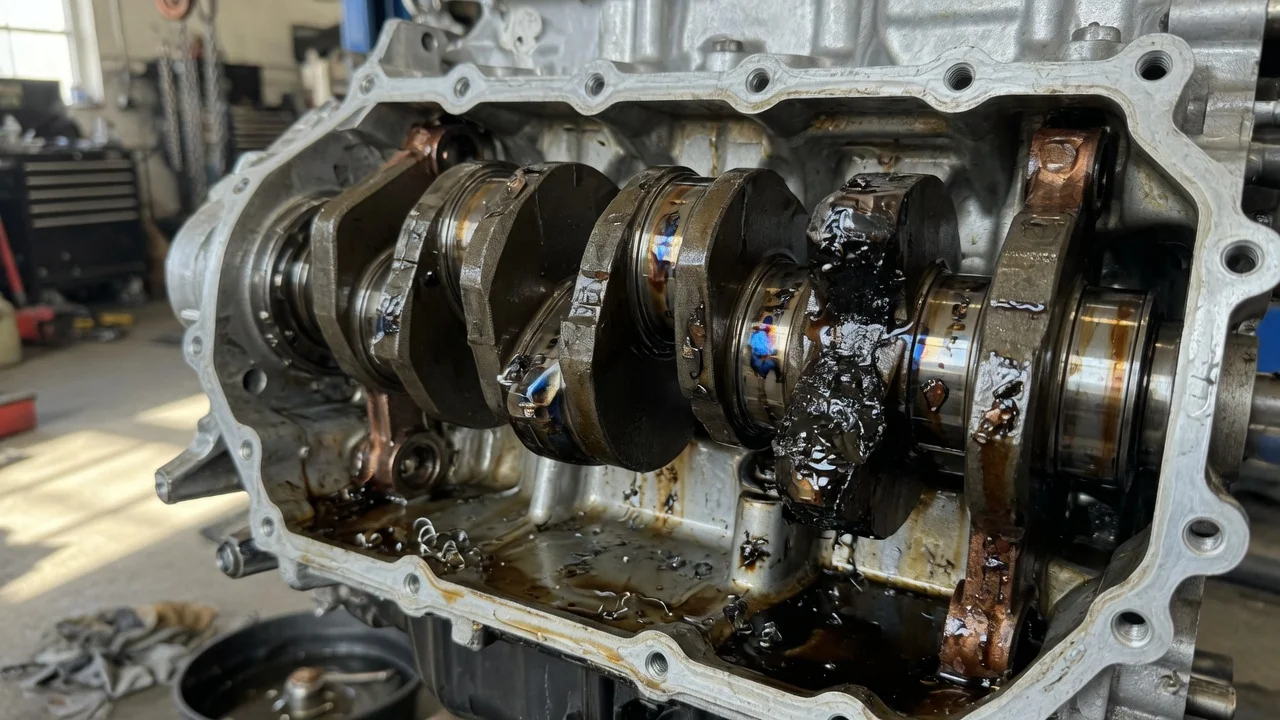
Reduced lubrication: with less oil film between moving surfaces, friction rises and parts wear faster. Higher temperatures: oil also removes heat. With less of it circulating, the oil and internal parts run hotter, and hot oil breaks down faster, which further weakens protection. Bearing wear: the crankshaft and connecting rod bearings, thin surfaces that the crankshaft spins on, depend on a constant pressurized supply of oil. Starved bearings wear quickly and can produce a knocking sound, often called rod knock. Valvetrain and timing components: camshafts, lifters and, on many engines, timing chains and their tensioners rely on oil. Shortages can cause ticking or rattling and accelerated wear. Turbocharger damage: on turbocharged engines, the turbo shaft spins at very high speed and is typically lubricated by engine oil, making it vulnerable to oil starvation. Seizure: in the worst case, friction and heat cause parts to weld or lock together, and the engine stops and will not turn. This usually means a major rebuild or engine replacement.
Signs an engine may be low on oil or already damaged
The oil pressure warning light or an oil level message appears on the dashboard. The dipstick reading is below the minimum mark or shows no oil. New ticking, tapping or knocking noises, especially a deep knock that rises with engine speed. A burning oil smell, visible smoke or oil spots under the vehicle, which can point to a leak. The engine runs hotter than usual or loses power.
Noises such as knocking can indicate that internal damage has already occurred. Adding oil at that point may quiet some symptoms, but it does not repair worn bearings or other parts.
What to do if you suspect low oil
If the oil pressure warning comes on while driving, pull over safely and switch the engine off as soon as possible. Continuing to drive with low pressure is the most common way minor trouble becomes major damage. Wait a few minutes for oil to drain back, then check the level on level ground as described in the owner's manual. If the level is low, top up with the oil grade and specification the manufacturer lists for that engine. If the warning stays on after topping up, or the engine makes unusual noises, do not keep driving. Have the vehicle inspected or towed. Find out why the level dropped. Leaks and oil consumption both have causes that should be diagnosed rather than repeatedly topped up.
Preventing low oil damage
The most effective prevention is checking the oil level regularly and following the manufacturer's change intervals. Many engines consume some oil between changes as part of normal operation, and the acceptable amount differs by engine. Checking the level periodically, rather than relying on the dashboard warning, gives an early chance to catch a drop before it reaches the point where pressure is affected.
Limits of this guide
This explanation covers general principles that apply to conventional oil-lubricated piston engines. It does not give model-specific details such as how low a particular engine can safely run, how long it can operate without oil before failing, how its warning systems are calibrated, or what repairs typically cost. Those vary by engine design, model year, powertrain and market, and should be confirmed through the vehicle's owner's manual, the manufacturer or a qualified technician.