Engine damage from low oil
The short answer
Yes, running an engine low on oil can damage it, and the damage can range from accelerated wear to complete engine failure. Engine oil lubricates moving metal parts, carries heat away from them, and helps keep internal surfaces clean. When there is not enough oil, the pump can draw in air instead of oil, especially during cornering, braking or climbing, and oil pressure falls. Metal surfaces that normally ride on a thin oil film then rub against each other, generating friction and heat.
How much harm results depends on how low the level is, how long the engine runs that way, and how hard it is driven. A level slightly below the full mark is not the same as an engine that has lost oil pressure. A modest shortfall caught and topped up promptly may cause little or no lasting harm, while driving with the oil pressure warning lit can destroy an engine in a short time. The supplied material does not include the precise thresholds for any specific engine, so the owner's manual remains the authority on acceptable oil level and capacity for a given model, engine and model year.
Low oil level versus low oil pressure
These two conditions are related but not identical. Oil level is how much oil is in the engine, usually checked with a dipstick or, on some vehicles, an electronic level sensor shown in the instrument display. Oil pressure is the force with which the pump circulates oil through the engine. An engine can be low on oil yet still maintain pressure for a while; once the level drops far enough, pressure becomes unstable or collapses.
Many vehicles have a red oil pressure warning light, which signals low pressure rather than simply a low level. Some vehicles also have a separate low-level warning, often shown in amber or yellow. Which warnings a particular vehicle has varies by manufacturer, model and trim, so the owner's manual should be checked to understand what each symbol means.
Which parts are damaged first
Crankshaft and connecting rod bearings: these rely on a pressurised oil film. When it breaks down, bearing surfaces wear quickly, which can lead to the deep knocking sound often called rod knock. Camshafts, lifters and valve train: these sit at the top of the engine and can be among the first areas starved of oil, producing ticking or tapping noises. Hydraulic timing chain tensioners and variable valve timing systems: on engines that use them, these depend on oil pressure to work correctly, and low pressure can cause rattles, timing faults or warning codes. Turbocharger bearings: on turbocharged engines, the turbo shaft spins at very high speed and depends on a steady oil supply; oil starvation can damage it. Pistons, rings and cylinder walls: increased friction and heat can cause scoring and wear, which may later show up as higher oil consumption. The engine as a whole: in severe cases, parts can overheat and seize, stopping the engine and typically requiring a major rebuild or replacement.
Warning signs to watch for
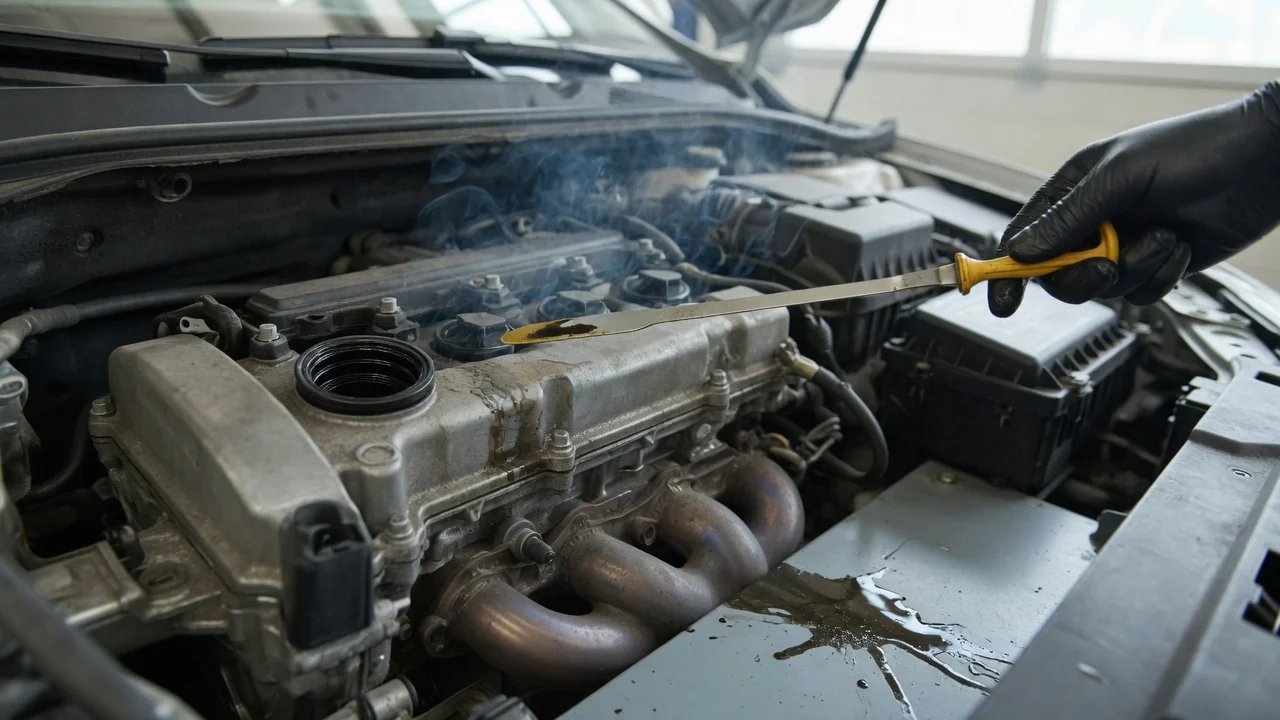
An oil pressure or oil level warning on the dashboard. Ticking, tapping or clattering from the top of the engine. A deep knocking from lower in the engine, which usually points to bearing damage. A burning oil smell, which can indicate a leak onto hot components. Higher engine temperature than usual, since oil also helps remove heat. Visible oil spots under the parked vehicle, or blue-grey exhaust smoke suggesting oil is being burned.
These symptoms are not unique to low oil and can have other causes, so they indicate the need for a check rather than a diagnosis on their own.
What to do if the oil is low
If the red oil pressure warning comes on while driving, pull over when it is safe and switch off the engine. Continuing to drive risks severe damage. With the vehicle on level ground and the engine off for a few minutes, check the dipstick or the electronic level reading as described in the owner's manual. If the level is low, top up with the oil grade and specification the manufacturer lists, adding a little at a time and rechecking to avoid overfilling. If the pressure warning stays on after topping up, or if knocking or other unusual noises continue, do not keep driving; arrange for the vehicle to be inspected or towed. Find out why the level dropped. Common reasons include leaks, oil being burned inside the engine, or an overdue service, and the cause should be addressed so the problem does not recur.
Can the damage be reversed?
Adding oil restores lubrication but does not repair worn metal. If an engine ran briefly with a slightly low level and runs quietly with normal oil pressure afterward, it may be fine, though an inspection is sensible. Worn bearings, scored cylinders or a damaged turbocharger generally require parts replacement, and a seized engine usually needs a rebuild or replacement. Repair costs vary widely by vehicle and region; no cost figures were supplied for this guide.
Damage traced to neglected maintenance or running without adequate oil may not be covered under a manufacturer warranty. The exact terms depend on the warranty and market, so they should be checked directly.
Preventing low-oil damage
The most reliable protection is to check the oil level regularly, follow the manufacturer's service intervals, and use the specified oil. Some engines consume a certain amount of oil between changes as normal behaviour, and manufacturers publish their own acceptable consumption limits; those figures are model-specific and were not part of the material for this guide. Never ignore an oil warning light, and investigate any steady drop in level or new leak promptly.