E0, E10 and E15 Gas: Ethanol Content and Vehicle Compatibility
Ethanol is an alcohol blended into most US gasoline. It raises octane, adds oxygen to the fuel and slightly reduces energy content per gallon. It also attracts water and can be harder on some older or non-automotive fuel system materials. The number after the E tells you the maximum ethanol percentage: E0 has none, E10 contains up to 10 percent and E15 contains up to 15 percent. Most modern cars run normally on E10. E15 is legally approved for many newer light-duty vehicles but not for every engine. Ethanol-free, or non-oxygenated, gas is mainly useful for older vehicles, small engines, boats and fuel that will sit in storage for a long time.
What Is Ethanol in Gas?
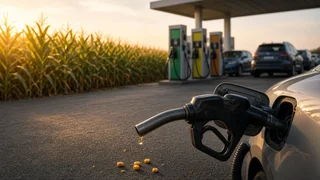
Fuel ethanol is the same alcohol found in alcoholic drinks, made fit for fuel use and produced in the US mostly from corn. Refiners and terminals blend it into gasoline for three main reasons: it is a renewable fuel component, it is an inexpensive octane booster, and its oxygen content helps the fuel burn more completely. An ethanol blend is named by its ethanol share by volume, so E10 is roughly nine parts gasoline to one part ethanol.
What Does Ethanol Do to Gas?
Adding ethanol changes several properties of the fuel. Some changes help and some create compromises, depending on the engine and how the fuel is used.
Raises octane: Ethanol has a high octane value and resists knock (premature ignition). Blenders often start with a lower-octane gasoline base and rely on ethanol to bring the finished fuel up to the posted pump rating. Adds oxygen: Ethanol is an oxygenate. The extra oxygen supports more complete combustion, which is why ethanol and other oxygenates have been used in emissions-control fuel programs. Lowers energy content: Ethanol holds less energy per gallon than gasoline, so blends deliver slightly lower fuel economy. The effect is small at E10 and grows as ethanol content rises. Attracts water: Ethanol is hygroscopic, meaning it absorbs moisture. If enough water accumulates, the ethanol and water can separate from the gasoline and settle at the bottom of a tank. This is called phase separation, and that layer can cause poor running or no-start problems. Acts as a solvent: Ethanol can loosen deposits and varnish in a fuel system. Some rubber, plastic, cork and metal parts designed before ethanol blends were common can degrade with prolonged exposure. Shortens storage life: Ethanol blends tend to degrade sooner in storage than ethanol-free gas, especially in vented tanks exposed to humid air.
In a modern fuel-injected car designed for ethanol blends, these effects are mostly invisible. The engine computer adjusts fueling for the oxygen content, and fuel system parts are built to tolerate ethanol. The drawbacks matter more for older vehicles, carbureted engines, small equipment and anything that sits unused for long periods.
What Is E0 and Non-Oxygenated Gas?
E0 is gasoline with no ethanol added. It is often labeled ethanol-free, pure gas, recreational fuel or non-oxygenated gas. Non-oxygenated gas, sometimes shortened to non-oxy gas, means the fuel contains no oxygenates at all. Ethanol is by far the most common oxygenate in US gasoline today, so in practice non-oxygenated gas and ethanol-free gas usually mean the same thing at the pump.
Ethanol-free gas is commonly sold at marinas, at some rural stations and in pre-mixed cans for small engines. It usually costs more than E10. It is often sold only as a higher octane grade, so check the posted octane rather than assuming it matches regular.
E0 makes the most sense for classic and collector vehicles with original fuel system parts, boats (especially those with older fiberglass fuel tanks or long idle periods), lawn and garden equipment, chainsaws, generators and other seasonal equipment, and some aircraft engines approved for automotive gas. For a modern car in regular use it offers little practical benefit beyond a slight fuel economy gain, which may not offset the higher price.
What Is E10 Gas?
E10 contains up to 10 percent ethanol and is the standard gasoline sold at most US stations. Pumps often carry a small notice that the fuel may contain up to 10 percent ethanol. Virtually all gasoline cars and light trucks sold in the US for decades are designed to use it, and most small-engine and marine manufacturers also allow E10. Regular, mid-grade and premium grades are commonly all E10. The octane number on the pump, not the ethanol content, tells you the grade.
What Is E15 Gas?
E15 contains more than 10 and up to 15 percent ethanol. It is often marketed as Unleaded 88, a reference to its typical octane rating, and is usually priced below regular E10. Federal rules permit E15 in model year 2001 and newer cars, light-duty trucks and medium-duty passenger vehicles, as well as in flex-fuel vehicles.
Federal rules prohibit E15 in vehicles older than model year 2001, motorcycles, heavy-duty engines, boats and marine engines, off-road vehicles such as ATVs and snowmobiles, and small engines such as mowers, chainsaws and generators. E15 pumps carry a distinctive warning label listing these restrictions. Read the label before fueling anything other than a newer car or light truck.
Legal approval and manufacturer approval are not the same thing. Some automakers explicitly approve E15 in their owner's manuals for certain model years, while others limit approved fuel to E10. If your manual does not list E15 as acceptable, fuel-related damage may raise warranty questions even though the fuel is legal for your vehicle's model year.
What Do E0-E10 and E0-E15 Mean?
These ranges usually appear in owner's manuals, on fuel cap labels and on equipment decals. They describe the span of ethanol content the engine is designed to accept, not a type of fuel sold at the pump.
E0-E10: The engine can run on anything from ethanol-free gas up to 10 percent ethanol. E15 and higher blends should not be used. E0-E15: The engine can run on anything from ethanol-free gas up to 15 percent ethanol, so E0, E10 and E15 are all acceptable. Higher blends such as E85 are not.
A vehicle rated E0-E15 does not need ethanol-free gas. E0 is simply within its acceptable range. Choose among acceptable fuels based on price, availability, required octane and how long the fuel will sit.
E0 vs E10 vs E15 at a Glance
Fuel | Ethanol content | Typical availability | Generally suitable for; E0 / non-oxygenated | None | Limited; marinas, some stations, canned fuel | Any gasoline engine, including classics, boats and small engines; E10 | Up to 10% | Standard at most US stations | Nearly all gasoline cars and most small, marine and powersport engines; E15 / Unleaded 88 | More than 10% up to 15% | Growing but uneven | Model year 2001 and newer cars and light trucks, and flex-fuel vehicles; not small, marine, powersport or older engines; E85 / flex fuel | Roughly 51% to 83% | Select stations | Flex-fuel vehicles only
Ethanol and Octane Rating
Ethanol and octane are related but separate. Ethanol content tells you what the fuel is made of. The octane rating tells you how well it resists knock. US pumps display the Anti-Knock Index, which is the average of two laboratory octane measurements. Always meet the minimum octane in your fuel specification. A higher-ethanol fuel does not replace premium if your engine requires premium, unless its posted octane meets that requirement. Using a higher octane than required generally brings no benefit in engines not designed to take advantage of it.
How to Check Which Ethanol Blend Your Vehicle Can Use
Read the fuel section of the owner's manual. It states the maximum ethanol content the manufacturer approves and the minimum octane. Check the inside of the fuel door or the fuel cap. Many vehicles show the approved fuel there, and flex-fuel vehicles are often marked with a yellow cap or an FFV or E85 badge. For small engines, boats, motorcycles and powersport vehicles, check the equipment manual or decal. Many are limited to E10, and some manufacturers recommend E0 for storage. Read the pump label before fueling. Confirm the ethanol percentage and octane, and look for the E15 warning label or flex-fuel markings. If you have no documentation for an older or modified vehicle, treat E10 as the upper limit and consider E0 for classic or carbureted engines.
Storage and Seasonal Equipment
Ethanol's water absorption and shorter shelf life matter most when fuel sits. For equipment stored for a season or longer, common approaches are to use ethanol-free fuel, add a fuel stabilizer to fresh gas and run the engine briefly so treated fuel reaches the carburetor or injectors, or run the fuel system dry if the manufacturer recommends it. Keep tanks and cans closed to limit moisture exposure. If stored fuel looks cloudy or shows a separate layer at the bottom, do not use it. Dispose of it properly and refill with fresh fuel.
Which Fuel Should You Choose?
For a modern car or light truck in daily use, E10 at the octane your manual specifies is the default choice. E15 is a reasonable lower-cost option if your vehicle is model year 2001 or newer and, ideally, the manufacturer lists E15 as approved. Ethanol-free gas is worth the extra cost for classic vehicles, boats, small engines and anything that will sit unused, where ethanol's moisture and material-compatibility drawbacks are most likely to cause trouble. When in doubt, the owner's manual and the pump label together answer the compatibility question for your specific engine.