Differential Oil vs Transmission Oil: What’s the Difference and Why It Matters
The Short Answer
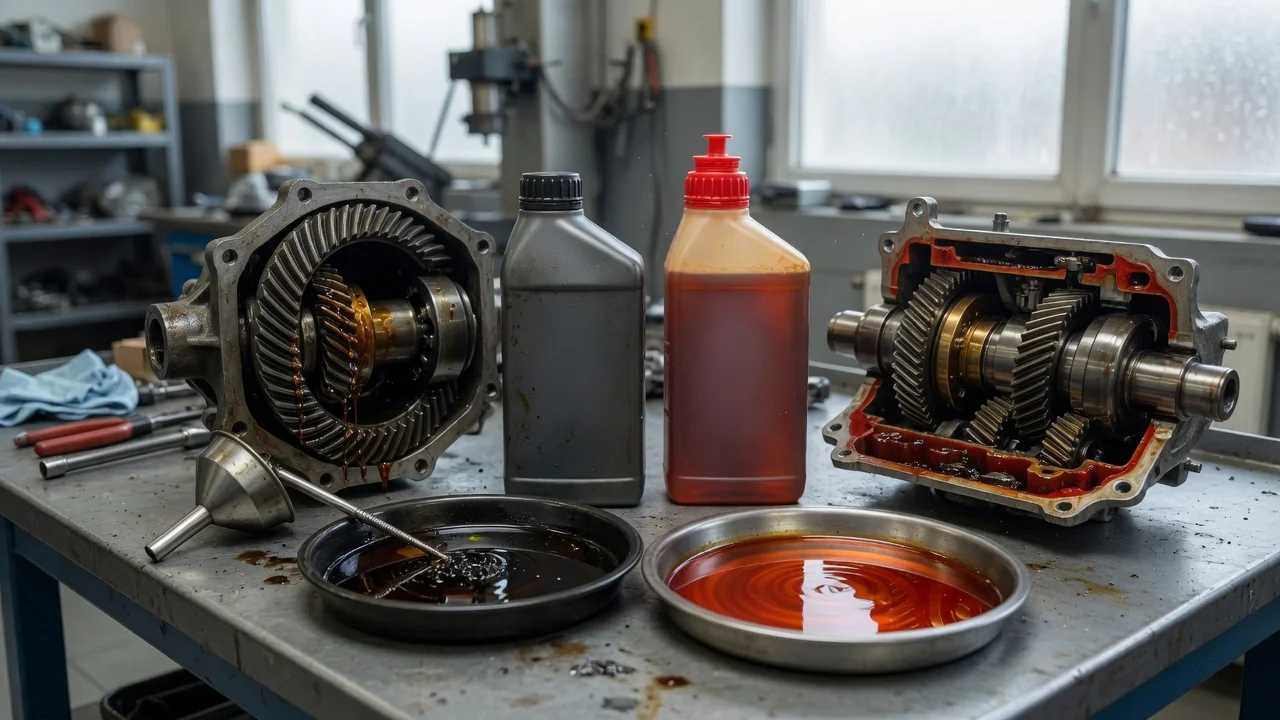
Differential oil and transmission oil are not automatically the same fluid, even though some vehicles can use one product in both components. In most cars and trucks, the differential and the transmission have separate housings, separate fill plugs, and separate fluid requirements. Transmission fluid is formulated to work with clutches, synchronizers, hydraulic controls, and high-speed gears. Differential oil is formulated mainly for hypoid or spiral bevel gears operating under extreme sliding pressure. Using the wrong product can cause noise, poor shifting, accelerated wear, or component failure. Always check the owner’s manual or a reliable specification sheet for the exact fluid type required for each unit.
What Transmission Oil Does
Transmission oil, often called transmission fluid, serves several functions at once. In an automatic transmission it acts as a hydraulic fluid, a friction modifier for clutches, a heat transfer medium, and a lubricant for gears and bearings. Automatic transmission fluids contain additive packages designed for valve bodies, torque converters, and wet clutches. In a manual transmission, the fluid lubricates gears, bearings, and synchronizers while also helping synchronizers match gear speeds during shifts. The requirements differ between automatic and manual gearboxes. An automatic transmission fluid is not the same as a typical manual transmission lubricant, and a fluid approved for one manual gearbox may be inappropriate for another because of synchronizer material or viscosity needs.
What Differential Oil Does
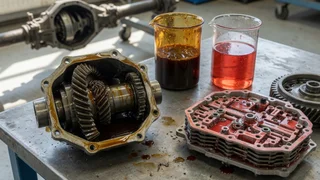
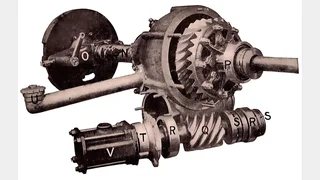
Differential oil lubricates the ring and pinion gears that transfer power from the driveshaft to the axles. In most rear-wheel-drive and four-wheel-drive vehicles, these are hypoid gears. Hypoid gears create a sliding action between the gear teeth under high pressure. This requires a lubricant with extreme-pressure additives, often based on sulfur and phosphorus compounds that form a sacrificial film on the metal surfaces. Differential oil is generally thicker than automatic transmission fluid. The common viscosities include 75W-90, 80W-90, and 75W-140, though exact requirements vary by vehicle. A limited-slip differential may also need a friction modifier additive unless the oil already contains one.
When the Fluids May Look Similar
Some drivetrain layouts blur the separation. In a transaxle used by many front-wheel-drive vehicles, the transmission and differential share one housing and often share one lubricant. In that case, the factory fluid is designed for both gear protection and transmission function. Some manual transaxles use a dedicated manual transmission fluid, while others use an engine oil or a fluid that also meets gear oil specifications. In a rear-wheel-drive manual transmission, some gearboxes can use a fluid that also works in a differential, but this is not universal. A fluid labeled as a gear oil or as a transmission fluid may meet both jobs only when the vehicle manufacturer explicitly approves it for both applications. The label alone does not guarantee compatibility.
Common Fluid Types and Where They Are Used
Fluid type|Typical use; ATF|Automatic transmissions and some manual transaxles specified for ATF; Manual transmission fluid|Manual gearboxes with synchronizer-specific requirements; Hypoid gear oil, 75W-90 or 80W-90|Differentials and some manual transmissions; Hypoid gear oil, 75W-140|Heavy-duty or high-temperature differentials; Limited-slip gear oil|Differentials that require a friction modifier
What Happens If You Use the Wrong Fluid
Putting differential oil in an automatic transmission can interfere with clutch engagement and valve body operation. It may cause harsh or slipping shifts and can damage the transmission over time. Putting automatic transmission fluid in a hypoid differential can leave the gears without enough extreme-pressure protection, leading to scoring, whining, and eventual gear failure. In manual transmissions, the wrong fluid can cause hard shifting, synchronizer wear, or bearing damage. Some damage appears immediately as noise or difficulty shifting. In other cases the wear is gradual and becomes obvious only after expensive parts have degraded.
How to Identify the Correct Fluid
The most reliable method is to check the owner’s manual or the vehicle manufacturer’s service information. Look for the specification or part number listed for each component, such as a specific Dexron, Mercon, or manufacturer fluid standard for an automatic transmission, or a GL-4 or GL-5 rating for a manual gearbox or differential. GL-4 and GL-5 are not interchangeable across all gearboxes. A GL-5 oil often contains more extreme-pressure additive, which can attack brass synchronizers in some older manual transmissions. A GL-4 fluid may not provide enough protection for a hypoid differential that requires GL-5. If the information is missing or unclear, consult a dealer or a qualified repair shop using the exact model year, drivetrain, and market specification of the vehicle.
Differential and Transfer Case: Another Distinction
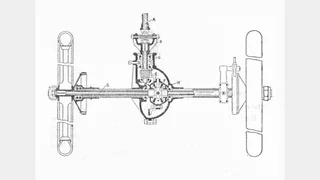
A transfer case in a four-wheel-drive or all-wheel-drive vehicle is not the same as a differential. It is a separate gearbox that splits power between the front and rear axles. Its fluid requirement is also separate. Some transfer cases use automatic transmission fluid, while others use a dedicated transfer case fluid or a specific gear oil. Do not assume a transfer case uses the same fluid as the transmission or the axles. Each housing must be checked against the manufacturer’s specification independently.
Practical Next Steps
Locate the exact fluid specification for the model year, engine, transmission type, and drivetrain. Check whether the vehicle uses a separate transmission and differential or a shared transaxle. Use only a fluid that meets the required specification, not one that merely has a similar name or viscosity. If a limited-slip differential is present, verify whether a separate friction modifier is needed. Replace fill and drain plug washers as recommended and torque plugs to the correct value. Record the mileage and fluid type used for future service.
Evidence Gaps
This article does not list fluid capacities, drain plug torque values, or service intervals. Those values vary by model, year, and drivetrain and must be confirmed from the owner’s manual or manufacturer data. No universal compatibility statement can cover all vehicles, because some transmissions and differentials share housings while others do not. Without a specific vehicle identification, any blanket recommendation would risk being inaccurate.