Diagnose Saab 9-3 hard start
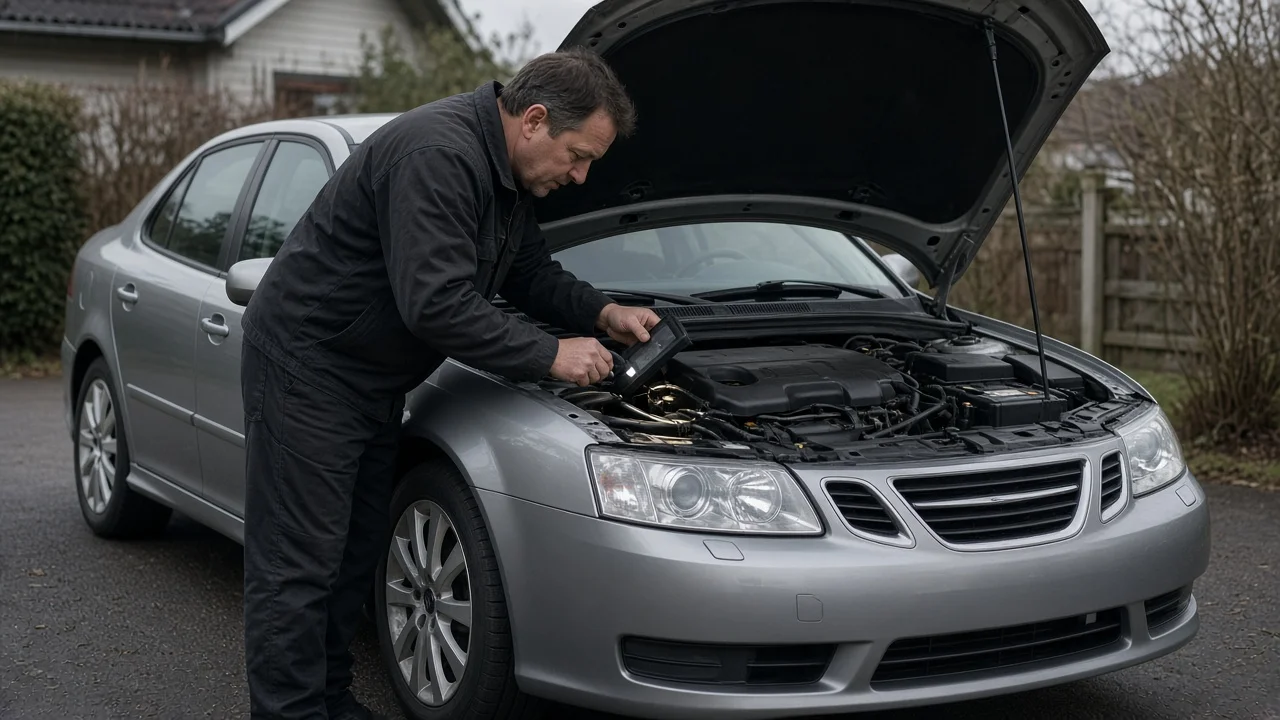
A Saab 9-3 that is struggling to start often turns a quick trip into an uncertain wait. The symptom can range from a brief hesitation to repeated cranking with no combustion, and the cause depends on the model year, powertrain configuration, and trim level. Because fuel, ignition, air, and engine-management systems must cooperate in a precise sequence, a hard-start condition is usually a clue rather than a single fault. Understanding where the starting sequence breaks down helps narrow the diagnostic path before parts are replaced.
Essential answer
A Saab 9-3 struggling to start is typically experiencing a disruption in the initial air-fuel mixture, compression, or spark delivery. The condition may appear only when the engine is cold, after a hot soak, or during damp weather. The scope changes with the model generation and market specification; a turbocharged car places different demands on the starting system than a naturally aspirated example. The key is to separate a slow crank from a normal crank that does not fire, because those two patterns point to different subsystems.
Direct interpretation begins with the driver’s observation. If the starter turns the engine vigorously but the engine does not catch, the likely area is fueling, ignition, or engine management. If the crank sounds weak or labored, the battery, cable connections, starter circuit, or engine ground path deserves attention. A car that starts after several throttle inputs may be revealing an idle-air or coolant-temperature signal problem. Body style and trim level matter less here than the shared engine architecture and its control sensors.
Diagnosing a problem
Diagnosis starts with observable behavior rather than assumptions. A quick check of the instrument cluster during cranking can show whether the immobilizer light behaves normally, since a security handshake failure may allow cranking but inhibit injection. Listening for the fuel pump’s brief priming hum at key-on is another useful distinction. If the pump is silent, the engine may start briefly on residual pressure and then stall, or it may simply crank without catching. These checks help separate fuel delivery from ignition-related faults.
A stored fault code should be treated as a direction for testing, not as proof that a particular component has failed. For example, a camshaft or crankshaft position sensor code can appear when wiring, connector contact, or a weak battery disturbs the signal. Manufacturer-dependent codes require confirmation against the correct engine management version for that model year and market specification. Before replacing a part, verify the circuit’s power, ground, and signal behavior with the proper tools. If there is a strong fuel odor, visible leakage, or unusual mechanical noise, stop repeated starting attempts and arrange professional diagnosis.