Saab Models: A Guide to Every Major Saab Car and How They Differ
Saab made cars for about six decades, from the late 1940s until the company collapsed in 2011. Over that time it built a fairly small lineup of compact and mid-size sedans, hatchbacks, wagons, convertibles and coupes. In its later years it also sold a few SUVs and crossovers developed with partner brands. If you are looking up Saab models, the short answer is this: the cars most US buyers will see are the 900, 9000, 9-3 and 9-5. Older classics such as the 96, 99 and Sonett appeal mainly to collectors. The 9-2X, 9-7X and 9-4X were short-lived models built largely on other manufacturers' platforms. Saab no longer exists as a carmaker, so every Saab is now a used car. Model years, equipment and engines often varied between markets, so treat the dates and configurations below as general guidance. The exact details depend on the specific model year, generation and market specification of the car in front of you.
How the Saab lineup is organized
Saab's naming went through two broad phases. Early and mid-period cars used simple numbers: 92, 93, 95, 96, 99, 900 and 9000. From the late 1990s, under General Motors ownership, Saab switched to a hyphenated scheme. The 9-3 was the smaller car and the 9-5 the larger one. The later 9-2X, 9-4X and 9-7X extended that pattern to models shared with other GM-affiliated brands.
It also helps to know what a model generation is. A generation is a period in which a model keeps the same basic platform and body design. Saab often kept a model name across generations that had little in common underneath. A 1990s 900 and a classic 1980s 900 are very different cars, as are a first-generation 9-3 and a second-generation 9-3.
Classic Saab models (late 1940s to early 1990s)
Saab 92: The company's first production car, a small aerodynamic two-door with a two-stroke engine and front-wheel drive. Front-wheel drive became a Saab trademark. Saab 93 and 95: Developments of the early design. The 95 was a wagon version. Saab 96: A long-running two-door sedan. Early cars had two-stroke engines; later versions switched to a V4 four-stroke engine. It is closely tied to Saab's rally reputation. Saab Sonett: A small two-seat sports car produced in limited numbers across a few distinct versions. Today it is mainly a collector's car. Saab 99: A larger, more modern car introduced in the late 1960s. It was offered in sedan and hatchback-style body styles. A turbocharged version, the 99 Turbo, helped popularize turbocharging in mainstream cars.
Saab 900 (classic generation)
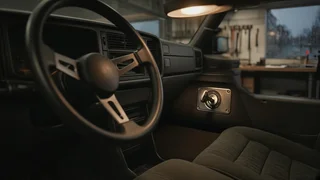
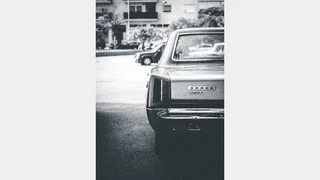
The classic 900 grew out of the 99 and was built from the late 1970s into the early 1990s. It is probably the best-known Saab design: a long front end, a steeply curved windshield, and the ignition switch between the front seats, which became a brand signature. Body styles included two-door and four-door sedans, three- and five-door hatchbacks, and a convertible added partway through the run. Power came from four-cylinder engines in naturally aspirated and turbocharged forms. The turbo versions are generally the most sought-after.
Saab 9000
The 9000 was Saab's larger car from the mid-1980s to the late 1990s. It was developed together with Fiat, Lancia and Alfa Romeo on a shared platform. It was offered as a five-door hatchback and, for part of its life, as a four-door sedan. Most versions used four-cylinder engines, many of them turbocharged, and some markets also got a V6. The 9000 is valued for its interior space and its fast turbo variants, especially the higher-performance Aero.
Saab 900 (GM generation, mid-1990s)
After General Motors took a stake in Saab, a new 900 arrived in the mid-1990s on a GM platform shared with the Opel Vectra of the time. It kept the 900 name and some styling cues but was an entirely different car from the classic model. It came as a three-door and five-door hatchback and as a convertible. Engines included turbocharged and naturally aspirated four-cylinders, plus a V6 in some markets. Buyers should not confuse this car with the classic 900; parts and ownership experience differ.
Saab 9-3 (first generation)
Around the end of the 1990s, the revised GM-era 900 was renamed the 9-3. The first-generation 9-3 kept the hatchback and convertible body styles and focused on turbocharged four-cylinder engines. High-output versions such as the Viggen and the Aero are of particular interest to enthusiasts.
Saab 9-3 (second generation)
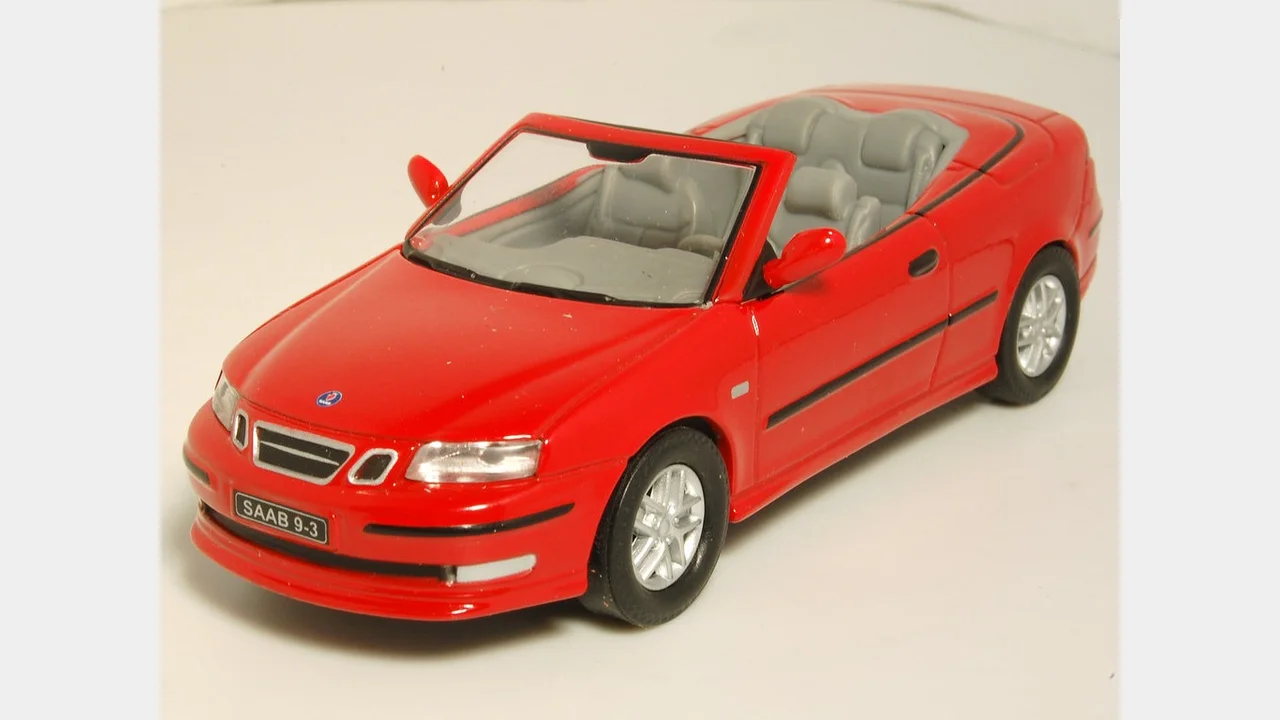
The second-generation 9-3 arrived in the early 2000s on a GM midsize platform and became the core Saab model of the brand's final decade. Saab dropped the hatchback for this generation. The car was offered as a four-door sedan, a convertible and a wagon called the SportCombi. A raised, all-wheel-drive-styled 9-3X variant appeared late in the run in some markets. The main powertrain configuration was a turbocharged four-cylinder. Aero trims in some model years used a turbocharged V6. All-wheel drive (marketed as XWD) and diesel engines were offered in certain markets and years, but not consistently in the US.
Saab 9-5 (first and second generation)
The 9-5 replaced the 9000 as Saab's larger car in the late 1990s. The first generation ran for more than a decade and came as a sedan and a wagon. Engines included turbocharged four-cylinders and a turbocharged V6, depending on year and trim. It received facelifts over its life, so the styling varies noticeably by model year.
The second-generation 9-5 sedan launched shortly before Saab's collapse, on a newer GM platform. Production was very brief, so these cars are uncommon. A planned wagon version barely reached production before the company failed. Rarity can make interesting cars, but it also makes some body and trim parts harder to source.
Saab SUVs and shared-platform models
Saab 9-2X: A compact wagon sold mainly in North America for a short period in the mid-2000s. It was based on the Subaru Impreza, so its mechanicals are Subaru's, including all-wheel drive. A turbocharged Aero version was offered. Saab 9-7X: A midsize SUV built in the US on a GM truck-based platform shared with models such as the Chevrolet TrailBlazer. It came with six-cylinder and V8 engines; a higher-output V8 was offered in the Aero version late in the run. Saab 9-4X: A midsize crossover related to the second-generation Cadillac SRX. It was built only briefly around 2011, which makes it one of the rarest Saab models.
Because these vehicles share most of their mechanical parts with other brands, routine service can be easier than for unique Saab designs. The Saab-specific exterior and interior pieces are the harder parts to find.
Quick comparison of major Saab models
Model | Approximate era | Main body styles | Typical powertrain; 96 | 1960s to 1970s | Two-door sedan | Two-stroke, later V4; 99 | Late 1960s to 1980s | Sedan, hatchback | Four-cylinder, including turbo; 900 (classic) | Late 1970s to early 1990s | Sedan, hatchback, convertible | Four-cylinder, turbo and non-turbo; 9000 | Mid-1980s to late 1990s | Hatchback, sedan | Four-cylinder turbo, some V6; 900 (GM) | Mid-1990s | Hatchback, convertible | Four-cylinder, some V6; 9-3 (first gen) | Late 1990s to early 2000s | Hatchback, convertible | Turbo four-cylinder; 9-3 (second gen) | Early 2000s to 2011 | Sedan, convertible, wagon | Turbo four-cylinder, some turbo V6; 9-5 (first gen) | Late 1990s to 2009 | Sedan, wagon | Turbo four-cylinder, turbo V6; 9-5 (second gen) | 2010 to 2011 | Sedan | Turbo four-cylinder, turbo V6; 9-2X | Mid-2000s | Wagon | Subaru-based four-cylinder, AWD; 9-7X | Mid to late 2000s | SUV | Six-cylinder, V8; 9-4X | Around 2011 | Crossover | GM V6
Dates are approximate and varied by market. Some engines and body styles were never sold in the US.
Understanding Saab trim levels
Saab trim levels changed over time and by market. Many US cars were simply labeled by engine, such as 2.0T, or by name, such as Arc or Linear, while some European markets used names like Vector. The most consistent name across eras is Aero, which generally marked the sportiest, most powerful version of a model. If you are comparing cars, check the specific trim and engine rather than assuming two cars with the same badge are equipped alike.
What happened to Saab
General Motors took full control of Saab in 2000 and sold it to Spyker around 2010. Saab Automobile entered bankruptcy at the end of 2011. A new owner, NEVS, later restarted limited production of a 9-3 sedan before that effort also ended. Separately, the Swedish aerospace and defense company Saab continues to operate; it has not been connected to car production for many years.
Choosing a Saab today
For classic character and collector interest, look at the 99, classic 900 and Sonett. These are best for buyers comfortable with older-car maintenance. For a practical used car with distinctive Saab design, the second-generation 9-3 and first-generation 9-5 are the most common choices in the US. For easier mechanical parts sourcing, the GM- and Subaru-based models share many components with other brands. For rarity, the second-generation 9-5 and 9-4X are uncommon, but some Saab-specific parts can be hard to find. Whatever the model, a documented service history matters, particularly the condition of the turbocharger, cooling system and engine oil maintenance on turbocharged cars.
Saab's original parts operation continued after the carmaker closed, and independent specialists still serve owners. Availability varies by model, generation and part type. Before buying, check that parts and qualified service are available near you for the specific car you are considering.