Saab 9-3 Steering Angle Sensor
A steering angle sensor query on a Saab 9-3 usually points to stability control warnings, unexplained traction interventions, or steering-related diagnostic trouble codes. The component reports steering wheel position and rotational direction to electronic control modules. Because the signal helps coordinate stability, traction, and sometimes headlight or suspension behavior, an erratic reading can produce symptoms that feel unrelated to steering. Owners often notice an intermittent dashboard light before any mechanical fault appears. The practical question is not only what the sensor is, but when its data should be treated as a cause, and when wheel alignment, joint play, or mounting points deserve attention first.
Essential answer
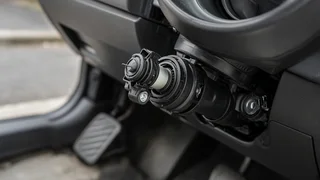
The steering angle sensor is an electronic input device that measures how far and how quickly the steering wheel is turned from a learned center position. On the Saab 9-3, its primary role is to tell the stability and traction systems what the driver intends, allowing the electronic control unit to compare that intent with actual yaw and wheel-speed behavior. When the signal is missing, implausible, or disagrees with other chassis data, the system may disable stability assistance and illuminate a warning indicator. A stored code is evidence of a signal problem, not automatic proof that the sensor itself has failed.
Several conditions can disturb the reading without a defective sensor. Changes in ride height or suspension geometry after component replacement can shift the neutral reference. Wheel alignment issues, loose mounting points, or joint play in the steering column can also introduce inconsistency between the driver input and the sensor's output. Because manufacturer-dependent codes and calibration procedures vary, an accurate diagnosis starts with confirming whether the signal is absent, stuck, or drifting. Vehicle-specific inspection and correct fastener specification help distinguish a failed component from a system that simply needs recentering.