Diagnose a clunking brake caliper
The short answer
A clunk that seems to come from a brake caliper is most often caused by parts that are free to move when they should be held firmly. Common examples are brake pads shifting in their bracket, worn or missing pad hardware, worn caliper slide pins, or loose caliper or bracket bolts. Some of these are minor wear items. Others, especially loose mounting bolts or loose wheel lug nuts, can lead to loss of braking or a wheel coming off. The caliper is also not always the source. Suspension, steering and wheel-bearing faults can produce a similar clunk under braking because braking shifts load onto the front of the vehicle. The goal of diagnosis is to work out when the noise happens and which part is moving.
This guide covers conventional disc brake systems, where a caliper squeezes pads against a rotor. Caliper design, hardware layout and fastener specifications vary by manufacturer, model, generation and model year. Vehicles with electric parking brakes built into the rear calipers may also need a specific service procedure before the caliper is worked on. No vehicle-specific data was supplied for this article, so check the factory service information for your exact vehicle before relying on any specification or procedure.
Stop driving and get help if you notice any of these
Wheel lug nuts that are loose, or a wheel that feels loose; A caliper or caliper bracket that moves by hand or appears to be hanging out of position; A brake pedal that feels soft or spongy, sinks toward the floor, or travels further than normal; The vehicle pulls strongly to one side when braking; A metal-on-metal grinding sound, or pads worn down to the backing plate; Brake fluid leaking at the caliper, hose or wheel area; A brake system warning light on the dashboard; A clunk that started immediately after brake work, combined with any change in how the brakes feel
If any of these apply, do not keep driving to see whether the noise goes away. Have the vehicle inspected, and towed if necessary. Brake faults that affect clamping force or caliper security are safety-critical.
Start by noting when the clunk happens
The conditions that trigger the noise are the most useful early evidence. Before inspecting anything, note whether the clunk happens only when the brakes are applied, only on the first stop after changing direction, over bumps without braking, while turning, or constantly while the vehicle is moving. Also note whether it started after recent brake, tire or suspension work.
When the clunk occurs | Likely area to investigate; Once, on the first brake application after switching between forward and reverse | Pads shifting in the caliper bracket; worn or missing anti-rattle clips or abutment hardware; Every time the brakes are applied | Loose caliper or bracket bolts; worn slide pins or bushings; incorrectly installed pads; Over bumps, with or without braking | Suspension or steering parts such as sway bar links, ball joints, control arm bushings, tie rod ends or strut mounts; loose pads or clips can also rattle over bumps; When braking and over bumps, worse when turning | Suspension or wheel bearing play that becomes noticeable as load shifts; Soon after brake or tire work | Fasteners not tightened to specification, missing or misfitted hardware, or loose lug nuts
This table points you toward where to look first. It does not confirm a failed part. More than one cause can be present, and the noise can travel through the vehicle's structure, so a clunk that seems to come from one wheel may start somewhere else.
Possible causes and what to check
Pads shifting in the bracket
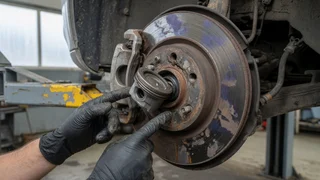
Brake pads sit in a caliper bracket and need a small amount of clearance to slide. When the direction of rotation changes, for example when moving from reverse to forward, the pads can shift across that clearance on the first brake application and make a single clunk. A small shift may be within normal tolerance on some designs. Excessive movement suggests worn bracket abutment surfaces, missing or worn anti-rattle clips, or pads that do not fit the bracket properly.
Check: with the wheel removed and the vehicle safely supported, see whether the clips or abutment hardware are present, seated correctly and not corroded or bent. Look for pads that are loose in the bracket or show uneven wear. A pronounced clunk on every direction change, rather than a faint tick, points to a fit or hardware problem worth fixing.
Worn or dry caliper slide pins
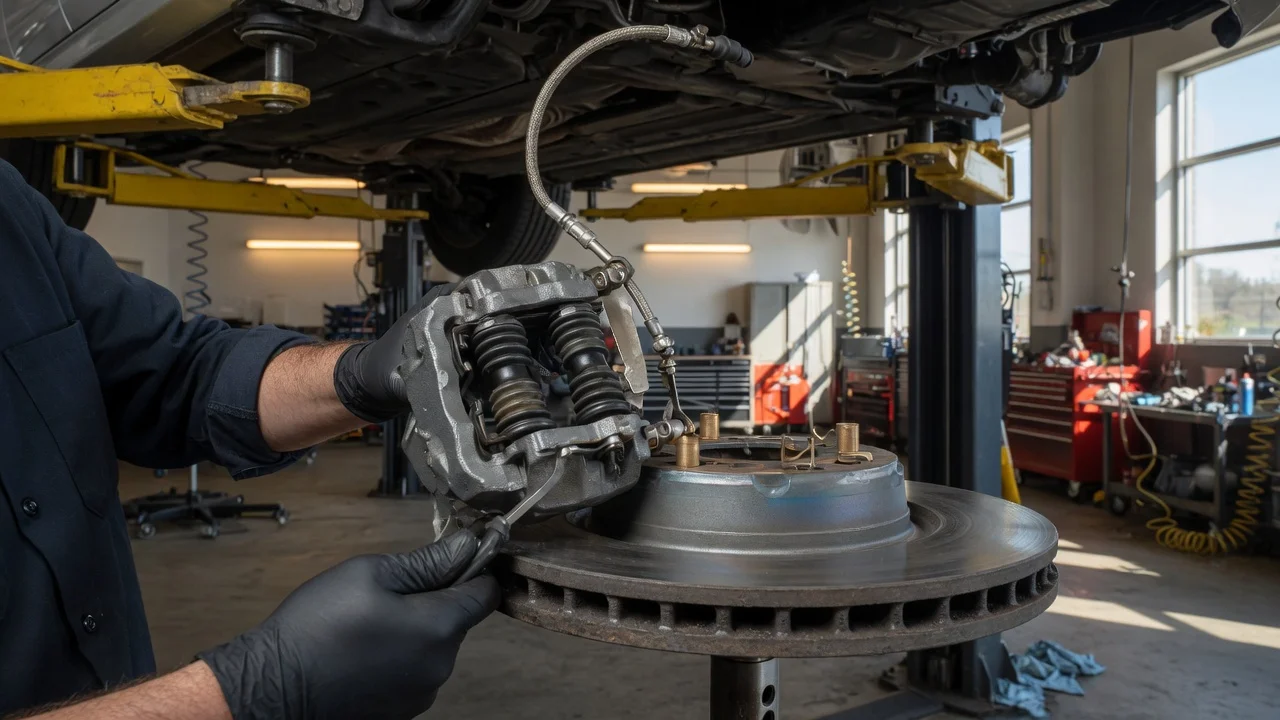
On a floating caliper, the most common design, the caliper body slides on guide pins, also called slide pins, that sit in rubber boots or bushings. If the pins or bushings are worn, the caliper can move in its mounts and knock when braking starts. If the pins are seized instead, the brakes may drag, or the pads on one side may wear faster than the other.
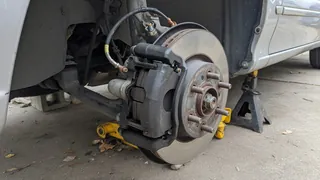
Check: with the pads still installed, try to move the caliper body by hand. Noticeable movement or knocking suggests worn pins or bushings. If the pins are removed, they should slide freely without binding and should not be visibly worn or corroded. Torn boots let in water and dirt, which speeds up wear.
Loose caliper or bracket bolts
If the bolts holding the caliper to its bracket, or the bracket to the steering knuckle, are loose, the assembly can shift sharply under braking and clunk. This is one of the most serious possibilities. A bolt that loosens further can let the caliper move out of position.
Check: inspect the bolts for signs of movement, such as fresh bright marks, a gap at the mounting face or missing fasteners. Confirm they are tightened to the torque specified for your vehicle. If you find a loose caliper or bracket bolt, do not drive the vehicle until it has been corrected. Some manufacturers specify new bolts or thread-locking compound, so follow the service information rather than simply retightening.
Incorrect installation after brake work
A clunk that starts right after a pad or caliper replacement often comes from that work. Possible causes include clips left out or fitted backwards, pads seated incorrectly, the wrong pads for the bracket, slide pins installed in the wrong positions, or fasteners not fully tightened.
Check: compare the installed parts with the service information or the part manufacturer's instructions. If a shop did the work, return the vehicle to them promptly and describe exactly when the noise occurs.
Problems that only sound like the caliper
Braking moves weight onto the front of the vehicle and loads suspension and steering joints. That can make worn components clunk only when you brake. Common candidates include sway bar links, lower control arm bushings, ball joints, tie rod ends, strut mounts and wheel bearings. Loose lug nuts can also cause a knock and must be ruled out first.
Check: confirm the lug nuts are tight. With the wheel off the ground and the vehicle securely supported, grip the tire at the top and bottom and rock it, then repeat at the sides. Play at the top and bottom can indicate a wheel bearing or ball joint. Play at the sides can indicate a tie rod end or wheel bearing. Look for torn boots, cracked bushings and loose links. If the clunk also happens over bumps without braking, the suspension becomes a stronger suspect than the caliper.
Inspecting safely
Do not rely on a jack alone. Use jack stands on a firm, level surface, chock the wheels that stay on the ground, and follow your vehicle's lifting points. Brake dust should not be blown off with compressed air or inhaled. Clean it off with a dedicated brake cleaner or a damp method instead. If your rear calipers include an electric parking brake, check the required service procedure before pushing back the pistons or removing the caliper, because forcing the mechanism can damage it.
When to hand it to a professional
Get a professional brake inspection if you cannot find an obvious cause, if the noise continues after you replace hardware, if any safety warning sign from the earlier list is present, or if you do not have the tools, torque specifications or experience to work on brakes confidently. A technician can road-test the vehicle to reproduce the noise, check fasteners against the correct specifications, measure pad and rotor condition, and inspect suspension parts under load. If a diagnostic tool reports a brake-related fault code, treat it as a lead for investigation rather than proof that a specific part has failed.
Gaps in this guide
No manufacturer data, test findings or vehicle-specific specifications were supplied for this article. It therefore gives no torque values, wear limits or model-specific procedures, and it does not identify which vehicles are known for caliper noise. Those details depend on the make, model, generation, model year and brake design, and should come from the factory service information or a qualified technician.