Stuck Brake Caliper: Symptoms, Causes, and What to Do Next
A stuck brake caliper is a disc brake caliper that no longer moves freely. Most often it stays partly applied after you release the brake pedal, so the pads keep rubbing the rotor. Less often it fails to apply fully, so that wheel does less than its share of the braking. Either way, the car's braking is unbalanced. The problem should be inspected promptly rather than driven on indefinitely, because a dragging brake can overheat and lose effectiveness.
The Short Answer
If one wheel is much hotter than the others after a drive, the car pulls to one side, or you smell hot brakes when you haven't been braking hard, a caliper may be sticking. The usual causes are corrosion or a lack of lubrication on the slide pins, a corroded or seized piston, or a deteriorating brake hose that traps pressure. Depending on the cause and condition of the parts, the fix ranges from cleaning and lubricating the slide hardware to replacing the caliper, the hose, the pads, and sometimes the rotor.
How a Disc Brake Caliper Works
When you press the brake pedal, the master cylinder pushes brake fluid through the lines to each caliper. Inside the caliper, the fluid pressure pushes one or more pistons outward, which squeeze the brake pads against the rotor. When you release the pedal, the pressure drops. The piston's square-cut seal pulls it back slightly, and the pads relax away from the rotor.
Most everyday passenger vehicles use floating (sliding) calipers. These have pistons on one side only, and the caliper body slides on guide pins so that both pads clamp evenly. Fixed calipers, common on performance and some heavier vehicles, have pistons on both sides and do not slide. This difference matters because the most frequent sticking point is different for each design. Floating calipers often stick at the slide pins, while fixed calipers usually stick at a piston.
Common Symptoms
The vehicle pulls to one side while driving, braking, or both. A burning or hot-metal smell near one wheel, sometimes with light smoke after a drive. One wheel is noticeably hotter than the others after normal driving. Heavier brake dust on one wheel than on the others. The car feels sluggish, as if it is being held back, or coasts poorly. Uneven pad wear, such as one pad much thinner than its partner or tapered wear across a pad. A grinding, scraping, or squealing noise that doesn't go away when you release the pedal. Vibration or pulsation from a rotor that has been overheated. Lower fuel economy than usual, caused by the constant drag.
A caliper that is stuck retracted, meaning it won't apply properly, produces a different picture. The car may pull away from that side under braking, stopping distances may grow, and the pads on that wheel may look less worn than expected.
What Causes a Caliper to Stick
Seized or dry slide pins
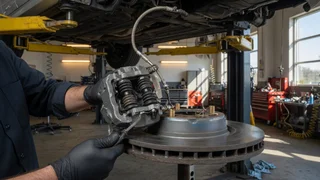
On floating calipers, the guide pins sit in rubber-booted bores and need a suitable high-temperature brake lubricant. If a boot tears, water and road salt get in, the grease washes out or hardens, and corrosion forms. The caliper then can't slide back, and one pad keeps dragging. This is one of the most common causes, especially in regions that use road salt.
Corroded or seized piston
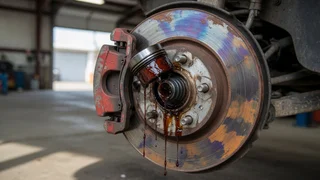
A dust boot protects the piston. Once that boot cracks or tears, moisture and debris reach the piston surface. Rust or pitting can then stop the piston from retracting, or from moving at all. Moisture absorbed into old brake fluid can also corrode the caliper from the inside.
Deteriorated brake hose
Flexible rubber brake hoses can break down internally with age. A loose inner layer can act like a one-way valve, letting pressure reach the caliper but not letting it release fully. The caliper itself may be healthy, yet it behaves exactly as if it were stuck. This is why a hose is often checked or replaced along with a caliper.
Pad and hardware problems
Rust buildup on the caliper bracket where the pad ears sit, missing or worn anti-rattle clips, or incorrectly fitted pads can bind the pads in place even when the caliper moves normally.
Parking brake mechanisms on rear calipers
Many vehicles have the parking brake built into the rear calipers. These calipers can stick because of a seized internal mechanism, a stuck or frozen parking brake cable, or, on vehicles with an electronic parking brake, a fault in the actuator. How this works varies a great deal by make, model, and model year. Some electronic systems also need a service mode or scan tool to retract the piston for pad work.
Infrequent use and age
Vehicles that sit for long periods, particularly outdoors or in humid climates, are more prone to corrosion on slides and pistons. Age and mileage raise the odds of worn boots and degraded hoses.
How It Differs From Similar Problems
Several other faults can feel like a stuck caliper. The comparison below covers the most common look-alikes. A hands-on inspection is still the reliable way to tell them apart.
Problem | Typical signs | How it differs from a stuck caliper; Stuck caliper (applied) | One hot wheel, pulling, burning smell, uneven pad wear | Drag is present even with the pedal released; Collapsed brake hose | Same as a stuck caliper | Caliper may move freely once pressure is released at the bleeder or line; Warped or unevenly worn rotor | Pedal or steering pulsation when braking | Usually no constant drag or single hot wheel when not braking; may be a result of a stuck caliper; Worn wheel bearing | Humming or growling that changes with speed or when turning | Noise without the burning smell; play or roughness felt at the hub; Stuck parking brake cable | Rear wheel drag, often after using the parking brake or in cold weather | Tied to the parking brake system rather than hydraulic pressure; Tire or alignment problem | Steady pull to one side | No heat buildup at one brake; pull doesn't change with braking
Checking for a Stuck Caliper
These checks can point toward a sticking caliper, but they don't replace a proper brake inspection.
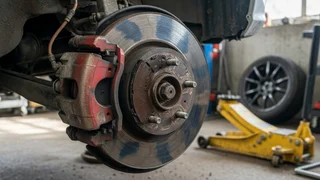
After a normal drive with little hard braking, compare wheel temperatures. An infrared thermometer is the safest way. Do not touch the rotor, caliper, or wheel, because they can be hot enough to cause burns. With the vehicle safely raised and supported on stands, spin each wheel by hand. Compare the resistance side to side; a dragging brake will feel noticeably tighter. Driven wheels naturally have some extra resistance from the drivetrain. Look at the pads through the wheel or with the wheel removed. Check for one pad worn much more than the other, or for tapered wear. Inspect the slide pin boots and the piston dust boot for tears, cracks, or rust. Look at the rotor for blue or dark heat discoloration. Note whether the pull or drag changes after the parking brake is used, which points toward the rear parking brake mechanism.
A technician may also open the bleeder briefly to see whether the caliper releases. If it does, a restricted hose is more likely than a seized caliper. This involves the hydraulic system and should be done with the correct procedure, followed by proper bleeding.
Is It Safe to Drive?
Driving with a stuck caliper is not recommended beyond getting the vehicle to a repair shop, and even that depends on how severe it is. A dragging brake can overheat the pads, rotor, and fluid. Overheated fluid can boil and cause brake fade or a soft pedal. The pull can also make the car harder to control in an emergency stop. In severe cases, extreme heat can damage the wheel bearing, the tire, or nearby components. If there is smoke, a strong burning smell, or a clear change in pedal feel, stop and arrange a tow rather than continuing.
Repair Options
The right repair depends on what is sticking and how much collateral damage the heat has caused.
Clean and lubricate the slide pins and replace torn boots, when the pins are only dry or lightly corroded and the bores are undamaged. Clean the caliper bracket and replace pad hardware, when rust buildup is binding the pads. Rebuild the caliper with new seals and boots, possible on some calipers when the piston and bore are not pitted. Many shops and owners now replace the caliper instead, because remanufactured and new units are widely available. Replace the caliper, when the piston is seized or pitted, the bore is corroded, or a rear integrated parking brake mechanism has failed. Replace the brake hose, when it is restricting release or shows cracking, swelling, or age. Replace the pads and possibly the rotor, when they have been overheated, glazed, unevenly worn, or contaminated with fluid. Flush or bleed the brake fluid, which is needed after opening the hydraulic system and also worth doing if the fluid is old or discolored.
Many technicians recommend servicing brakes in axle pairs, both left and right, so that braking stays balanced. This applies especially to pads and rotors, and often to calipers when both sides are similarly aged or corroded. Repair cost varies widely with the vehicle, the parts chosen, labor rates, and how much secondary damage the drag caused, so a written estimate after inspection is the best guide.
DIY or Professional Repair?
Cleaning and lubricating slide pins and replacing a caliper are common do-it-yourself jobs for owners with the right tools, a torque wrench, and a service procedure for their specific vehicle. Brakes are safety-critical, though. Any work that opens the hydraulic system needs correct bleeding afterward, using the brake fluid type specified for the vehicle. Rear calipers with integrated or electronic parking brakes can need special tools or a scan tool. If you are unsure about any step, a professional brake service is the safer choice.
Reducing the Chance of a Sticking Caliper
Have the slide pins cleaned and re-lubricated whenever the pads are replaced, using a lubricant made for brake components. Ask for the boots to be checked during routine tire rotations or brake inspections. Change the brake fluid at the interval in your owner's manual. Moisture builds up in fluid over time and can corrode internal parts. In areas that use road salt, rinse the underside and wheels periodically during winter. If a vehicle will sit for a long time, drive it occasionally where practical, or expect a brake inspection before returning it to regular use. Address pulling, odd smells, or uneven brake dust early, before overheating damages the pads, rotors, or hoses.
Bottom Line
A stuck brake caliper is usually caused by corroded or dry slide pins, a seized piston, a failing hose, or a rear parking brake mechanism that won't release. The most telling signs are one unusually hot wheel, a pull to one side, a burning smell, and uneven pad wear. Because a dragging or non-applying brake affects stopping performance, the sensible next step is a prompt inspection. That inspection should confirm whether the caliper, the hose, or the hardware is at fault and whether the pads and rotors need attention as well.