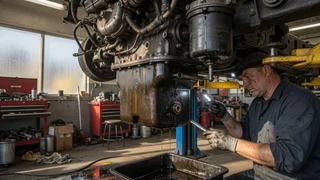
Detroit Series 60 Engine Oil Pressure: Specs, Causes and What to Check
Direct answer and scope
The Detroit Diesel Series 60 is an inline six-cylinder heavy-duty diesel engine. Healthy oil pressure depends on engine generation, coolant temperature, idle speed and oil viscosity. At normal operating temperature, many Series 60 engines show roughly 10 to 15 psi at warm idle and 40 to 60 psi at governed or rated speed. These are practical field expectations rather than a single factory number for every build. The Detroit Diesel 12.7L and 14.0L variants can differ by calibration and wear condition.
Typical oil pressure values
A commonly cited reference window for the Series 60 is approximately 10 psi minimum at warm idle and 40 to 60 psi at 1,800 rpm or higher with the engine at operating temperature. Cold starts can produce higher readings because oil is thicker. Some electronic engines may activate an alarm or derate condition when oil pressure is too low for a given rpm and temperature. Exact warning thresholds are configured in the engine control module and vary by application.
Low oil pressure causes
Oil level too low from consumption or leakage; Diluted or incorrect oil viscosity; Worn main, rod or camshaft bearings; Faulty oil pressure regulator or relief valve; Restricted pickup screen or damaged pickup tube; Worn oil pump; Defective oil pressure sender or gauge
High oil pressure causes
Cold oil during startup; Overfilled crankcase; Restricted oil filter or internal oil passage; Sticking oil pressure regulator; Excessively thick oil grade for ambient conditions
Diagnostic steps
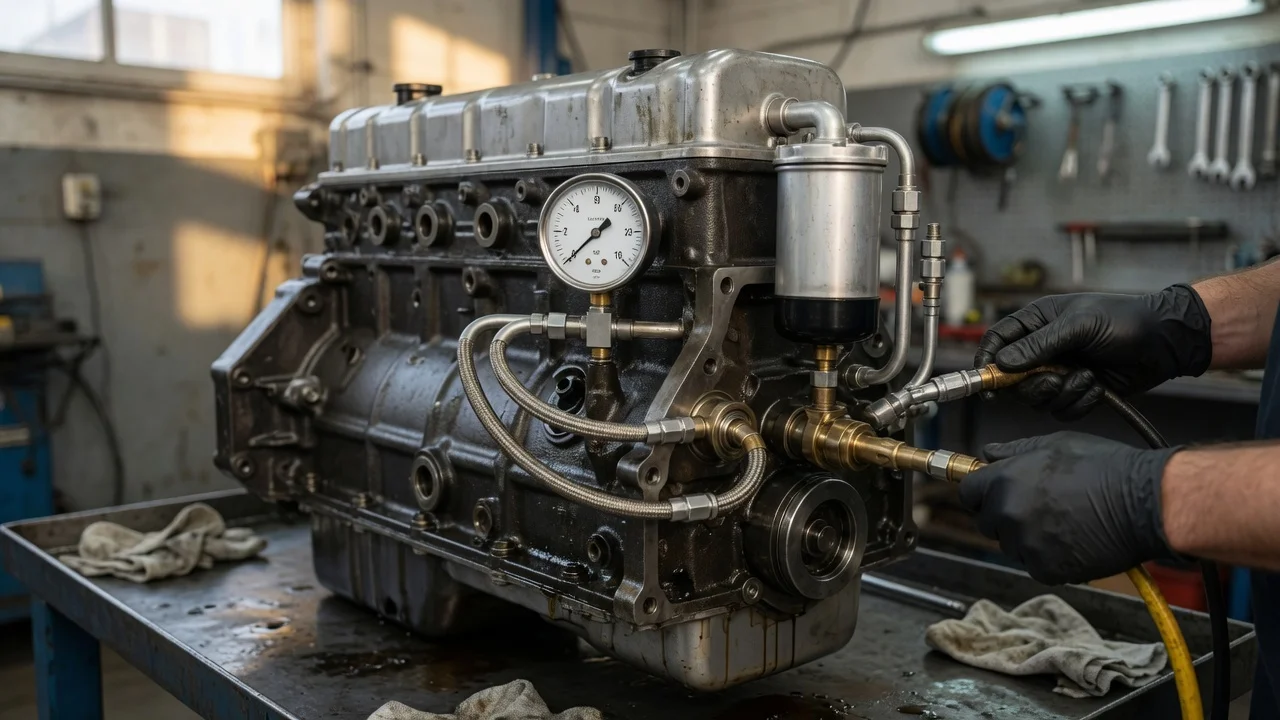
First verify the gauge with a mechanical test gauge at the oil gallery. Compare the mechanical reading with the dash or electronic sender value. Check the oil level and condition. If the oil smells strongly of diesel fuel or appears thin, investigate fuel dilution. Change the oil and filter using the viscosity and specification recommended for the engine and operating climate. Inspect the pickup screen and pressure regulator if pressure remains out of range.
A single erratic reading is not proof of internal damage. Confirm pressure mechanically before planning bearing or oil pump work.
Ownership guidance
Use the oil classification specified for the Series 60 and maintain the correct fill level. Watch for gradual pressure loss over weeks because that may indicate bearing wear rather than a sensor problem. If low oil pressure appears with knocking, metallic debris in drained oil or rising oil temperature, stop the engine and have the lower end inspected. For most owners, verifying the sender, oil level, filter and viscosity is the correct first action before internal repairs.
Material uncertainty
Factory service literature for specific Series 60 builds may list different minimum idle pressure based on model year, emission level and application. This guide reports commonly accepted field ranges and diagnostic priorities, not a calibration-specific specification for every Detroit Series 60 engine.