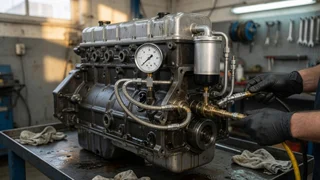
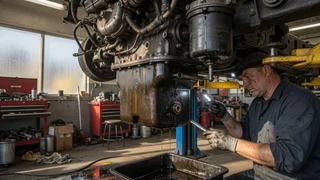
Detroit Series 60 Engine Oil Pressure
Low oil pressure in a Detroit Series 60 diesel is an urgent warning, not a routine gauge fluctuation. This inline six-cylinder engine relies on a stable lubricant film to protect its crankshaft, camshaft, turbocharger, and rod bearings under sustained load. A pressure drop may point to a faulty sender, a weak relief valve, diluted oil, or advanced bearing wear. Understanding the normal flow path and the most likely failure points helps a fleet operator or owner decide whether to check the easiest causes first or pursue a deeper mechanical inspection.
Essential answer
Detroit Series 60 engine oil pressure is not a single fixed number for every operating condition. The gauge reading changes with engine speed, oil temperature, and load. At idle, a fully warm engine may show a lower value than a cold start. The important question is whether pressure climbs promptly as rpm rises and whether the reading matches the engine’s known behavior. A sudden change from the usual range deserves attention, even if the gauge still shows some pressure.
A low reading does not automatically mean the bearings are ruined. The most common causes are incorrect fill quantity, a failed oil pressure sender, a stuck pressure relief valve, or oil diluted by fuel or coolant. Wear at the main and rod bearings usually produces a gradual decline, often accompanied by metallic noise. Start with the easiest checks: verify the oil level, confirm the correct lubricant specification, and inspect the gauge circuit before assuming major internal damage.