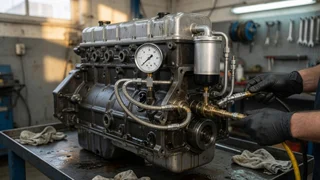
Detroit Series 60 Oil Capacity: What It Depends On and How to Confirm It
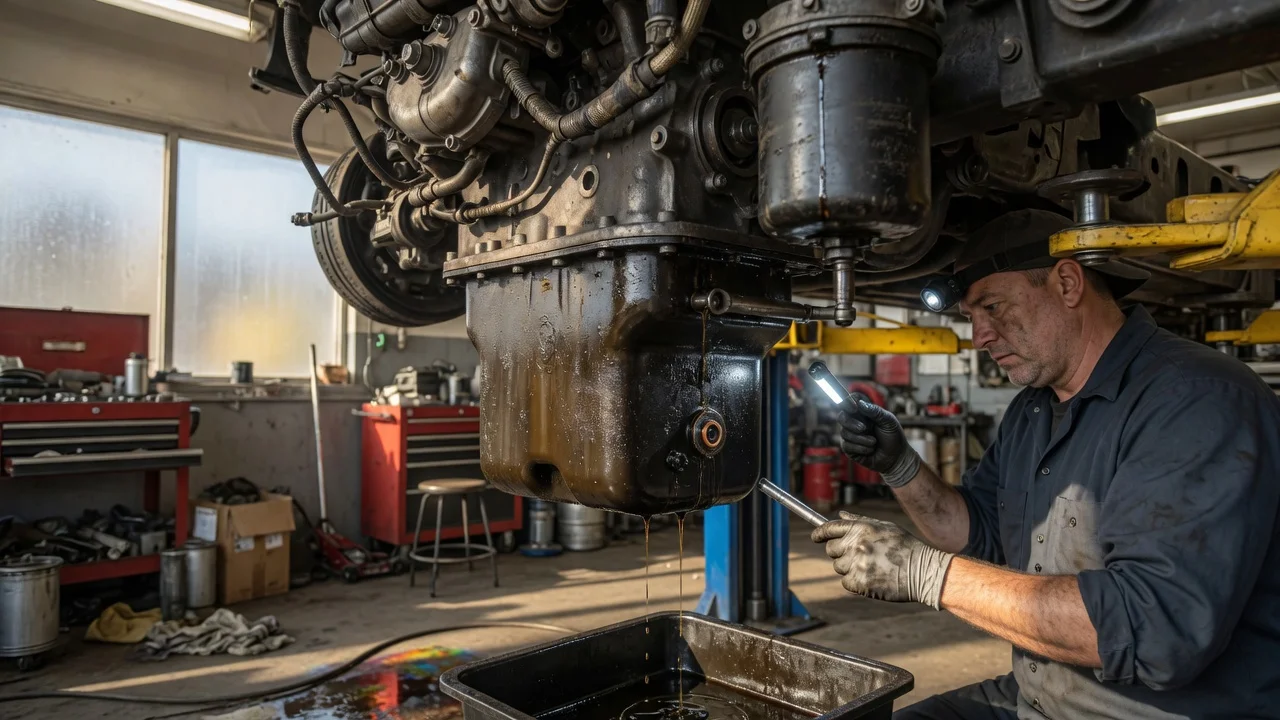
The short answer
The Detroit Diesel Series 60 does not have one oil capacity that applies to every engine. The amount of oil it holds depends on the specific engine configuration, mainly the displacement version, the oil pan fitted for the application, and whether the figure includes the oil filters and the oil cooler circuit. A capacity quoted for one Series 60 can be wrong for another.
No verified manufacturer capacity figures were available for this article, so no exact number is given here. Figures circulated among owners and parts sellers for on-highway truck engines often fall in the high-30s to low-40s range in US quarts. That range has not been checked against Detroit Diesel documentation and should not be used as a fill specification. The dependable answer for your engine comes from the operator's or service documentation for its exact configuration, together with the marks on the dipstick that matches its oil pan.
Why the capacity varies between Series 60 engines
The Series 60 is an inline six-cylinder diesel. It was built in several displacements, commonly listed as 11.1, 12.7 and 14.0 liters, and it was installed in highway trucks, coaches, vocational vehicles and industrial or generator equipment. Each installation can use a different oil pan, and the pan sets most of the difference in capacity.
Oil pan design: pans differ in depth and sump position, such as front or rear sump, to suit the chassis or equipment. A different pan holds a different volume. Displacement and production period: changes over the engine's production run can affect the published figure, so the model year and engine build matter. What the figure includes: some capacities cover the pan only, while others include the full-flow and bypass filters and the oil cooler. The gap between a pan-only refill and a dry-engine fill can be significant. Application: an engine in a truck, a bus and a stationary generator may each carry a different pan and dipstick, even when the displacement is the same.
How to identify your engine and its oil pan
To find the correct capacity, you first need to know which Series 60 you have. The identifiers below are the usual starting points. Their exact locations can vary by engine version, so confirm them against the documentation for your engine before relying on them.
Engine serial number: this is stamped on the cylinder block. On Series 60 engines it is generally on the left side of the block, near the top. Exact placement varies by configuration, so verify it for your engine. Detroit Diesel dealers and service records use the serial number to look up the original build. Engine option or emission label: this is usually a label or plate on the valve cover or another visible surface. It typically shows the model number, displacement and certification information. Oil pan part number: this is often cast into or marked on the pan. Use it to confirm which pan is fitted, especially if the engine has been swapped or rebuilt. Dipstick and tube: the dipstick is calibrated for a particular pan. A replacement or mismatched dipstick can give misleading readings even when the capacity figure is correct.
Do not confuse it with similar Detroit engines
Detroit Diesel also produced two-stroke engines such as the Series 53, 71 and 92, as well as later DD-series engines such as the DD13, DD15 and DD16. These are different designs with their own lubrication specifications. Oil capacities for these engines should not be applied to a Series 60, and the reverse is also true. If the engine label shows a DD model number or a two-stroke series, look for that engine's documentation instead.
Practical way to fill correctly
Even with a documented figure, the dipstick is the final check. A cautious approach is to add slightly less than the documented capacity and then confirm the level as follows.
With the vehicle or equipment parked on level ground, add oil until the level is near the low end of the dipstick's operating range. Run the engine briefly so the filters and oil passages fill, then shut it down and allow time for the oil to drain back to the pan. Recheck the dipstick and top up gradually to the full mark. Avoid overfilling, which can cause the oil to aerate and can raise crankcase pressure.
Information gaps to resolve
This guide could not provide verified capacity figures for individual Series 60 displacements or oil pan options, the official locations of identification markings for every version, or the recommended oil specification and change intervals. For these details, use the Detroit Diesel operator's manual or service manual for your engine's serial number, or ask an authorized Detroit Diesel service location that can look up the original build.