Detroit Series 60 Oil Capacity: What to Expect and How to Confirm It
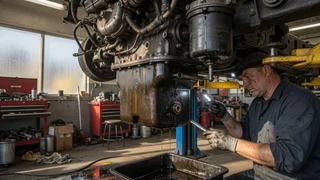
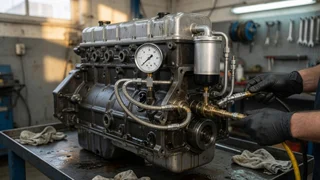
The Detroit Diesel Series 60 is a large inline six-cylinder diesel used in heavy trucks, coaches, and industrial and marine equipment. Owners often ask for one oil capacity figure, but there isn't one that fits every engine. The amount of oil a Series 60 holds depends mainly on the oil pan and filter setup fitted for its application, not just on the engine family. This guide explains what drives the fill quantity, how to identify your engine, and how to confirm the correct amount before an oil change.
The Short Answer
Series 60 engines carry a large oil volume by passenger-vehicle standards. Commonly quoted figures for on-highway truck installations fall roughly between 9 and 11 US gallons (about 36 to 44 quarts), including filters. Treat that range as a general guide only, not a specification for your engine. Oil pan depth, pan shape, and filter count differ between truck, coach, and industrial installations, and those differences change the total.
In practice, the dipstick fitted to your engine is the final authority. A quoted capacity tells you roughly how much oil to have on hand. The full mark on the dipstick, read correctly, tells you when the engine is properly filled.
Why the Fill Quantity Varies
Detroit Diesel built the Series 60 over a long production run, in several displacements, for many types of equipment. Several factors affect how much oil a particular engine needs:
Oil pan design: truck, bus, motorhome, generator and marine installations can use different pans to clear chassis components, which changes sump volume. Filter arrangement: many configurations use more than one spin-on filter, and remote-mounted filters or bypass systems add capacity. Oil cooler and lines: the volume held in coolers and external plumbing differs between installations. Refill versus dry fill: an oil change leaves some oil in passages and the cooler, so a routine refill takes less than filling a rebuilt, dry engine. Dipstick and tube: replacement or mismatched dipsticks can show a level that doesn't match the pan actually fitted.
Because of these variables, two Series 60 engines of the same displacement can need noticeably different amounts of oil.
How to Identify Your Series 60
Before you look up a capacity or oil specification, identify exactly which engine you have. Equipment identification matters because displacement, emissions generation, and application all affect the correct service data.
Engine serial and model numbers: these are usually stamped on the cylinder block, and an engine option or emissions label is typically fixed to the valve (rocker) cover. A Detroit dealer can use the serial number to pull the build record for that engine. Displacement: the Series 60 was offered in 11.1-liter, 12.7-liter and 14.0-liter versions. The emissions label or build record will show which one you have. Electronic control generation: Series 60 engines used successive DDEC electronic control systems. Knowing the generation helps narrow down the model year range and emissions configuration. Emissions configuration: later engines with exhaust gas recirculation (EGR) and aftertreatment have different oil specification requirements from earlier non-EGR engines. Vehicle or equipment documentation: the chassis or equipment maker's service literature often lists the installed oil capacity, because the pan may be specific to that installation.
Engines Commonly Confused With the Series 60
Several other Detroit engines share showrooms, parts counters and online forums with the Series 60, and their capacities don't carry over:
Series 50: a four-cylinder engine with similar design ideas, used widely in buses. It is not a Series 60 and has different service data. DD13, DD15 and DD16: Detroit's later heavy-duty engine family, which replaced the Series 60 in on-highway trucks. Oil capacities and specifications for these engines are separate. Two-stroke Detroit engines such as the Series 92 and Series 71: older designs with completely different lubrication requirements.
If a capacity figure comes from a forum post or a parts listing, check that it actually refers to a Series 60 of the same displacement and application as yours.
Choosing the Right Oil
Getting the lubricant specification right matters as much as getting the fill quantity right. Detroit publishes its own oil specifications, a family of 93K-series requirements, in addition to the API service categories printed on oil containers. Oils that meet a Detroit specification are listed as having manufacturer approval for that standard.
The appropriate specification depends on the emissions generation of the engine. EGR-equipped engines with diesel particulate filters need low-ash oils designed for aftertreatment compatibility. Earlier engines were originally specified with older oil categories, and current heavy-duty oils are generally formulated to be backward compatible. Viscosity grade also depends on climate and operating conditions. Check the engine's documentation or ask a Detroit dealer which specification and viscosity apply to your serial number.
Filling and Checking the Level Correctly
Because capacity varies, use a measured approach rather than pouring in a fixed number of gallons:
Park on level ground so the dipstick reading is accurate. Drain the old oil fully and replace the filters. Prefilling new filters with clean oil, where the filter orientation allows it, reduces dry running at startup. Add somewhat less than the expected refill quantity, then check the dipstick. Top up gradually until the level reaches the full mark. Start the engine, check for leaks at the filters and drain plug, and let it idle briefly. Shut the engine down and wait for the oil to drain back into the pan before rechecking. Then make a final adjustment to bring the level to the full mark.
Avoid overfilling. Too much oil can lead to aeration, higher crankcase pressure and leaks. Running low reduces the oil's ability to carry heat and maintain pressure under load. Once you know the actual refill amount for your engine, write it down for future services.
Routine Level Checks
A regular level check between oil changes is the simplest way to catch oil consumption or leaks early. Check with the engine off, the vehicle level, and the oil given time to drain back. Note how much oil you add between services. A change in consumption can point to wear, a leak, or a crankcase ventilation problem that needs attention.
Service Interval Considerations
Oil change intervals for the Series 60 depend on duty cycle, fuel consumption, idle time, oil specification and operating environment. Linehaul highway use is generally treated very differently from severe service such as stop-and-go work, heavy idling or dusty conditions. Many fleets use oil analysis to confirm whether their chosen service interval suits how the engine is actually used. Base the interval on Detroit's guidance for your application and duty cycle rather than a single generic figure.
Quick Reference
Question | What to rely on; Approximate oil volume | Commonly quoted at roughly 9 to 11 US gallons for on-highway trucks, varying by installation; Exact fill quantity | Engine and equipment documentation, plus the dipstick full mark; Engine identification | Serial number on the block and the option or emissions label; Oil specification | Detroit 93K-series specification matching the emissions generation; Service interval | Detroit guidance for the duty cycle, optionally supported by oil analysis
Bottom Line
A Detroit Series 60 holds a large volume of oil, but the exact amount depends on its oil pan, filters and installation. Identify the engine by its serial number and labels, use the correct Detroit-approved lubricant for its emissions generation, and fill to the dipstick rather than to a fixed number. That approach keeps the engine properly lubricated whichever Series 60 variant you're servicing.