What Causes High Oil Pressure in an Engine
High oil pressure means the lubrication system is generating more resistance than the engine’s design expects, and it is not automatically a sign of better protection. In gasoline and diesel engines alike, the condition can stress seals, distort filters, and disrupt the oil film that bearings depend on. Knowing what causes high oil pressure in an engine starts with separating a cold-start reading from a sustained hot-idle fault. This overview explains the likely sources, how the system normally regulates itself, and which observations point toward a safe fix.
Essential answer
The most common causes of high oil pressure in an engine are a pressure relief valve that is stuck closed, a sending unit or gauge that is reading incorrectly, oil that is too thick for the ambient temperature, or a restriction in the lubrication passages. In a diesel engine, cold oil combined with high idle speed can also produce an elevated reading until the lubricant reaches operating temperature. The exact cause depends on whether the reading appears at idle, rises with rpm, or stays pegged at the gauge maximum from a cold start.
A reading that is slightly above the normal range on a cold morning can be normal because cold oil resists flow. A reading that remains high after the engine warms or that accompanies oil leaks, filter deformation, or unusual engine noise is a more serious clue. Rather than treating the number alone as proof of a failed part, use it as evidence to interpret. The distinction matters because excessive pressure can push past seals and reduce the protective flow that bearings require.
How it works
Engine oil pressure is created by the pump pushing a fixed volume of lubricant through narrow clearances in bearings and galleries. Pressure is not the same as flow; it is the resistance that the oil meets while moving. When the lubricant is cold, it has higher viscosity and resists flow more, so pressure rises. As the engine warms, the oil thins and pressure settles into the normal range. A pressure relief valve limits the maximum pressure by opening a bypass path back to the sump or pump inlet when a set point is reached.
The pressure gauge or warning light reads from a sensor threaded into an oil gallery. A sensor can fail or its wiring can add resistance, producing a false high reading even when the mechanical pressure is normal. The filter also sits in the pressure path; a clogged filter or an incorrect filter with too much restriction can raise pressure downstream. In diesel engines, the high compression ratio and heavier rotating components place different demands on the lubrication system, but the basic relationship between viscosity, flow, and restriction still governs the pressure reading.
Strengths, limitations and suitability
High oil pressure can seem like a sign of a strong pump and generous lubrication, but that interpretation is only partly useful. Moderate pressure is required to keep the crankshaft journals and camshaft bearings separated by an oil film. Once pressure exceeds the system’s relief setting, the extra resistance can stress seals, collapse or balloon oil filters, and reduce the pump’s volumetric efficiency. A properly functioning relief valve is therefore a protective limitation, not a component that should be disabled or adjusted beyond its design range.
The suitability of a particular oil viscosity depends on the climate and the engine’s required lubricant specification. Thicker oil may quiet an older engine and raise idle pressure, but it can also delay flow to the valvetrain during cold starts. For most drivers, the best choice is the manufacturer-approved viscosity range for the expected ambient temperatures. If the gauge remains high after the specified oil and filter are installed, the most suitable next step is diagnosis of the relief valve and sensor rather than a change to an even heavier lubricant.
Procedure
Before changing parts, record the pressure reading under repeatable conditions: cold start, warm idle, and a steady cruise if the vehicle has a gauge. Check the oil level with the engine off and the vehicle on level ground, because an overfilled crankcase can allow the rotating assembly to whip air into the oil and produce erratic pressure readings. Compare the current fill quantity and lubricant specification with the values listed for your engine, and confirm the correct filter is fitted. A wrong filter or a previous oil change with the wrong viscosity can explain an elevated reading without any internal fault.
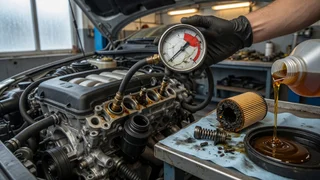
The next useful check is the pressure sending unit. A faulty sensor can deliver a false high signal to the gauge or engine computer, while the actual relief valve and pump remain within normal limits. On many engines the sensor can be replaced and the reading rechecked with a mechanical test gauge, but the exact access steps and torque values should come from vehicle-specific service information. If the engine also shows oil leaks, filter distortion, or a relief valve that cannot be inspected safely without full disassembly, stop using the vehicle and have the lubrication system tested before further driving.
Diagnosing a problem
A high oil pressure complaint can usually be organized into three categories: the signal, the oil, or the mechanical path. A signal fault appears when the gauge reads high but the engine runs normally and the oil level and filter are correct. In that case, the sender, wiring, or instrument cluster becomes the leading suspect, and a mechanical gauge fitted temporarily to the gallery gives a more reliable reference. The exact adapter and expected hot and cold ranges vary by manufacturer, so vehicle-specific confirmation is needed before condemning the sensor.
A mechanical cause is more likely when high pressure accompanies other symptoms. A pressure relief valve that is stuck closed can push pressure well beyond the normal range and may damage the filter or cause leaks. An internal restriction, such as blocked oil passages or an improperly installed gasket, can starve one part of the engine while raising pressure elsewhere. In a diesel engine, high pressure during a cold start may simply reflect thick oil and elevated idle, but if the reading stays high after warm-up or rises with load, the relief valve or a restriction should be investigated before the condition damages seals or bearings.