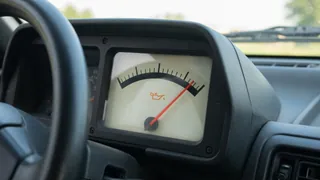
Oil pressure gauge reads high with engine off
Seeing an oil pressure gauge maxed out with the engine off can be startling, but the reading does not necessarily mean a lubrication failure is occurring. When the crankshaft is not spinning, the pump is not producing pressure, so a typical mechanical gauge should rest at zero. An elevated indication usually points to an electrical signaling problem, a stepper motor fault, or a sending unit issue rather than actual high oil pressure. Understanding how the cluster interprets the sender signal helps separate a real engine concern from an instrument or circuit anomaly. The key is checking whether the gauge behavior changes once the engine starts and whether other warning indicators respond normally.
Essential answer
A high oil pressure gauge reading with the engine off is generally a gauge, sender, or circuit symptom, not proof that oil pressure is elevated. With the ignition key in the run position but the engine not rotating, the oil pump is stationary and cannot generate pressure. The gauge may be receiving a false high signal from a short to voltage, a poor ground, or an incorrect resistance path. In some clusters, a failed stepper motor can leave the needle pinned at the top regardless of the actual variable being measured.
If the needle drops toward zero after the engine starts and then rises with rpm, the circuit may be responding oddly only in the key-on, engine-off state. If the gauge stays maxed out in all states, the sending unit circuit, cluster electronics, or gauge driver are the more likely suspects. A mechanical test gauge can confirm actual pressure, but the diagnosis should treat the high reading as evidence of an indication problem until the circuit and sender are checked.