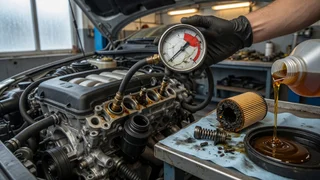
Can high oil pressure damage an engine
High oil pressure can feel like reassurance, but an unusually high reading is a warning rather than proof of better protection. The question is whether excess pressure can damage an engine, and the practical answer is yes under specific conditions. Pressure reflects resistance to oil flow, not oil volume or quality. When resistance rises sharply, seals, filters, bearings and drive components can be stressed. This overview explains the difference between normal pressure variation and pressure high enough to create mechanical risk, and what a driver can usefully interpret before taking the next step.
Essential answer
High oil pressure can damage an engine when the pressure is caused by a restriction that starves a bearing or by a failed relief system that allows pressure to climb beyond component limits. A cold start naturally raises pressure because thicker oil resists flow, but this typically falls as the engine warms. The concern is a sustained high reading at normal operating temperature, especially when accompanied by noise, leakage or an oil pressure warning. The gauge alone does not prove damage; it is a clue about flow resistance that requires interpretation.
Damage from excessive pressure most often appears at seals and gaskets first. A crankshaft seal, camshaft seal or oil filter gasket can be pushed out of position or deformed when pressure overcomes its retention. In severe cases, a filter canister can bulge or loosen, leading to rapid oil loss. Bearing damage is less commonly caused by pressure itself and more often by the underlying condition, such as a blocked gallery, that raises pressure while reducing delivery to a specific journal. For this reason, the oil pressure reading should be connected to oil level, viscosity and engine temperature rather than treated as an isolated fault.