Corrosion on Positive vs Negative Car Battery Terminal
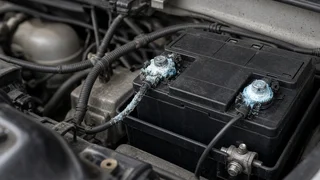
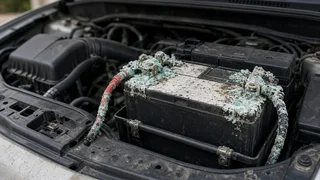
Corrosion on a car battery terminal can appear as a white, blue, or greenish crust that interrupts the electrical connection between the cable and the post. The location of that buildup is diagnostic. Corrosion on the positive terminal usually points to overcharging or acid vapor escaping near the post seal. Corrosion on the negative terminal more often reflects undercharging or a vehicle electrical load that is working the battery too gently over time. Reading the color and side helps narrow the cause and guides the right repair step.
Direct answer
In many cases, corrosion on the positive car battery terminal is linked to the charging system working too hard or the battery venting small amounts of electrolyte vapor. Heat and pressure inside the case can push acidic gas past the post seal, and the positive post is often the first place that residue collects. The resulting powdery crust is a reaction product, not proof that the battery itself has failed. It is a sign to check the alternator output and the condition of the battery case before condemning any part.
Corrosion on the negative car battery terminal has a different typical pattern. It frequently develops when the battery spends too much time slightly discharged or when there is a persistent low-level electrical draw after shutdown. The chemical environment at the negative post can encourage sulfate deposits or a softer fluffy coating. No single symptom alone identifies a failed component, but negative-side buildup should prompt a check of the charging voltage, cable contact, accessory loads, and whether the battery is receiving enough regular recharge.
How it works
Battery terminal corrosion is fundamentally an electrochemical reaction involving acid vapor, moisture, and the lead or copper in the terminal and clamp. The battery produces hydrogen and oxygen during charging, and small amounts of sulfuric acid mist can escape around a post. When those vapors meet the metal, they form sulfate compounds that appear as a dry crust. Heat, vibration, and a poor seal can increase the amount of vapor reaching the terminal, while the direction of current flow influences which post collects more visible residue.
The positive and negative posts do not corrode identically because each side has a different role in electron flow. The positive terminal supplies current to the vehicle circuits, while the negative side completes the return path and bonds to the chassis. Differences in system voltage, grounding, and charging output can shift the reaction products toward one post. A vehicle that regularly sees short trips or extended accessory use may show buildup on one side even though the battery is functioning acceptably. The location is a clue, not a failure verdict.
Symptoms and checks
Blue corrosion on a car battery negative terminal often appears as a fine blue-green deposit on the cable end or clamp. This is a normal copper reaction product when the terminal sees moisture and mild acid exposure. Blue corrosion on a car battery positive terminal can look similar but may form faster if the alternator is pushing voltage above the expected range. In either case, clean the area only with appropriate care, and look for related symptoms such as slow cranking, a sulfur smell, or a battery case that feels unusually warm after driving.
A simple voltage drop check can be more useful than assuming corrosion means a bad battery. Measure between the battery post and the cable clamp while the starter is engaged or a load is applied. A noticeable drop means the corrosion or clamp tightness is resisting current flow. The alternator charging output should also be observed because an overcharging condition can refill the same buildup after cleaning. If corrosion is confined to one side and the vehicle has an intermittent parasitic draw, that draw may explain a constant mild discharge and the recurring deposit.