Wheel Offset Explained: Positive vs Negative Offset
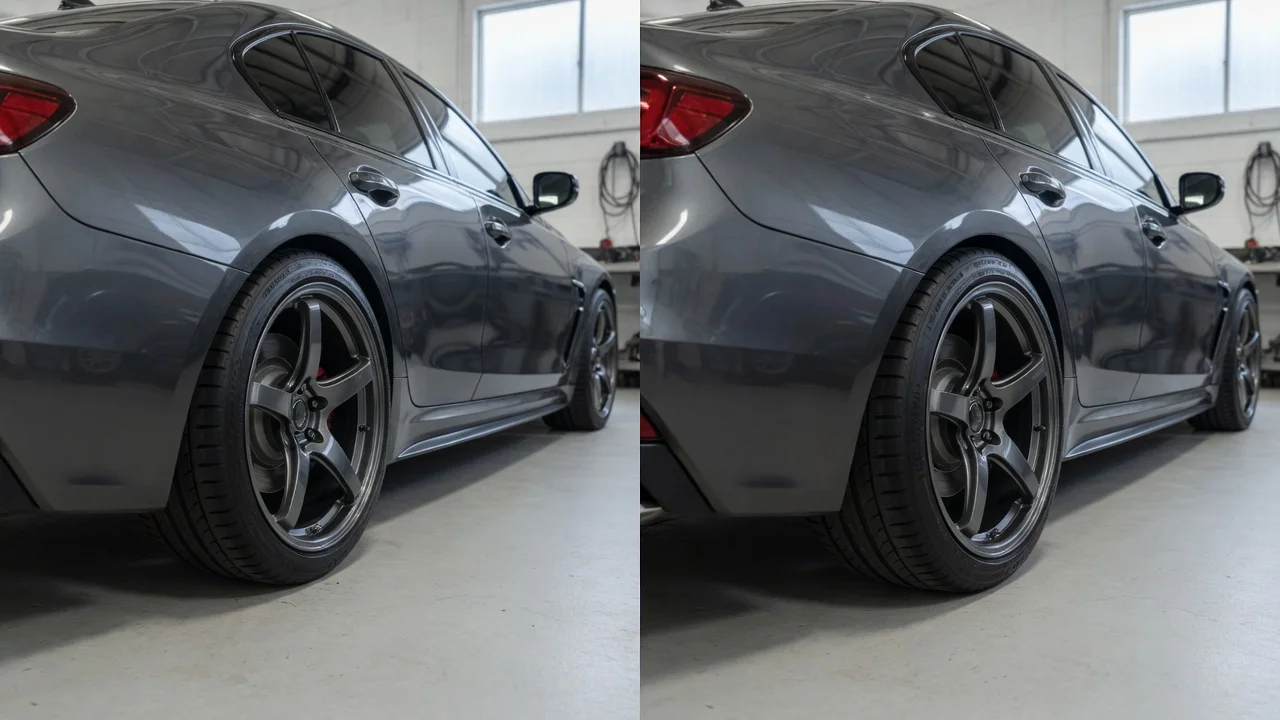
What is wheel offset?
Wheel offset is the distance between the wheel's mounting surface and the centerline of the wheel, usually stated in millimeters. The mounting surface is the flat face on the back of the wheel that sits against the brake rotor or drum. The centerline is the imaginary plane exactly halfway across the wheel's width. Offset tells you where the wheel sits laterally in relation to the hub, which affects clearance to suspension parts, brakes, and fenders.
Offset is not the same as wheel width, bolt pattern, or backspacing. Backspacing measures from the mounting surface to the inner rim edge, while offset compares the mounting surface to the centerline. You will sometimes see offset marked as ET, from the German term Einpresstiefe, meaning insertion depth.
Positive offset vs negative offset
A positive offset means the mounting surface is toward the outer, street side of the wheel from the centerline. This tucks the wheel farther inward, closer to the vehicle. A negative offset means the mounting surface is toward the inner, brake side of the wheel from the centerline, which pushes the tire and rim outward, away from the vehicle.
Positive offset: mounting surface is outside the centerline; wheel sits more inward. Negative offset: mounting surface is inside the centerline; wheel sticks out more. Zero offset: mounting surface is exactly on the centerline.
Most modern front-wheel-drive cars and many crossovers use noticeable positive offset. Negative offset is more common on deep-dish wheels, older rear-wheel-drive styles, and some off-road or show setups where the wheel is pushed outward. The exact number that counts as high or low depends on the wheel width and the original specifications for the specific vehicle.
What does the offset number mean?
Offset is expressed as a number in millimeters, often with a plus or minus sign. For example, a +40 offset means the mounting surface is 40 mm toward the street side of the wheel's centerline. A -12 offset means the surface is 12 mm toward the brake side. The higher the positive number, the more the wheel is pulled inward. The more negative the number, the farther the wheel is pushed outward.
A zero offset wheel has the mounting surface centered in the wheel. That places the wheel evenly arranged across the hub, though the visible outer face can still vary because wheel face design is separate from offset.
Which offset pushes the wheel out?
Lower offset pushes the wheel outward. Moving from a higher positive offset to a lower positive number, or from positive to zero to negative, moves the wheel's outer face and the tire farther away from the suspension and usually closer to the fender. For a fixed wheel width, a lower offset increases the outer stance.
Because offset works together with wheel width, the outward placement cannot be judged by offset alone. A wider wheel with the same offset has its extra width distributed on both sides of the centerline, so it can still change inner and outer clearance.
Why offset matters
Offset affects how the tire and wheel line up with the suspension, brakes, steering geometry, and bodywork. A wheel with too much positive offset may contact suspension arms, struts, or brake components. A wheel with too little offset, or too much negative offset, may contact the fender lip or stick out beyond legal or practical limits.
Changing offset also changes the relationship between the steering axis and the tire's contact patch, which can alter steering feel and component loads. For these reasons, repair and wheel-fitment guidance usually recommends choosing offset close to the original specification for the specific vehicle, model year, and configuration.
Where to find wheel offset
Wheel offset is often stamped or cast on the back of a spoke, on the mounting pad, or elsewhere on the inner side of the wheel. Look for an ET marking followed by a number, such as ET35 or ET45. The markings can be small, hidden by brake dust, or absent on some used or older wheels, so a clean inspection of the inner side is usually required.
How to measure wheel offset
If the marking is not visible, you can calculate offset from two measurements. First, measure the total wheel width in millimeters across the outer rim lips. Divide that number by two to find the centerline. Second, measure from the rim edge on the brake side to the mounting surface. The offset is the backspace measurement minus the centerline measurement.
For example, if a wheel is 180 mm wide, the centerline is at 90 mm. If the distance from the inner rim edge to the mounting surface is 120 mm, the offset is 120 minus 90, or +30 mm. If the mounting surface is closer to the brake side than the centerline, the result is negative. The practical challenge is making the measurements accurately by hand, especially while a tire is still mounted.
Offset from a factory-style wheel can also be confirmed through original equipment specifications for the vehicle, since the same model can use different offsets across trim levels, brake packages, and markets. Any measurement should be read as approximate rather than a replacement for a verified original specification.
Wheel offset and backspacing compared
Backspacing describes the distance from the wheel's inner edge to the mounting surface. Offset describes the mounting surface's position relative to the centerline. The two measurements are related, but they answer different questions. Backspacing helps determine inner clearance, while offset gives a more direct comparison of how a wheel sits across different wheel widths.
Because offset depends on the wheel's total width, the same offset number can behave differently on wheels of different widths. This is why fitment comparisons must consider width and offset together rather than offset alone.
Choosing offset for a vehicle
The safest reference is the vehicle's original wheel offset specification. A small change is sometimes workable if the wheel and tire package still clears the brakes, suspension, and body through the full steering and suspension travel. Larger changes can cause contact or undesirable steering behavior, and the acceptable range varies by vehicle, wheel width, tire size, and suspension condition.
Before choosing a non-standard offset, check clearance at both steering extremes and suspension travel where practical. If clearances are tight or the vehicle-specific specification is unknown, treat the original offset as the practical default.