Coolant Drain Pans: Choosing a Container for Draining Antifreeze
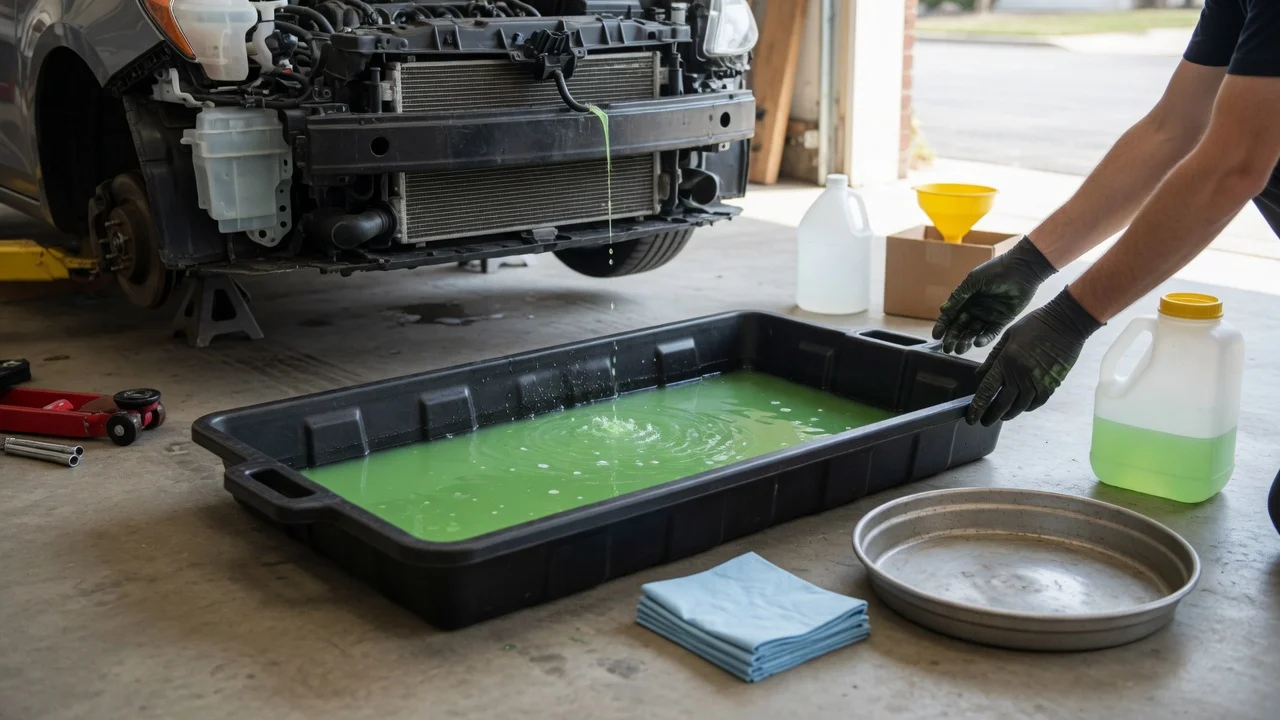
What a coolant drain pan needs to do
A coolant drain pan is a container placed under the radiator, engine block drain or lower hose during cooling system work. Its immediate job is to catch antifreeze as it leaves the system without letting the fluid spill onto the ground. Coolant is toxic to people and animals, so containment matters as much as convenience.
The defining difference from a general purpose drain pan is chemical compatibility. Because engine coolant is usually a mixture of water and ethylene glycol or propylene glycol, a suitable pan must resist coolant and tolerate warm fluid. Before committing to a purchase, check the pan's listed capacity and material rather than assuming any plastic container sold for oil changes will work.
Checks before buying
Four checks will usually determine whether a drain pan fits the job.
Capacity: Estimate how much coolant the system can release at once. Drain point height: Measure the clearance from the drain point to the floor when the vehicle is on ramps or stands. Chemistry: Confirm the pan material is compatible with coolant, not only with petroleum oil. Pouring and handling: Look for a stable base, a shaped spout and a large enough opening for the coolant stream.
Advertised capacities are not always the volume you can safely carry. A pan near its stated capacity is difficult to move without sloshing, so allow usable headroom. Prices and availability may vary by market and date; confirm the current product and included accessories through the seller before relying on a specific figure.
Material and compatibility
Most coolant drain pans are molded plastic, often polyethylene or another chemically resistant polymer. Polyethylene is generally suited to both coolant and oil, but the product description should state what the pan is made for. Metal pans may be acceptable when clean, but coolant can encourage corrosion if the surface is damaged, and a metal pan intended for oil may not be the best long-term choice.
Do not assume a container that held oil is automatically safe to reuse for coolant testing or disposal. Rinse residue only when the intended reuse is clear. The most practical approach is to use a dedicated coolant pan so that the recovered fluid is not mixed with oil, which changes how it can be recycled or disposed of.
Comparing pan designs
Low-profile rounded pans fit well under vehicles with limited clearance. Their main trade-off is that a very shallow pan may not hold a full system drain or may be awkward to carry once loaded. Pans with a molded pour spout are easier to decant into a sealable waste container, but the spout should be wide enough to prevent a restricted pour from splashing.
Enclosed drain containers with a top opening are another option. They control splashing better during draining and often include a cap for storage, but the opening can be harder to align under a drain point. If the vehicle is high enough, a taller container with a screw cap may reduce the number of times you have to move open fluid.
Design | Main advantage | Key trade-off; Low-profile pan | Fits under low drain points | Smaller capacity or harder carry; Spouted pan | Easier pouring into a waste jug | Can be slower or splash-prone if narrow; Covered drain container | Less spillage during storage | Opening alignment is more difficult
Capacity and the full drain
A typical passenger car cooling system may hold several quarts or more, so the pan should comfortably exceed the amount you expect to release. If you are draining a system in stages or doing a partial drain, a smaller pan can work, but for a coolant flush a larger container reduces the need to stop and empty fluid mid-drain.
Check the pans you are comparing using the same capacity units. One product may be listed in quarts, another in gallons, and a container described only by dimensions gives no direct indication of usable volume. When a product does not state capacity clearly, treat that as a gap to resolve before buying.
A stable, safe setup
Place the pan on a level surface and position it directly under the drain point before opening the system. Coolant can emerge quickly when the drain plug or lower hose is released, and a small offset is enough to cause a spill. If the vehicle is supported on ramps or jack stands, allow additional clearance and account for the direction of the coolant stream.
Keep the cooling system depressurized and cool before opening it. Draining hot pressurized coolant is dangerous even with a well-chosen pan. The pan solves containment, but it does not make a hot system safe to handle.
Transfer and disposal
After draining, transfer coolant to a sealable, clearly labeled container. The drain pan is a temporary collection point, not permanent storage. Keep antifreeze away from children and pets throughout the entire process. Disposal rules for used coolant vary by location, so follow local requirements rather than pouring fluid into a drain or onto the ground.
Which pan fits your priorities
For low-clearance vehicles, a low-profile spouted pan is often the most practical starting point if its capacity covers the expected drain volume. For larger cooling systems or flushes, choose a covered container or a higher-capacity pan even if it requires more clearance. If you commonly handle both oil and coolant, a purpose-made container for each fluid is cleaner than sharing one pan, because mixing fluids complicates recycling and can make the recovered coolant less useful.
The available product descriptions do not always state every relevant specification. When a pan lacks a clear capacity, material or coolant-compatibility statement, verify those details with the seller before purchase. A cheap oil pan that happens to fit underneath is not a substitute for a container confirmed to hold the full coolant volume safely.