Coolant Drain Pans: How to Choose a Pan for a Coolant Flush
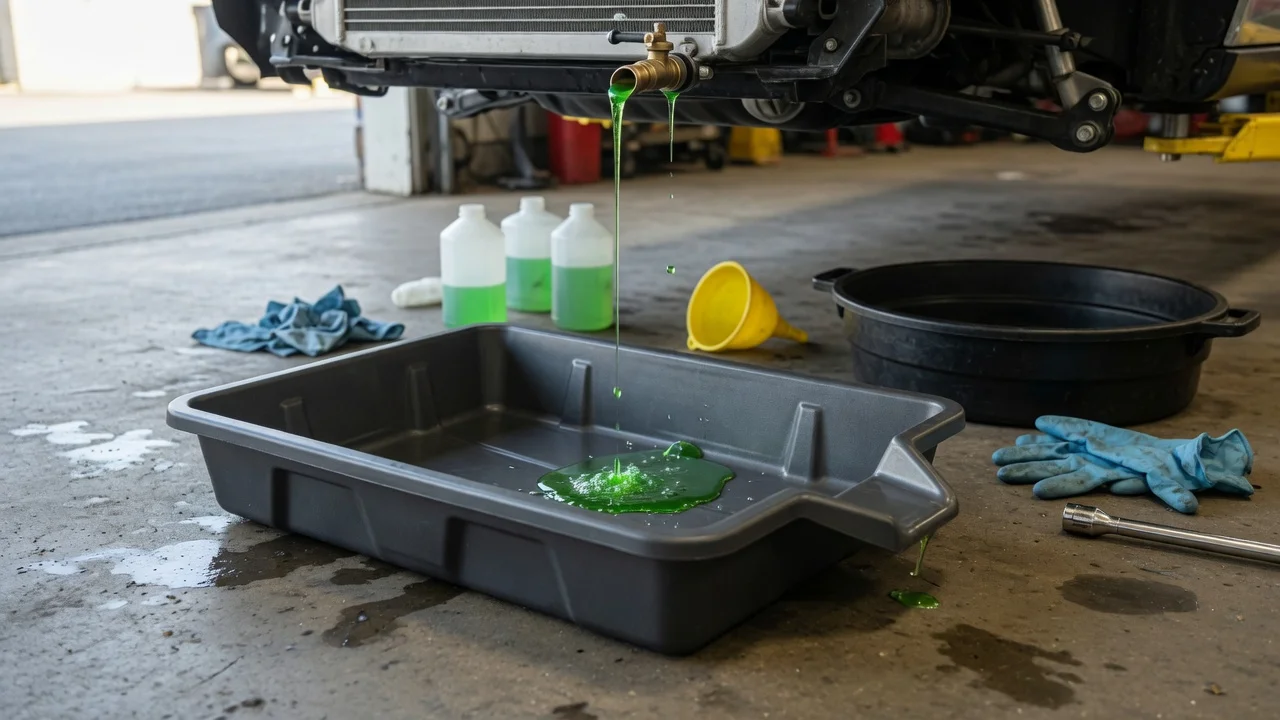
What you need from a coolant drain pan
A coolant drain pan is a shallow catch container placed under the radiator drain cock, lower radiator hose, or engine block drain so used antifreeze and rinse water stay off the floor during a drain or flush. The pan that fits the job is one whose usable volume is greater than the cooling-system capacity listed for your vehicle, that slides under the drain point without forcing you to raise the vehicle higher than you plan to, that resists ethylene glycol or propylene glycol coolant, and that lets you pour or drain the captured fluid into a sealed container for recycling or household hazardous-waste disposal.
That choice changes with ground clearance, whether you will rinse the system, and whether the pan has to travel without spilling. A flush collects more liquid than a single drain because rinse water is added after the first empty. Cooling-system volume is specific to model year, market, engine, and equipment; use the figure in the owner’s manual or under-hood information for that vehicle. If the published capacity is missing or unclear for your powertrain, treat it as a gap and confirm it before you size the pan. Rules for used coolant also vary by jurisdiction.
Match capacity and height to the vehicle
Start with the cooling-system capacity in the owner’s manual, then choose a pan with usable volume above that amount. Usable volume is the amount you can hold without the fluid sitting at the brim, where a splash or a tipped pan will overflow. If you plan to catch the first drain and later rinse water in the same pan, size for more than one system fill or keep a second empty pan or transfer jug ready so the first pan is emptied before it is full.
Height is the other hard limit. The pan has to fit under the drain point with the vehicle on the ground, on ramps, or on stands—whichever method you will actually use. A low pan clears a tight gap but holds less for a given footprint. A taller pan holds more but may require raising the vehicle. A wide, stable base is less likely to tip when the stream hits one side of the pan rather than the center.
Features that decide which pan to buy
After size, choose on how you will move the used coolant and how much splash you expect from the drain cock or a dropped hose.
Chemical-resistant body, typically a glycol-tolerant plastic such as high-density polyethylene, so the pan does not swell, crack, or weep. Anti-splash rim or inner lip to keep a fast drain stream inside the pan. Capped pour spout or a bottom drain so you can transfer fluid without carrying a full open tray. Lid or other cover for transport and short storage. Ethylene glycol coolant is toxic to people and animals and should not sit uncovered where a pet can drink it. Handles or a grip that remain usable when the pan is full. Graduation marks only as a rough check of how much you recovered, unless the pan is specified as a measuring vessel.
Which pan type fits the intended use
Compare pans on the same job: catching one cooling-system drain plus any rinse water, then moving that liquid into a closed container. Labeled capacities are comparable only when you read the same usable rating rather than mixing brim-full claims from different products. Costs are comparable only for pans sold in the same market at the same time; use current retail figures if price is part of the decision.
Pan type Best fit Trade-off; Open low-profile tray Tight ground clearance and a drain stream that falls straight down Easy to splash or spill while carrying; often smaller usable volume; Spouted plastic drain pan Typical driveway drain or flush when the pan fits and you can pour into a jug Spout caps can leak; height and capacity still have to match the vehicle; Lidded or screw-top drain container Moving used coolant off site or storing it briefly before a recycling drop-off Taller or bulkier, so confirm it still fits under the drain point; General-purpose oil drain pan You already own one that is glycol-tolerant, large enough, and clean Residual oil contaminates coolant waste and can complicate recycling; Metal drain pan Rigidity and heat resistance if the pan also catches other shop fluids Heavier when full; seams and coatings still have to tolerate coolant
For a standard coolant flush on a passenger vehicle you can raise, or that already has clearance, a chemical-resistant plastic pan with a capped spout, a lid, and usable capacity above the published system volume is the practical default. If the vehicle sits low and you will not use ramps or stands, prioritize a low-profile pan with a large footprint and plan a transfer container so the pan never overfills. If you must haul used coolant to a collection site, a lid or an immediate pour into a sealed, labeled container matters more than extra open volume.
Limits, disposal, and when to stop
A drain pan only collects fluid. It does not replace a thermostat, radiator cap, bleed procedure, or a decision between a simple drain-and-fill and a full flush. Used coolant is typically treated as regulated waste. Do not pour it into a storm drain, soil, or household plumbing; take it to a facility that accepts automotive coolant under the rules where you live. Mixing coolant with motor oil in the same pan can make that waste harder to accept.
Wait until the engine is cool before opening the cooling system. Hot coolant and steam can cause severe burns, and a pressurized cap can discharge suddenly. If the drain cock is seized, a plastic radiator tank looks brittle, or the vehicle’s service information puts the drain or refill in a shop-only procedure, have the work done by a qualified technician.
The two figures to compare are the pan’s labeled usable capacity and materials, and the cooling-system volume for that model year and engine. If either figure is missing, confirm it before you start the drain so the pan is not the limiting factor.