Choosing a VF48 Turbo Blanket: Fit, Materials and Trade-offs
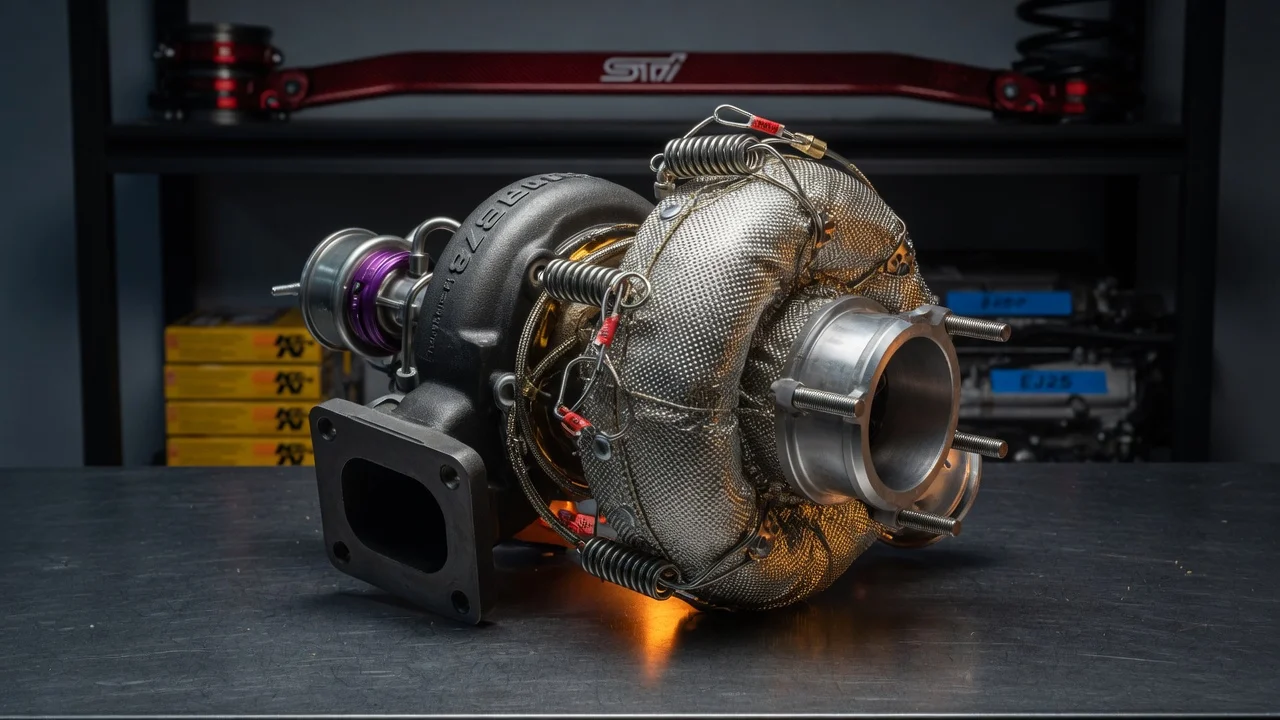
A VF48 turbo blanket wraps the turbine housing of the IHI VF48 turbocharger to keep exhaust heat contained and cut radiant heat in the engine bay. Before buying one, be clear about what a blanket can and cannot do, whether it fits your turbo and engine configuration, and what it adds to routine maintenance. This guide covers those checks from a mechanic's point of view, so you can compare options on construction and fit instead of packaging claims.
Define the job the product must do
A turbo blanket has one core job: keeping heat inside the turbine housing instead of letting it radiate into the engine bay. On a VF48, the hot side sits close to wiring, vacuum and coolant hoses, the wastegate actuator and the firewall. Reducing radiant heat there can protect rubber and plastic parts from repeated heat cycling. Some sellers also promise faster spool because more exhaust energy stays in the housing. Treat that as a possible side effect, not a reason to buy. Any change is small and depends on the rest of the setup.
Start by writing down how the car is used and what problem you want to solve. A daily driver in mild weather needs less than a car that sees track days, sustained heavy loads or an aggressive tune. Practical constraints matter too. Space around the up-pipe and downpipe is tight, the factory heat shield usually has to come off, and many blankets are far easier to fit with the turbo removed. If you are reacting to a specific symptom, such as a brittle connector or a melted hose, confirm the heat source first. A blanket only helps when radiation from the turbine housing is actually the cause.
Check compatibility
First confirm the turbo really is a VF48. The identification is stamped or tagged on the compressor housing. The service history may also show whether a previous owner swapped in a different IHI unit or an aftermarket turbo. The VF48 is commonly associated with EJ257-powered WRX STI models sold in North America from the late 2000s into the early 2010s. Other model years, markets and engine variants used different VF-series turbos with different housing shapes, so do not assume fit from the car's badge alone.
The blanket must clear every interface on the hot side: the inlet flange from the up-pipe, the outlet to the downpipe, the internal wastegate arm and its linkage, and the oil and coolant lines that feed the center section. Cutouts that are slightly off can bind the wastegate arm or press on a line. A blanket sold as fitting several VF-series turbos may suit one housing better than another. Ask which housing the pattern was made from, and compare product photos or a cutout diagram with your own turbo. Aftermarket up-pipes, downpipes or relocated lines change the geometry and deserve a second look.
Features that affect the choice
Construction is where real differences show up. Most blankets combine an insulating core, often fiberglass, basalt or silica-based fabric, with an outer cover of coated fabric or stainless or titanium mesh. Check whether the stated temperature rating is continuous or intermittent, because exhaust temperatures under sustained load can approach the limits of cheaper materials. An outer layer that resists abrasion and oil lasts longer in an engine bay. Fastening also matters. Springs and safety wire hold tightly but take time to remove. Straps and buckles are quicker to service but can loosen over time.
Separate evidence from labels. A published continuous temperature rating, a layer-by-layer material description, a cutout diagram and installation instructions written for your turbo are all useful. Labels such as race-proven, or claims of a specific temperature drop, tell you little unless the seller explains how and where the measurement was taken. Coverage is a genuine trade-off. A full wrap contains more heat than a partial design, which also means the housing itself runs hotter.
Limitations and ownership costs
Heat retention is the main point of debate. Some owners report cracked turbine housings, sticking wastegates or seized hardware after running a blanket. These are symptom reports, not verified failures traced to the blanket, and housings crack and wastegates wear on cars without one too. If you notice wastegate rattle, unstable boost or boost-related diagnostic codes, inspect the car under the symptom conditions before you blame or credit the blanket. Pull the blanket periodically to examine the housing, flanges, studs and wastegate arm, because the cover also hides early cracks and leaks.
Oil is a real hazard. A blanket that soaks up oil from a weeping feed line, return line or nearby gasket can smoke or smolder. Fix any leaks before installing, and replace a blanket that becomes saturated. Ownership costs include installation time, new gaskets or hardware if the turbo comes off, and eventual replacement as the fabric degrades. A blanket cannot fix boost control faults, clear diagnostic codes, make up for a worn turbo or stand in for intercooler improvements. Keep the factory heat shield in case you remove the blanket later.
Build a practical shortlist
Narrow the field to two or three candidates and compare them on the same points. Start by confirming the turbo identification and any changes to the up-pipe, downpipe, and oil or coolant lines. Then check that each blanket's cutouts match the wastegate arm, flanges and lines on your housing, that the continuous temperature rating and layer materials are stated, and that the outer cover can handle oil exposure and abrasion.
Next, compare how each blanket fastens, how easily it comes off for inspection, and whether its instructions are written for your turbo or for a generic family. Price it complete, including springs, wire or replacement hardware. A return policy that covers fitment problems is worth having when one pattern is shared across several housings. When reinstalling the turbo or related parts, follow the manufacturer specifications for torque and gaskets. The right choice is the blanket that fits your engine configuration cleanly and is easy to service, not the one with the boldest claims.