Choosing a Turbo Guard Turbo Blanket: Fitment, Features and Trade-offs
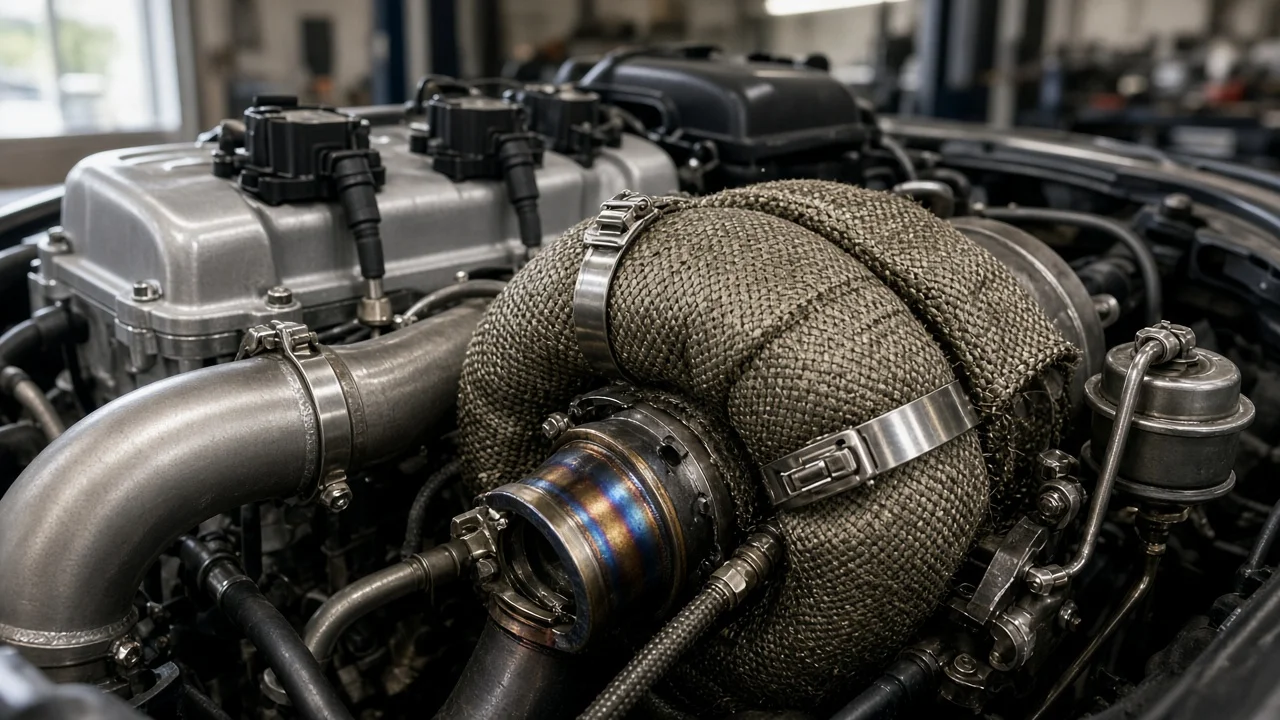
A turbo blanket, sometimes sold as a turbo guard, wraps the hot turbine side of a turbocharger to hold heat in the housing and keep it away from nearby parts. Choosing one depends less on brand claims and more on matching the blanket to your exact turbo, your engine bay and the problem you are actually trying to solve. This guide covers fitment, materials, fasteners and the real limits of the product.
Define the job the product must do
Start by naming the reason you want a blanket. Common goals are lowering underhood temperatures around the intake, wiring and brake or fuel lines, and protecting a relocated or aftermarket turbo that lost its factory heat shield. Another goal is keeping the turbine housing hotter so more exhaust energy reaches the turbine wheel. That last benefit is often promoted as faster spool. Treat it as a possible small gain rather than a guaranteed result, because it depends on the setup and is rarely measured independently.
Be clear about whether you are reacting to a symptom report or a verified failure. A melted connector, a brittle vacuum line or heat-soaked intake air are symptoms worth recording. Note the symptom conditions with them: ambient temperature, driving pattern, and whether the car idled after hard use. A cracked turbine housing, a failing turbo or stored diagnostic codes are verified problems that need inspection and repair first. A blanket can help protect surrounding parts from heat. It will not fix a turbo that is already leaking oil, losing boost or setting fault codes. Also weigh your duty cycle, such as daily driving, track use or towing. Consider whether the car is under warranty and how often you or a shop need access to the turbo for service.
Check compatibility
Fitment is determined by the turbine housing, not by the vehicle name alone. The same model can carry different turbochargers depending on model year, engine variant and market. A mid-cycle update may change the housing shape, wastegate arrangement or exhaust routing. Confirm your engine configuration from the build data, the turbo's identification tag or your service history. Then compare it with the blanket maker's listed applications. For aftermarket turbos, the usual reference points are the turbine inlet flange style, such as T25, T3, T4 or a V-band inlet, and the housing size.
Check the interfaces around the housing. An internal wastegate needs a cutout or flap so the actuator arm and rod can move freely. An external wastegate setup changes where the blanket can sit. Look for clearance around oxygen sensors, exhaust gas temperature probes, coolant and oil lines, the downpipe joint and any mounting studs. If the turbo is a factory unit in a tight bay, measure the space between the housing and the firewall, strut tower or intake plumbing before ordering. A thicker blanket may contact surrounding parts.
Read the manufacturer specifications for both the vehicle and the turbo. Some vehicle and turbo makers rely on factory heat shields or advise against wrapping certain cast housings. Removing a factory shield may also affect warranty coverage or local inspection requirements. If the guidance is unclear, keep the factory shielding or ask the turbo supplier before installing a blanket.
Features that affect the choice
Material is the main construction choice. Blankets are commonly built from layers of woven fiberglass, silica or basalt cloth around an insulating core. Some add a stainless mesh or reflective outer layer. Each maker rates its product for a maximum temperature, and you should compare those ratings against the duty your turbo sees. Remember that these ratings are the maker's claims, not independent test results. Labels such as titanium, lava or race grade describe a fabric style or a marketing position. On their own, they do not tell you how the blanket will perform on your engine.
Fastening affects both fit and safety. Springs with hooks, stainless safety wire, clamps and integrated straps can all work. Whatever the method, the blanket should sit snugly so it cannot shift into the actuator, belts or exhaust joints. Stitching quality matters, because loose seams and frayed edges tend to get worse with heat cycling and vibration. A blanket shaped for one specific housing usually fits closer than a generic wrap. A generic design may be easier to adapt to a modified turbo.
Coverage is also a trade-off. Full coverage holds the most heat in the housing. A design that leaves the inlet flange or wastegate area exposed is easier to fit and service. If underhood temperature is your main concern, consider the blanket together with the existing heat shields and the rest of the exhaust path rather than relying on it alone. If you also plan to wrap the downpipe, check that the combination stays within the turbo and exhaust manufacturers' guidance.
Limitations and ownership costs
Expect some setup work. Installation usually means removing the factory heat shield, cleaning the housing and fitting the blanket on a cold engine. Wear gloves, because many insulating fibers irritate skin. Blankets often smoke or smell during the first heat cycles as binders and coatings burn off. Follow the product's break-in instructions and run the engine in a ventilated area. The blanket also has to come off for turbo, wastegate or downpipe work, which adds labor to future repairs.
Plan for regular inspection. At oil changes or other service visits, check the blanket for oil saturation, fraying, loose fasteners or contact with nearby parts. An oil-soaked blanket can become a fire risk. Replace it and fix the leak rather than ignoring it. Heat cycling gradually breaks down the fabric, so treat the blanket as a wear item, not a permanent part. Be realistic about what it cannot do. It does not cool the engine oil, replace shielding on the manifold or downpipe, cure boost leaks or clear diagnostic codes. Judge any claimed performance gain on your own car rather than assuming it.
Build a practical shortlist
To narrow the options, compare each candidate against the same checklist. Does the listing name your turbo or housing for your model year and engine variant, or the correct flange type for an aftermarket unit? Does it leave room for the wastegate actuator, sensors, and oil and coolant lines? What material and temperature rating does the maker state, and does the outer layer resist abrasion and fluids? How is it secured, and are the fasteners included? Are break-in, inspection and replacement instructions provided, and what does the warranty cover?
Drop any option that needs cutting or forcing to clear moving parts, or that conflicts with the manufacturer specifications for your turbo. Among the remaining choices, prefer the closest housing-specific fit and the clearest instructions over the boldest marketing. If you are unsure whether a heat problem comes from the turbo, the exhaust or a separate fault, have the car inspected first. Then choose a turbo blanket that addresses the confirmed need.