Choosing a MOOG Steering Linkage Assembly
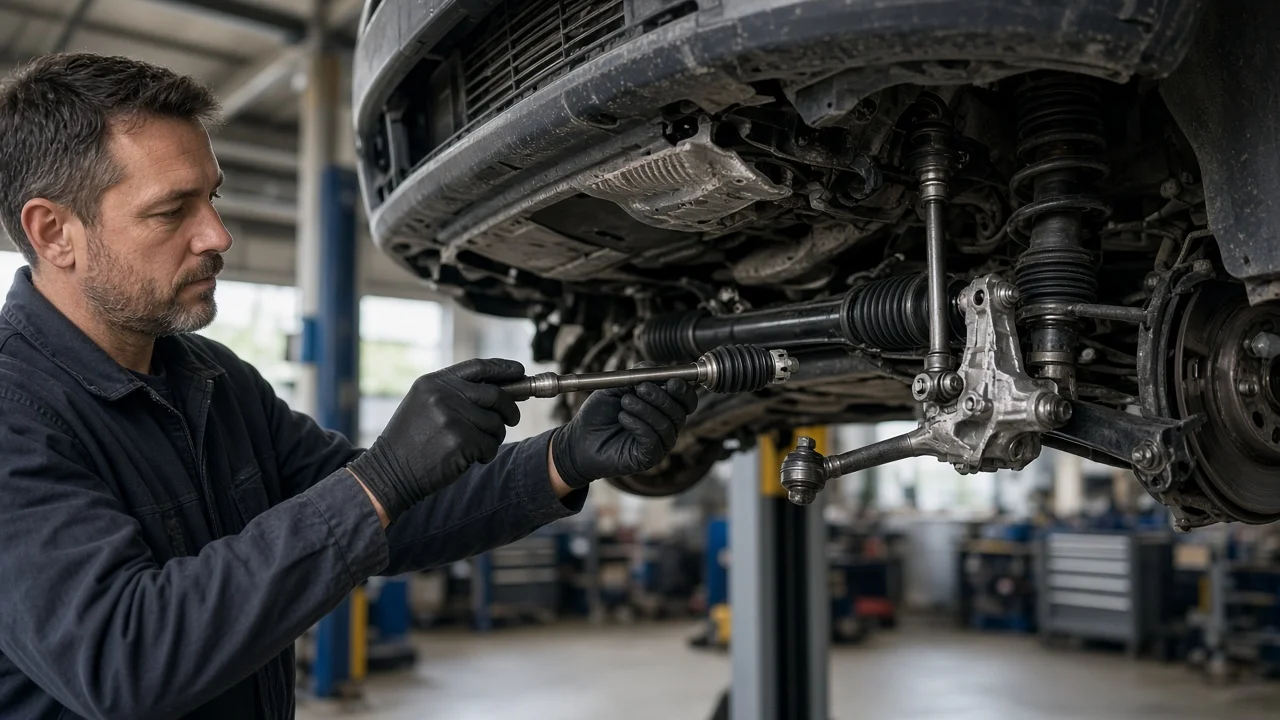
A MOOG steering linkage assembly can restore precise steering when worn tie rods, drag links or idler components cause wander, clunks or uneven tire wear. Choosing the right one depends less on the brand name and more on matching the exact linkage design on your vehicle, the condition of the parts around it and how you drive. This guide covers the checks a suspension and steering mechanic makes before ordering, so the part fits and is worth its cost.
Define the job the product must do
Start by confirming that the linkage is actually the problem. Loose steering, a delayed response off center, knocking over bumps and feathered tire edges can all come from worn linkage joints, but worn ball joints, loose wheel bearings, a tired steering gear or rack, and damaged tires produce similar complaints. With the vehicle raised and resting on jack stands, rock each front wheel at the three and nine o'clock positions while a helper watches the tie rod ends, drag link and idler joints. Visible joint play, a torn boot or a joint that moves before the wheel does points to the component that needs replacing. Play that appears at twelve and six o'clock usually points elsewhere, such as ball joints or bearings.
Next, describe how the vehicle is used. A daily commuter on paved roads asks less of the linkage than a pickup that tows, plows snow, carries a heavy front bumper or sees regular off-road use. Note any practical constraints as well: your budget, whether you own a torque wrench and a joint separator, and whether an alignment shop is accessible after the work. These answers decide whether you need a single outer tie rod end, a matched pair, or a complete assembly that replaces several joints at once.
Check compatibility
Identify the steering design first, because the word linkage covers different parts on different vehicles. Rack-and-pinion systems use inner and outer tie rods. Recirculating-ball systems with a parallelogram layout use a pitman arm, center link, idler arm and tie rods. Many trucks with a solid front axle use a drag link and a long tie rod, which is often what a complete steering linkage assembly refers to. Then confirm year, make, model, trim, two-wheel or four-wheel drive and, where catalogs split them, production date or VIN-based fitment, since manufacturers sometimes change parts mid-year.
The interfaces matter as much as the vehicle listing. Compare taper size, thread size and direction, overall length, adjuster sleeve design and stud orientation at each of the mounting points, ideally by laying the new part beside the old one before installing it. Ride height is the common trap. Catalog fitment assumes a stock vehicle, so a lift, leveling kit, drop pitman arm or aftermarket knuckles can change the geometry and the part needed. If the vehicle has been modified, confirm the requirement with the modification supplier rather than relying on a stock lookup.
Features that affect the choice
Some steering joints include grease fittings, while others are sealed. A greaseable joint lets you add lubricant and purge contamination, which can help on vehicles exposed to water, mud and road salt, but it only pays off if you actually grease it on schedule. A sealed joint needs no routine lubrication, yet it cannot be serviced once moisture gets past the boot. Also check what comes in the box: castle nuts, cotter pins, jam nuts and adjuster sleeves are not always included, and missing hardware adds cost and delay. A preassembled linkage saves installation time but also replaces joints that may still be serviceable.
Separate evidence from marketing labels. Terms such as heavy duty, upgraded or problem-solving design tell you little on their own. Useful evidence is specific: a stated design difference from the original part, a larger stud or different bearing arrangement described in the listing, clear dimensions and written warranty terms. Read what the warranty requires, such as proof of purchase or professional installation, and what it excludes. If a listing cannot tell you how a part differs from a basic replacement for your vehicle, treat the label as a description, not a performance claim.
Limitations and ownership costs
Replacing tie rods, a drag link or a center link changes toe, so a professional wheel alignment is part of the job, not an optional extra. Counting threads or measuring the old part only gets the vehicle close enough to drive carefully to the shop; it is not an alignment, and some vehicles also need the steering wheel centered. Work on level ground with the vehicle on rated jack stands at the manufacturer's lift points, never on a jack alone. Tighten every nut to the fastener specification in the vehicle's service information, use new cotter pins, and never loosen a castle nut to line up the pin hole; follow the service procedure for that step.
Ownership costs continue after installation. Greaseable joints need lubrication at the interval given by the vehicle or part instructions, and every joint benefits from a boot inspection at routine service, since a torn boot lets grit in and shortens life. Know what a new linkage cannot do. It will not cure worn ball joints, loose wheel bearings, play in the steering gear or rack, tire defects, or a bent knuckle, axle or frame from an impact. If those problems exist, the new linkage will wear prematurely or the original symptom will remain.
Build a practical shortlist
Before ordering, run each candidate part number through a short checklist. Is the worn component confirmed by inspection rather than by symptom alone? Does the listing match your steering design, drive type, production date and actual ride height? Do taper, threads, length, stud direction and adjuster sleeve match the original? Do you prefer greaseable or sealed joints for your climate and maintenance habits? Is the hardware included, and are the warranty terms written and acceptable? Finally, does the total cost, including alignment, any tools you need and possible labor, still make sense compared with replacing only the worn joint?
Narrow the field to two or three parts that pass every check, then let fitment certainty and verifiable details decide, not a best-product label. Ask the parts counter to confirm with your VIN, and inspect the part on arrival before removing anything from the vehicle. If the job calls for tools or support equipment you do not have, getting a shop quote for installation plus alignment is often the safer and more economical choice.