Choosing Steering Linkage Bushings: Fit, Materials and Ownership Costs
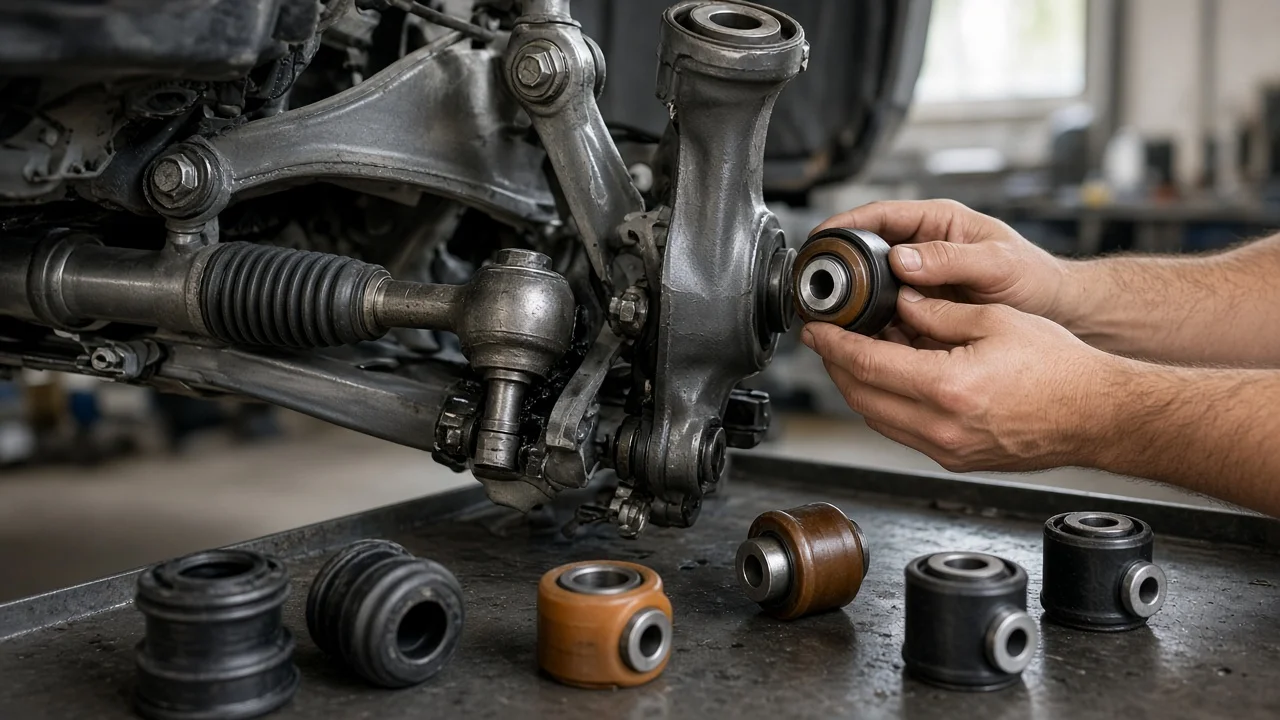
Steering linkage bushings are small, inexpensive parts, but they strongly affect how a vehicle tracks, returns to center and responds to small steering inputs. When they wear, slack builds up between the steering wheel and the tires, and the steering can feel vague, clunk over bumps or wander on the highway. Choosing a replacement depends less on brand names than on matching the right bushing to your linkage design, your driving and the work you are prepared to take on.
Define the job the bushing must do
Start by identifying which bushing is actually involved. On trucks and older vehicles with parallelogram steering, the bushing most often replaced is in the idler arm, which supports one end of the center link. Rack-and-pinion vehicles use mount bushings that hold the steering rack to the subframe or crossmember. Many trucks and SUVs also have bushings at each end of a steering stabilizer. Each location takes different loads and uses a different part, so 'steering bushing' alone is not enough to shop with. Confirm the worn component before buying. A common check is to have a helper rock the steering wheel back and forth with the vehicle on the ground while you watch each linkage joint and mount for movement before the wheels respond. Excess joint play, a torn or shifted bushing, or a rack that moves in its mounts points to the part that needs attention.
Next, consider how the vehicle is used. A daily commuter usually benefits most from quiet operation and long service life. A tow vehicle, a work truck carrying heavy loads or a vehicle driven off pavement puts more stress on the linkage and may justify a firmer or more serviceable design. A driver chasing sharper steering feel will accept more noise and vibration than someone who wants a factory-like ride. Practical limits matter too: whether you have a press and separator tools, how long the vehicle can be out of service, and whether your budget includes a wheel alignment afterward.
Check compatibility
Fitment begins with the full vehicle description: year, make, model, engine, drivetrain and, where relevant, cab or chassis configuration. Two-wheel-drive and four-wheel-drive versions of the same truck often use different steering components, and mid-year production changes are common. Use the catalog fitment notes rather than the product photo, and compare the listing against the part you remove. The interfaces that decide suitability are the outer diameter and length of the bushing, the inner sleeve diameter and length, any flange or offset shape, and the bolt size at the mounting points. A bushing that slides in loosely or needs force beyond what the design intends will not hold the linkage in position.
Modified vehicles need extra care. Lift kits, leveling kits, drop brackets and aftermarket steering arms can change angles at the linkage and sometimes use components that differ from stock. Replacement bushings are generally designed around the original geometry and ride height, so if the vehicle has been altered, check the suspension kit maker's guidance on which steering parts are compatible.
Features that affect the choice
Material is the main trade-off. Rubber bushings, the typical original equipment choice, flex enough to absorb vibration and road noise and need no lubrication, but they deflect under load and can deteriorate with age, heat and oil exposure. Polyurethane bushings are firmer, so they resist deflection and can make steering feel more direct. In exchange they pass more vibration and noise into the cabin, may squeak, and usually require a specific grease at installation and sometimes periodically afterward. Some polyurethane designs include grease fittings so they can be serviced without removal. A harder bushing is not automatically better; on a commuter vehicle the added harshness may outweigh the gain in precision.
Format matters as much as material. Some listings are bushings only, which must be pressed into an existing arm, bracket or rack mount. Others are complete assemblies, such as an idler arm with the bushing already installed, which costs more but avoids pressing work and replaces other worn parts at the same time. When comparing listings, rely on concrete information: stated material, dimensions, what hardware and sleeves are included, whether grease is supplied, the installation instructions and the written warranty terms. Labels such as 'heavy duty', 'premium' or 'performance' say little on their own unless they are backed by these specifics.
Limitations and ownership costs
Installation needs safe vehicle support. Work on level ground, chock the wheels that stay on the ground, lift only at the manufacturer's specified points and rest the vehicle on rated jack stands, never on a jack alone. Depending on the design, you may need a bushing press, a tapered-joint separator and penetrating oil for corroded hardware. Follow the vehicle's service information for the fastener specification and tightening sequence, and note whether it calls for new nuts, cotter pins or other one-time-use hardware. Many rubber bushings must be tightened with the suspension at normal ride height. Tightening them with the wheels hanging can preload the rubber and shorten its life. Your service procedure will say whether this applies.
Plan for wheel alignment. Replacing steering linkage components can change toe, so an alignment check afterward is normally part of the job cost. Polyurethane bushings may add ongoing maintenance in the form of periodic greasing. Also be clear about what bushings cannot do: they will not cure worn tie rod ends, ball joints, steering gear play, a bent linkage component or tires worn by earlier misalignment. If several joints show play, replacing one bushing will not restore precise steering, so inspect the whole system and budget accordingly.
Build a practical shortlist
Before comparing prices, run each candidate through the same checks. Confirm the exact worn component and its location in the linkage. Verify fitment by year, model, drivetrain and steering type, and match the bushing dimensions and mounting points to the original part. Pick the material based on your priority, quiet comfort or firmer response, and decide between a bushing-only kit and a complete assembly based on your tools and the condition of the surrounding parts. Check what hardware, sleeves and grease are included, and whether clear instructions and written warranty terms come with the part. Finally, add the full cost of ownership: any special tools, a post-repair alignment and any routine lubrication the design requires.
Parts that pass every check are reasonable candidates. Choose among them on value and availability rather than marketing claims. If you cannot confirm which joint is loose, or the vehicle has been modified in ways the catalog does not cover, have a qualified shop inspect the steering before you buy so the money goes to the part that actually fixes the problem.