Choosing an ATV for Kids: Size, Safety and What to Check Before You Buy
The short answer
Choose a youth ATV that the manufacturer has rated for your child's age group, that your child physically fits now rather than will grow into, and that has adjustable speed controls you can set yourself. In the US, youth ATVs are sold in age-based categories, and safety authorities consistently advise that children under 16 should not ride adult-sized machines. A bigger or more powerful ATV is not a better buy for a child; it is the most common way a purchase goes wrong.
Two conditions change this answer. First, if you are looking at a battery-powered ride-on toy marketed as a kids 4x4 ATV, you are shopping in a different category with different checks, covered below. Second, state laws on minimum riding ages, helmets, training and registration vary, so the rules where your child will ride can narrow your options before any other factor does.
Start with the age rating on the machine
Youth ATVs built to the voluntary US industry standard carry a label stating the minimum rider age the machine is designed for. The commonly used groupings are 6 and older, 10 and older, 12 and older, a transition category for riders 14 and older, and adult models for riders 16 and older. Each youth category is designed with a lower maximum speed than adult machines. The exact speed limits and requirements belong to the standard and the specific model, so confirm them in the owner's manual for the model year you are considering rather than relying on a listing.
Treat the age label as a ceiling, not a target. A child who has just reached the minimum age for a category may still be too small or too inexperienced for it. Machines without a clear age label, or with labels that do not reference a recognized standard, deserve extra scrutiny because there is no straightforward way to confirm what they were designed for.
Check physical fit with your child present
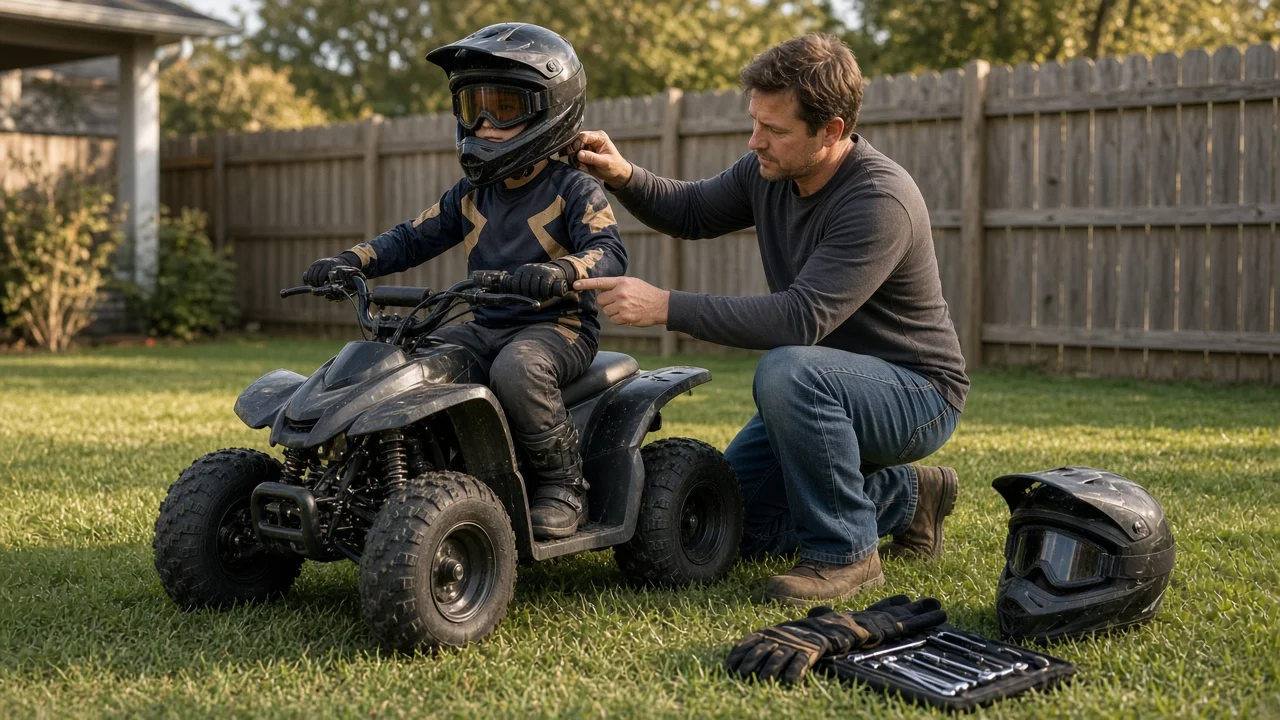
Age categories are a starting point; fit decides the purchase. If possible, have your child sit on the exact model before buying, wearing riding boots. A child who fits a youth ATV should be able to do all of the following without stretching or shifting position:
Sit with both feet flat on the footrests and knees comfortably bent. Grip both handlebar ends with arms slightly bent, and turn the bars fully left and right while staying seated. Reach and operate the brake levers and throttle with normal hand pressure. Stand on the footrests with knees bent and still have clearance between the seat and body. Shift weight side to side, which riding an ATV requires.
If any of these are a struggle, the machine is too large regardless of what the label says. Buying a size up so a child can grow into it removes the margin that youth categories are meant to provide.
Speed limiting and parental controls
The features that matter most on a kids ATV are the ones that let an adult control how it is ridden. Look for:
An adjustable throttle limiter or speed limiter that restricts how far the throttle opens or how fast the machine can go. On gas models this is often a screw at the throttle; on electric models it may be a switch or setting. A tether or lanyard kill switch that an adult can use to shut off the engine or motor, sometimes with a remote option on certain models. A key or removable switch so the machine cannot be started without adult involvement. An automatic or semi-automatic transmission on models for younger riders, so the child can focus on steering, braking and body position. Working front and rear brakes that the child can operate with the strength they have.
Confirm these features for the specific model year and trim you are considering, because equipment can change between years and between versions sold through different channels.
Gas or electric
Both powertrains are available in youth sizes. Electric models are generally quieter, need no fuel or oil changes, and deliver power without a clutch or gear changes, which some parents find easier for a first machine. Their practical limits are battery run time, charging time, and the eventual cost of replacing the battery. Gas models typically run longer between stops and can be refueled immediately, but need routine engine maintenance and fuel storage. Run time, charge time and battery replacement cost vary widely by model, so check the manufacturer's figures for the version you are looking at and note the conditions those figures assume.
If you searched for a kids 4x4 ATV
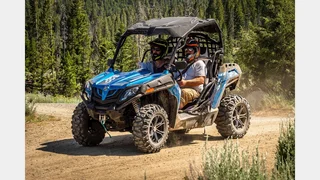
Four-wheel drive is uncommon in true youth-category ATVs; youth models are typically simpler two-wheel-drive machines, which suits their lower speeds and lighter weight. When a listing advertises a kids 4x4 ATV, it is usually one of two things: a battery-powered ride-on toy styled to look like a four-wheeler, or a full-size utility ATV with four-wheel drive that is designed for adults. The first is a toy intended for very young children on flat, supervised ground and is not a substitute for a youth ATV. The second is not appropriate for a child rider at all. If a listing does not clearly state which it is, ask the seller for the manufacturer's age rating before going further.
Brand, standard and parts support
Youth ATVs are sold by established manufacturers through dealers and by lesser-known importers through online marketplaces. Whichever route you take, confirm that the machine carries an age label and compliance information, that an owner's manual is included, and that replacement parts such as brake components, tires, chains, batteries and throttle limiters can actually be bought for that model. A low purchase price is less attractive if a broken part cannot be replaced or no local shop will work on the machine.
Checks for a used kids ATV
Used youth ATVs are common because children outgrow them. A used machine can be good value, but some problems specific to kids' machines are easy to miss:
Confirm the throttle limiter or speed limiter is still present and adjustable. Sellers sometimes remove or bypass limiters, which changes how the machine behaves. Confirm the tether kill switch and any remote shutoff work. Check that the age label is still on the machine and matches the model. Inspect the frame, footrests, handlebars and suspension for bends or cracks that suggest crashes. Test both brakes, check tire condition, and check the chain or drive for wear. On electric models, ask how old the battery is and how long it currently runs on a charge. Look up the model for safety recalls and ask whether any recall work was completed. ATV recalls in the US are published by the Consumer Product Safety Commission. Record the VIN, ask for a bill of sale or title as applicable in your state, and consider checking whether the machine has been reported stolen.
Price and total ownership cost
No verified prices were available for this guide, so it does not quote purchase or ownership figures. When you compare prices yourself, note the date, whether the figure is an advertised price or a completed sale, and what it includes. Dealer listings may exclude freight, assembly or preparation fees, and private sale prices often reflect negotiation that does not appear in the ad.
Budget beyond the machine itself. Costs that commonly come with a kids ATV include:
Protective gear: a helmet meeting a recognized safety standard, eye protection, gloves, over-the-ankle boots, and long sleeves and pants. Gear must fit the child and will need replacing as they grow. A hands-on rider training course. Routine maintenance, tires and, for gas models, fuel and oil; for electric models, eventual battery replacement. Transport, such as a trailer or truck bed ramps, if you will ride away from home. Registration, trail permits or insurance where your state or riding area requires them.
Training, supervision and where your child will ride
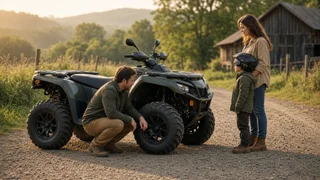
How a child rides affects safety as much as which machine you buy. Widely published US safety guidance calls for adult supervision, no passengers on single-rider ATVs, and no riding on paved roads, where ATVs handle poorly. The ATV Safety Institute offers hands-on courses, and some manufacturers support training for buyers of new machines; check current availability and any age requirements for courses in your area.
Before buying, confirm your state's rules for youth riders, including minimum ages, helmet requirements, training certificates and registration. Also check the rules at any trail system or riding area you plan to use, since some set their own age or size limits.
Before you commit
The manufacturer's age rating matches or is below your child's age. Your child fits the machine now, tested in person with boots on. Speed limiting, a kill switch and adult-controlled starting are present and working. The listing is a true youth ATV, not a ride-on toy or an adult 4x4. Parts and service are available for the exact model. For used machines, condition, recalls, limiter and paperwork have been checked. You have budgeted for gear, training and upkeep. Your state and riding area rules allow the planned use.