Choosing a 4-Wheel ATV for Adults: What to Check Before You Buy
The Short Answer
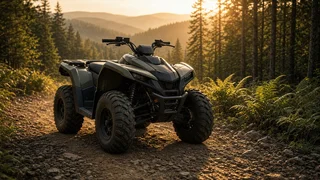
The right adult four-wheeler is a full-size model the manufacturer labels for adult riders, matched to how you will actually use it. For most riders that means one of two types: a utility ATV for work, hauling and trail riding, or a sport ATV for faster, more aggressive riding. Three things change the answer most: whether you need four-wheel drive, whether you plan to carry a passenger, and whether the machine fits your body and experience level. If you want to carry a passenger regularly, look at two-up ATVs built for it, or at a side-by-side (UTV).
No model-specific prices, specifications or test results were available for this guide. Use it as a checklist, and confirm every figure against the manufacturer's published specifications for the exact model year, trim and engine you are considering.
Start With How You Will Ride
Adult ATVs fall into a few broad categories. Choosing the category first narrows the field more than comparing individual models does.
Type | Typical use | What to prioritize; Utility ATV | Farm and property work, hunting, hauling, general trail riding | Four-wheel drive, cargo rack and towing capacity, low-speed control, durability; Sport ATV | Dunes, tracks, fast trail riding | Light weight, responsive handling, suspension travel, usually two-wheel drive with a manual or clutch-type transmission; Two-up (tandem) ATV | Riding with one passenger | A raised passenger seat with its own grab handles and footrests, designed and labeled for a passenger by the manufacturer; Side-by-side (UTV) | Passengers, larger loads, longer outings | Not an ATV: it has a steering wheel, bench or bucket seats and seat belts, and is a separate purchase decision
Confirm It Is Built for Adults
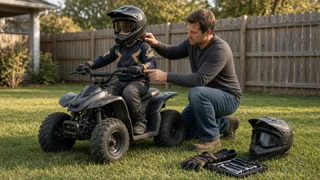
ATVs sold in the US carry a manufacturer warning label that states the minimum rider age the model is designed for. Youth models are sized and speed-limited for younger riders and are not a budget substitute for an adult machine. Check the label on the vehicle or in the owner's manual rather than relying on a seller's description. This matters even more on used machines, where labels may be missing or the model may have been modified.
Specifications Worth Comparing
Once you have chosen a category, compare these items between candidate models. Specifications often differ between model years, trims and engine options of the same nameplate, so compare like for like.
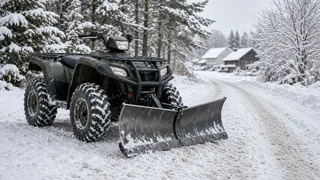
Engine size and type: Larger displacement generally means more pulling power and weight. More power is not automatically better for a newer rider, so match it to your experience and terrain. Drivetrain: Two-wheel drive is lighter and simpler. Selectable four-wheel drive helps in mud, snow, steep ground and when towing. Some models add a front differential lock, which forces both front wheels to turn together for extra traction. Transmission: Many utility models use a CVT (continuously variable transmission), which shifts automatically and is easy to learn. Sport models often use a manual gearbox with a clutch. Check whether there is a low range for slow, controlled work. Engine braking: This feature slows the ATV when you lift off the throttle, which helps on descents and is worth confirming on utility models. Suspension: Independent rear suspension usually rides more smoothly over rough ground. A solid rear axle is simpler and common on sport models. Power steering: Electronic power steering reduces effort and kickback on heavier utility machines. It is often limited to certain trims. Rack and towing ratings: If you will haul or tow, check the manufacturer's rated front rack, rear rack and towing capacities for the exact trim. Do not exceed them. Fuel delivery and starting: Fuel injection and electric start make cold starts and altitude changes easier than carbureted or pull-start-only setups.
Check Rider Fit in Person
Sit on the machine before buying. You should be able to reach the handlebars, throttle and brakes comfortably, place your feet firmly on the footrests, and shift your weight forward, back and side to side. ATVs rely on active rider movement for stability, so a machine that feels cramped or too large for you is harder to control. Consider how seat height and overall weight will feel when loading the ATV onto a trailer or recovering it on uneven ground.
Passengers: A Common Mistake
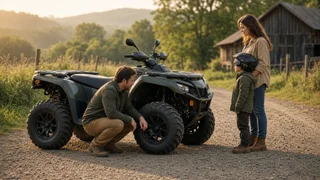
Most single-rider ATVs are not designed to carry a passenger, even if the seat looks long enough. A passenger shifts the center of gravity and restricts the driver's movement, which increases the risk of losing control. If riding two-up matters to you, buy a model the manufacturer designs and labels for a passenger, or consider a side-by-side.
New Versus Used
A new ATV comes with a warranty and a clear model history, and the dealer usually handles pre-delivery setup. A used ATV can cost less but needs careful inspection. Before buying used, check:
The VIN on the frame matches the title or bill of sale, and the seller can prove ownership. The VIN has not been reported stolen, through a check with local law enforcement or a VIN lookup service. The engine starts cold and idles smoothly, without heavy smoke or unusual noise. Four-wheel drive and any differential lock engage properly during a test ride. Brakes, throttle return and steering work smoothly with no excessive play. The CV boots, axles, ball joints, wheel bearings and suspension bushings are not torn or worn. The frame shows no cracks, welds or bends that suggest a crash or overloading. The air filter and airbox are clean and dry, with no signs of water or mud entering the intake. You know about any modifications, such as engine, exhaust or suspension changes, and they are legal where you will ride.
Paperwork and Rules
Title, registration, trail permits and road-use rules for ATVs vary by state and sometimes by county or trail system. Some areas restrict off-highway vehicle use on public roads, require safety training for certain riders, or require a spark arrestor for public land. Confirm the requirements with your state's motor vehicle or natural resources agency before you buy, especially if you are buying out of state.
Budget for More Than the Machine
Plan for an approved helmet, eye protection, gloves, over-the-ankle boots, long sleeves and long pants. Add a hands-on rider training course if you are new to ATVs. Also plan for a way to transport the ATV, such as a trailer or truck with ramps, plus insurance and routine maintenance. No cost figures were available for this guide, so get quotes for your area.
A Practical Next Step
Write down your main use, your terrain, and whether you need four-wheel drive, towing or passenger capacity. Shortlist a few adult-labeled models in the matching category. Then compare their published specifications for the specific model year and trim, and sit on each one before you decide.