Chevrolet Traverse Transmission Identification: How to Find Out Which Unit Your Vehicle Has
The Short Answer
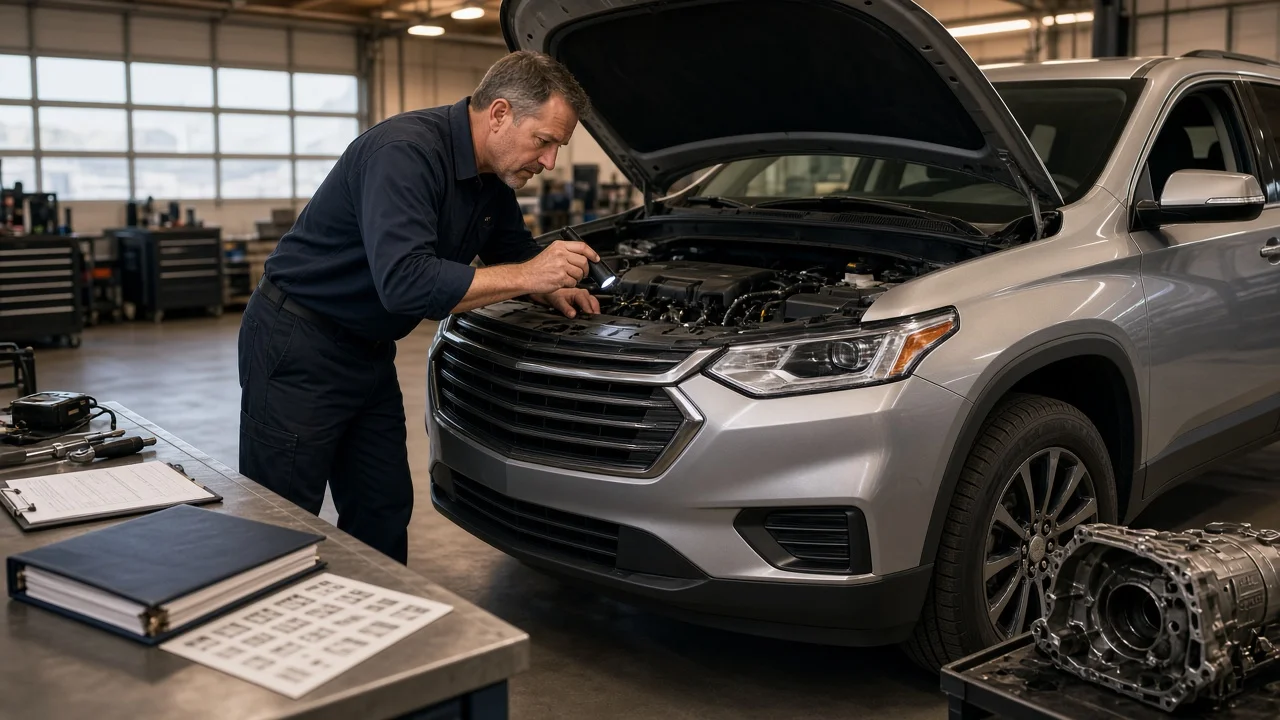
The Chevrolet Traverse has been sold with automatic transmissions. The exact unit fitted to a given vehicle depends on its model year, generation and powertrain, so no single transmission answer covers every Traverse. The reliable way to confirm which transmission a specific vehicle has is to check its own records rather than rely on a general model-wide answer. Those records are the factory option code label, a VIN-based lookup through a dealer or GM parts system, and the identification markings on the transmission itself.
This guide covers how to perform that identification. It does not list confirmed transmission model names or codes for each Traverse model year, because no verified specification data was available for this article. Treat any year-by-year transmission list from other sources as something to confirm against the vehicle's own documentation.
Why the Model Year and Powertrain Matter
Manufacturers often change transmissions between generations, and sometimes within a generation when an engine option is added or dropped. Drive configuration can also affect related components, so a front-wheel-drive Traverse and an all-wheel-drive Traverse may not share identical parts. For parts ordering, fluid selection or repair research, identify the transmission for the specific vehicle. Avoid assuming that two Traverses from different years use the same unit.
How to Identify the Transmission
1) Check the Service Parts Identification Label (RPO Codes)
GM vehicles have traditionally carried a Service Parts Identification label. This sticker lists Regular Production Option (RPO) codes, which are short alphanumeric codes describing how the vehicle was built, including the engine and transmission. On many GM vehicles the label has been found in the glove box, but placement differs between models and years, and some newer vehicles may not carry a physical label. If you cannot find it, check the owner's manual for its location in your configuration.
In GM's RPO system, transmission codes commonly begin with the letter M. On its own, an RPO code is just a build code. To learn what transmission it refers to, match it against GM service information, a dealer parts department or a reputable RPO reference for the correct model year.
2) Use the VIN for a Build Lookup
The 17-character Vehicle Identification Number (VIN) is visible through the windshield at the base of the driver's side. It also appears on the driver's door jamb label and on registration and title documents. Under the standardized VIN format, the 10th character indicates the model year, which is the first thing to pin down.
For GM vehicles, the VIN typically encodes the engine but not the transmission directly. To get the transmission, give the full VIN to a Chevrolet dealer's parts or service department. They can pull the original build record, including the transmission option code. This route is especially useful when the RPO label is missing or unreadable.
3) Inspect the Markings on the Transmission Case
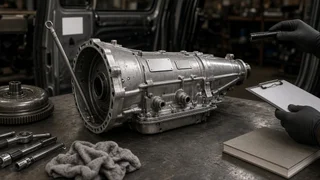
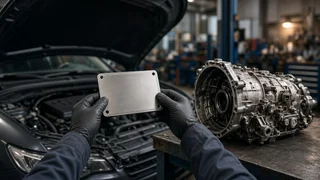
Transmissions usually carry an identification tag, label or stamped marking on the case. These markings can include a model designation, a build or serial code and a manufacturing date code. Where the marking sits depends on the transmission and the vehicle layout. On a transverse-engine vehicle such as the Traverse, it may be hard to see without raising the vehicle or removing covers. Check the service manual for the applicable transmission before searching. Do not work under a vehicle that is supported only by a jack.
Case markings are the most direct evidence of what is physically installed. That matters if the original transmission may have been replaced. In that case, the build record shows what the factory fitted, and the case tag shows what is in the vehicle now.
Comparing the Identification Methods
Method | Where to look | What it tells you | Main limitation; RPO code label | Service Parts Identification sticker, often in the glove box on GM vehicles (location varies) | Factory-installed transmission option code | May be missing, worn or absent on some newer vehicles; code needs decoding; Dealer VIN lookup | Full VIN provided to a Chevrolet parts or service department | Original build configuration, including transmission | Reflects factory build, not later replacements; Transmission case marking | Tag or stamping on the transmission housing (location varies by unit) | The unit actually installed, often with model and date information | Can be hard to reach or read; rebuilt units may have altered or missing tags; Owner's manual and service records | Glove box documents, maintenance and repair invoices | Context on configuration and any transmission replacement | Manuals often cover several configurations; records may be incomplete
Common Points of Confusion
Engine code versus transmission code: the VIN character that identifies the engine does not identify the transmission. Do not infer the transmission from the engine code alone. Transmission versus all-wheel-drive components: on all-wheel-drive versions, the unit that sends power to the rear axle is a separate assembly. Its markings should not be mistaken for the transmission's. Factory build versus current hardware: a dealer build record shows the original transmission. If the vehicle has had a replacement or remanufactured unit, confirm what is installed using the case markings or repair invoices. Model-year overlap: a vehicle's model year can differ from the date it was built. Use the model year from the VIN when matching codes and parts, not the build date or the year of sale.
Information Gaps
This article does not state which transmission model, gear count or RPO code applies to each Traverse generation or model year. Verified specification data for those details was not available. It also does not confirm the exact location of the identification label or case marking for specific years. For those details, rely on the vehicle's own documentation: the owner's manual, GM service information or a Chevrolet dealer working from the VIN.
Recommended Next Step
Start by noting the full VIN and checking for the Service Parts Identification label. If you find a transmission RPO code, have it confirmed for your model year by a dealer parts department. If you need certainty about what is physically installed, for example before buying parts or a used vehicle with an unclear repair history, also check the markings on the transmission case or ask a technician to do so.