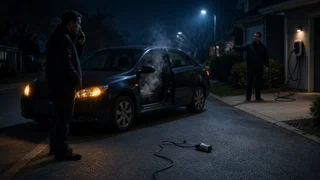
Car With Smoke: What to Do When Your Vehicle Starts Smoking
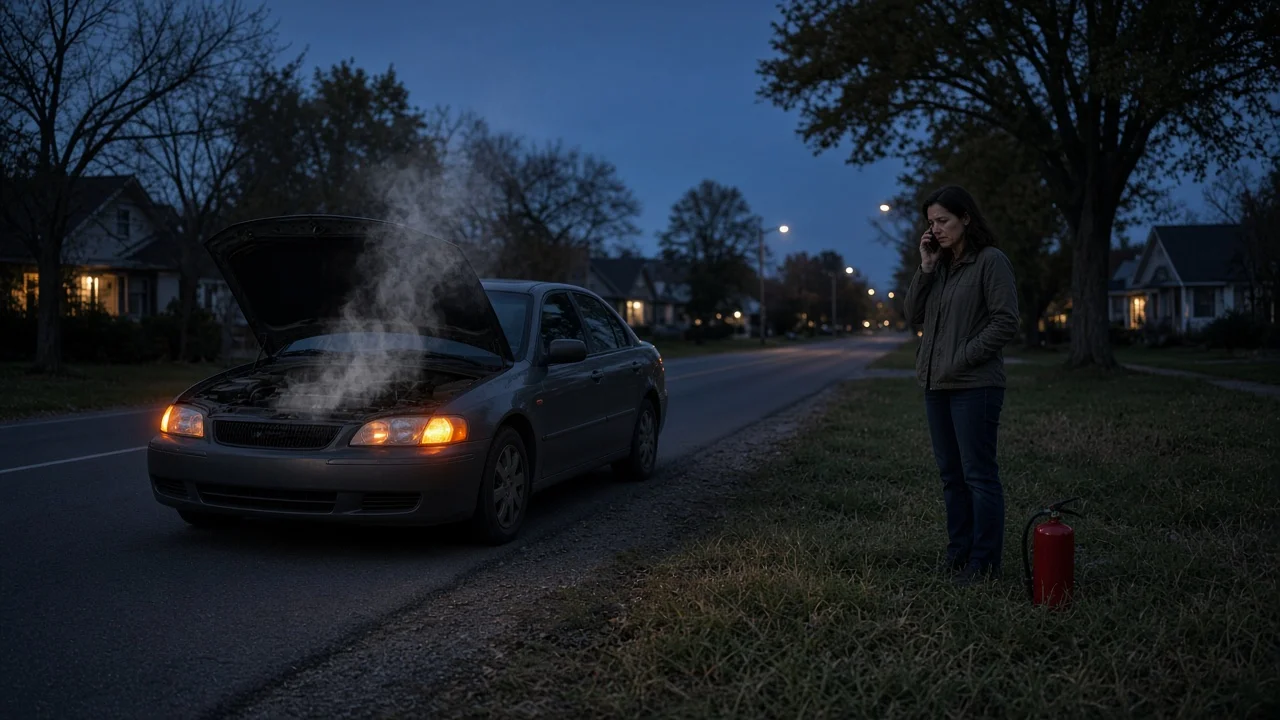
The Short Answer
If smoke is coming from under the hood, from beneath the vehicle or inside the cabin, treat it as a possible fire. Signal, pull over somewhere safe, switch off the engine, get every occupant out, move well away from the vehicle and any traffic, and call 911. Smoke does not always mean fire, but you usually cannot tell the difference safely from behind the wheel. Getting people clear comes first. The car and its contents come second.
This guide covers how drivers in the US should respond to a smoking vehicle on the road. It does not diagnose specific models or faults. No model-specific data, test findings or statistics were available for this article. The guidance below reflects general, widely published fire-safety principles rather than measurements.
Immediate Steps When You See Smoke
Signal and move to the shoulder or another safe spot away from traffic, buildings, dry grass and fuel pumps where possible. Put the transmission in park, set the parking brake and turn off the ignition. This stops fuel delivery and engine heat on conventional vehicles. Get everyone out, including children and pets. Help anyone who needs it, and exit on the side away from traffic if you can. Leave belongings behind. Do not go back into the vehicle for phones, bags or documents. Move well away from the car and stay clear of the roadway. Keep upwind if you can, because vehicle smoke can be toxic. Call 911 and give your location, a description of the vehicle and whether anyone is hurt or still inside. Warn approaching drivers only if you can do so without putting yourself in traffic.
What Not to Do
Do not open the hood if you suspect a fire. Lifting it can let in a rush of air that feeds the flames, and it puts your face and hands close to the source. Do not keep driving to reach a gas station, an exit or your home. A small problem can grow quickly while the vehicle is moving. Do not stand next to the car to watch or film it. Tires, fluids and pressurized parts can fail suddenly in a fire. Do not try to fight anything beyond a very small, early-stage fire.
Should You Use a Fire Extinguisher?
Using a fire extinguisher is only reasonable if three things are true: everyone is already out, the fire is small, and you have a clear escape path behind you. Aim at the base of the flames from a distance. If the fire is under the hood, do not open the hood. Aim through gaps such as the grille or wheel wells instead. If the fire does not go out quickly, or it grows, stop and move away. A burning vehicle is not worth an injury. Professional firefighters are equipped for this situation.
Smoke, Steam or Fire: Telling the Difference
Not every cloud from a car is smoke from a fire. The signs below are general indicators only. Causes vary by vehicle, so a qualified technician should confirm any diagnosis. If you are unsure, follow the safety steps above.
What you notice | Commonly associated with | Suggested response; White vapor from under the hood, often with a sweet smell | Coolant leaking onto hot parts or an overheating engine | Pull over, turn off the engine, let it cool, and do not open a hot radiator or coolant cap; Blue-gray smoke from the exhaust | Engine oil being burned | Not an emergency by itself, but have it inspected soon; Black smoke from the exhaust | Engine running rich (too much fuel) | Have it inspected; watch for other warning signs; Dark smoke from under the hood, a burning plastic or rubber smell, or visible flames | Possible fire, electrical fault or fluid ignition | Stop, get everyone out, move away and call 911; Smoke or a burning smell inside the cabin | Possible electrical or wiring fault | Stop and get out; do not keep driving
Coolant vapor can also cause serious burns. The cooling system is pressurized when hot, so even if you are confident it is steam and not fire, keep the cap closed and stay back until the engine has cooled.
Extra Precautions for Hybrids and Electric Vehicles
The steps for getting out and getting away are the same for every powertrain. Vehicles with high-voltage lithium-ion batteries, such as hybrids, plug-in hybrids and battery-electric models, need a few additional precautions. A battery fire can produce toxic gases, can be hard to put out, and can reignite after it seems to be over. Do not try to fight a battery fire yourself. When you call 911, tell the dispatcher the vehicle is a hybrid or electric car so responders can prepare. Follow any emergency guidance in your owner's manual, because procedures differ by manufacturer, model and model year.
After the Incident
Once the scene is safe, do not restart or drive a vehicle that has smoked or burned, even if it looks undamaged. Have it towed and inspected by a qualified technician. Contact your insurer to report the incident, and keep any report number that emergency responders give you. If you saw a warning light, smell or other symptom before the smoke appeared, write it down. That information can help with the diagnosis.