Car charger fire: immediate safety steps
The short answer
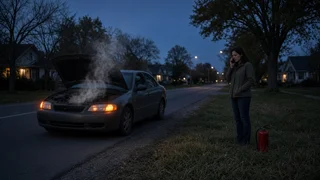
If a charger in or connected to your car is smoking, sparking or burning, put people first. Stop the vehicle safely, get everyone out, move well away and upwind, and call 911. Try to fight the fire only if it is very small, you have a suitable extinguisher, and you have a clear way out. Never stay near a fire that is spreading, coming from under the dashboard or hood, or involving a vehicle's high-voltage battery.
"Car charger" can mean two different things, and the right response depends on which one you have:
Accessory charger: a phone or device charger plugged into the 12-volt power outlet (the former cigarette-lighter socket) or a USB port. These run on the car's low-voltage system. EV charging equipment: the cable, connector or charging station used to charge a plug-in hybrid or battery-electric vehicle. These carry much higher voltages, and a fire may involve the vehicle's traction battery, the large high-voltage battery that drives the car.
The steps below cover both cases. They are general safety principles, not model-specific instructions. Emergency procedures, outlet locations and charger shut-off controls vary by vehicle, model year and charging equipment. Check your owner's manual and the charger manufacturer's guidance for your setup.
Before anything happens: what helps
Know where your vehicle's hazard lights, ignition or power button, and door releases are, including any manual door release on vehicles with electronic door handles. If you carry a fire extinguisher, read its label so you know which fire classes it is rated for and how to use it. Water-based or unsuitable extinguishers can be ineffective or unsafe on electrical fires. If you charge an EV at home, find out where the charger's circuit breaker or emergency shut-off is before you need it. Use chargers and cables certified by a recognized testing laboratory, and replace any that are cracked, scorched, frayed or loose in the socket.
If an accessory charger smokes or burns while driving
1) Turn on your hazard lights and pull over as soon as it is safe, away from traffic, buildings, dry grass and fuel pumps. 2) Turn off the engine or switch off the vehicle. In many vehicles this cuts power to the outlet, though some outlets stay live with the ignition off. 3) If it is only a smoking or melting charger with no open flame, and you can reach it without leaning over flames, unplug it by the body or cable. Only do this if it is not too hot to touch, and drop it onto a non-flammable surface outside the car. 4) If there are flames, or smoke is coming from the dashboard, the outlet or behind panels, do not reach in. Get everyone out and leave the doors closed to limit airflow to the fire. 5) Move well away from the vehicle, upwind if possible, and keep others back. 6) Call 911 and give your location and a description of what is burning. 7) Use an extinguisher only on a small, contained fire, only if it is rated for that type of fire, and only with your back to a clear escape route. If the fire does not go out quickly, back away and wait for responders.
Do not open the hood if you suspect the fire has spread into the wiring. Fresh air can make it grow, and wiring fires can move behind panels where you cannot see them.
If EV charging equipment or the vehicle catches fire while charging
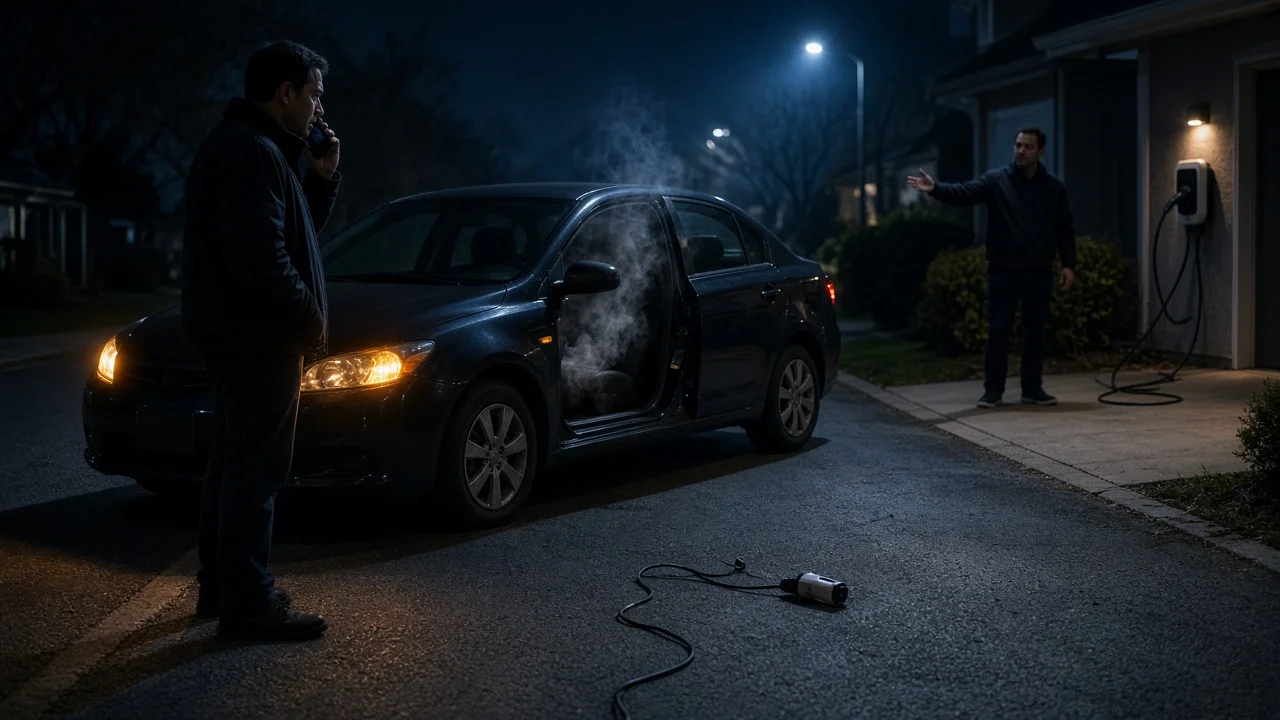
1) Do not touch the vehicle, the connector or the cable if there is smoke, flame, sparking or melting. 2) If you can do so without approaching the fire, use the charging station's emergency stop or switch off the circuit breaker that feeds a home charger. 3) Get everyone, including pets, away from the vehicle. If it is in a garage, leave the building and close the door behind you if that is safe. 4) Call 911. Tell the dispatcher it is an electric or plug-in hybrid vehicle and that it was charging, because battery fires need a different firefighting approach. 5) Do not try to fight a fire involving the traction battery. Battery fires can burn intensely, release toxic smoke and reignite after appearing to be out. They are a job for the fire department. 6) Stay clear of the smoke, and keep a large distance until responders say the area is safe.
If the fault seems limited to the charging cable or wall unit, with no involvement of the vehicle, the same rules apply. Cut power remotely if you can, do not handle the equipment, and let emergency services decide when it is safe.
Completion check: when the immediate danger is over
Everyone is out of the vehicle, accounted for and away from smoke. Emergency services have been called, or the fire was small, fully out, and the charger has been unplugged and removed. There is no remaining smoke, hot smell, crackling or heat from the dashboard, outlet, under the hood or around the battery. For EVs, responders have confirmed the vehicle is safe to approach, tow or store.
After the fire: inspection and next steps
Do not use the affected power outlet, USB port or charging equipment again until it has been inspected. Heat damage to wiring is not always visible. Have the vehicle checked by a qualified technician. For EVs and plug-in hybrids, use a technician or dealer trained on high-voltage systems. Do not open or repair high-voltage components yourself. A vehicle whose battery was involved in a fire, or was exposed to heat, should be stored outdoors and away from buildings and other vehicles until it has been assessed, because of the risk of reignition. Keep the failed charger, cable and any packaging if it is safe to do so. They may help with an insurance claim, a warranty claim or a product-safety report. Check whether the charger or your vehicle is subject to a recall, and report the incident to the manufacturer and your insurer.
What this guide does not cover
No model-specific evidence was available for this article. It does not give extinguisher ratings for particular vehicles, safe-distance figures, charger shut-off locations, or recall information for specific chargers or vehicles. For those details, rely on your owner's manual, the charging equipment's documentation, your local fire department and the manufacturer.