Car Theft Prevention: Practical Ways to Reduce Your Risk
Car theft prevention is less about one clever gadget and more about making your vehicle slow, noisy and risky to take. This guide covers practical car theft prevention tips, from daily habits and keyless entry precautions to products, technology and safe do-it-yourself steps, plus extra advice for classic car owners. The goal is realistic vehicle security that fits how and where you actually park.
How Modern Car Theft Happens and Why Layered Protection Works Best
Vehicles disappear in a handful of broad ways. Many are simply opportunistic thefts: an unlocked door, a running engine, or a key left inside. Cars with keyless entry can be targeted by extending the fob's signal, while others are attacked electronically through the diagnostic port or related systems. Some are lifted or towed away without ever being started. Because these routes differ so much, the most effective car theft prevention method is not one device or habit but a combination.
Sound car theft prevention strategies stack layers. Deter by making protection visible, delay with physical barriers, disable by preventing the engine from starting, and detect or recover through alerts and tracking. Each layer adds time, noise and uncertainty, which is what pushes a thief toward an easier target. Match the layers to your own exposure: street or driveway parking versus a garage, whether the car uses keyless entry, and how sought after the vehicle or its parts might be.
Everyday Habits That Make Your Car a Harder Target
Good habits cost nothing and block the easiest thefts. Lock the car every time, close the windows and sunroof, and never leave the engine running unattended. Keys and spare fobs should never stay in the vehicle. After pressing the lock button, confirm it worked by watching for the lights to flash or the mirrors to fold, or by listening for the locking sound. Keep bags, electronics, chargers and paperwork showing personal details out of sight, or out of the car entirely.
Where you park matters as much as how. Choose well-lit, busy or monitored spots, and use a garage whenever one is available. Turning the wheels toward the curb and engaging the steering lock, where appropriate, makes a car harder to tow or roll away. At home, store car and house keys well away from doors and windows, where they cannot be seen or reached from outside. Know exactly how many keys exist for your vehicle, and follow up promptly if one goes missing.
Protecting Keyless Entry Cars From Relay Attacks
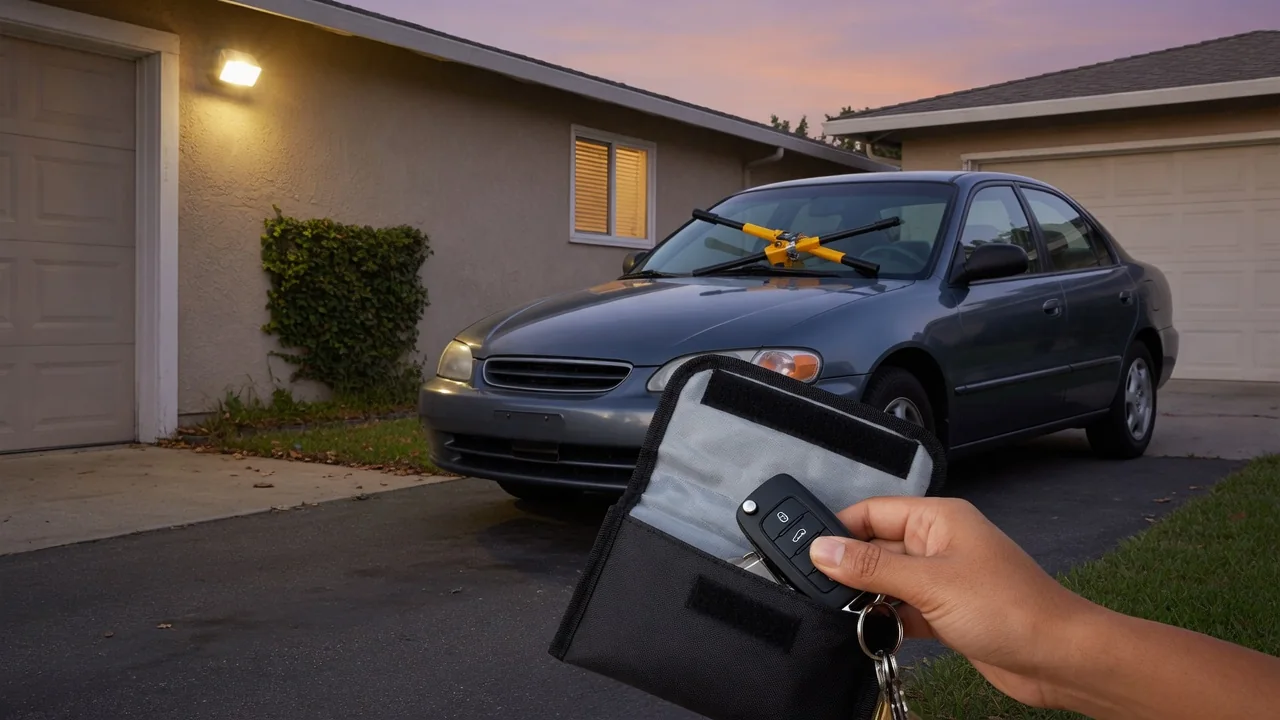
In a relay attack, thieves stretch the reach of a key fob's signal so the car believes the key is beside it, even though the fob is sitting inside the house. Relay car theft prevention begins with blocking that signal: keep fobs in a signal-blocking pouch or metal-lined box, often sold as a Faraday pouch, and store them away from exterior walls and doors. Test the pouch by standing next to the car with the fob sealed inside and trying the door handle.
Some fobs enter a sleep mode when they stop moving, and some vehicles let owners switch keyless entry off, but neither feature is universal. Check the owner's manual or ask a dealer what your particular car supports rather than assuming. The spare fob needs the same treatment as the main one. Since signal defenses only protect the entry step, pair them with a physical lock or an added immobilizer that keeps the car from being driven away if the doors are opened.
Anti-Theft Products and Tools Worth Considering
Car theft prevention products fall into a few categories. Steering wheel locks, pedal locks and gear lever locks restrict the controls. Wheel clamps stop the car rolling, while locking wheel nuts protect the wheels themselves. An OBD port lock covers the diagnostic socket, and shields or identifying markings address catalytic converter theft. Most of these tools are deliberately conspicuous, which is part of their value against opportunistic thieves. None makes theft impossible; a physical lock buys time and raises the chance of being noticed.
When comparing options, look for sturdy construction, a proper fit for your specific vehicle, and a design you will genuinely use every day, because a steering wheel lock left in the trunk protects nothing. Buying from reputable sellers reduces the risk of a flimsy imitation. An aftermarket car alarm adds noise and attention, and warning decals or alarm stickers advertise that the car is protected. Whatever anti-theft device you choose, consistency matters more than sophistication; thieves notice the one night it is skipped.
Anti-Theft Technology: Immobilizers, Ghost-Style Systems and GPS Trackers
A factory engine immobilizer generally prevents the engine from starting unless the car recognizes its correct key. That is a strong baseline, yet determined thieves may target the electronics themselves, which is why extra layers are worth considering. Searches for ghost car theft prevention usually refer to aftermarket digital immobilizers that require a PIN-style sequence of existing buttons before the car will start. Confirm compatibility, features and any warranty implications with an authorized installer for your vehicle.
Other car theft prevention technology focuses on detection and recovery. A GPS tracker or connected-car app will not stop a theft, but it can alert you and help locate the vehicle; ask about movement alerts, a backup battery and whether a subscription is required. A dash cam with parking mode or remote monitoring can record activity around the car. Anything wired into the vehicle's electrics should be professionally installed. It is also worth asking your insurer whether specific approved devices affect your policy, as discounts are never guaranteed.
DIY Car Theft Prevention You Can Do Safely Yourself
Plenty of DIY car theft prevention needs no technical skill. Fitting a steering or pedal lock each time you park, keeping fobs in a signal-blocking pouch, installing locking wheel nuts according to the product instructions and applying warning stickers are all low-risk jobs. VIN etching on the windows or marking of major parts makes a vehicle harder to disguise and resell. Record serial numbers and take clear photos of the car and its accessories, storing copies away from the vehicle, to support identification and recovery.
Your property is part of the security picture too. Motion-sensor lighting or a camera overlooking the driveway removes the cover of darkness, and garage doors and gates only help when they are kept locked. Draw the line at electrical work, however. Hidden kill switches, alarm wiring and immobilizer fitting interact with the vehicle's electrical and safety systems, and mistakes can cause faults, warranty disputes or genuine safety hazards. Those jobs belong with qualified installers who know the specific vehicle.
Extra Steps for Protecting a Classic Car From Theft
Classic car theft prevention starts from a weaker baseline, because older vehicles may have no immobilizer and only simple locks and ignition systems. Physical barriers and secure classic car storage therefore carry most of the load. A locked garage is the foundation, strengthened by a ground anchor or wheel clamp and a fitted cover that hides what is underneath. Limit how publicly you share where the car is kept. Discreet trackers and alarms are best fitted by specialists familiar with older vehicles, so originality and aging wiring are respected.
Documentation matters more for a classic, since unique details help prove identity if the car is recovered. Keep photos, the VIN and chassis numbers, notes on distinguishing features and receipts, and ask a specialist insurer what security they expect for storage and transport. At shows and events, never leave keys in the car, keep it in view or with someone you trust, and hold back on posting your real-time location online until you are home.