Keyless Car Theft Prevention: Practical Ways to Protect Your Vehicle
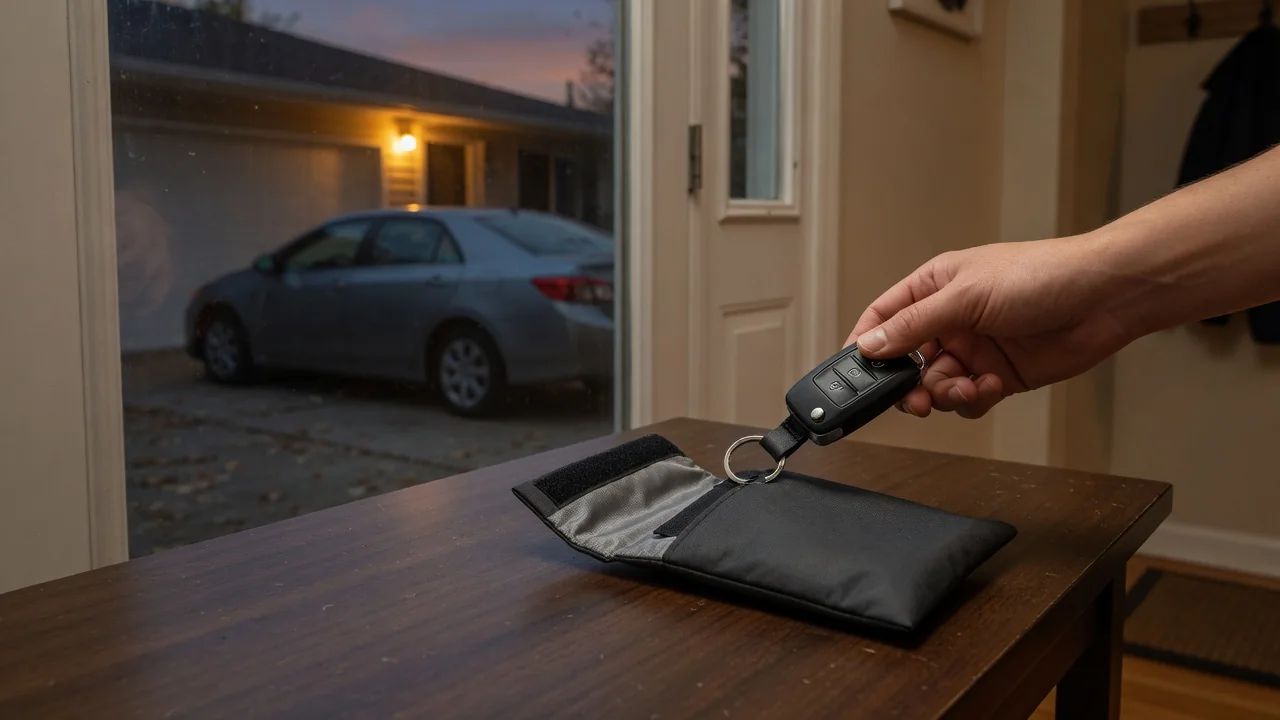
Keyless car theft prevention starts with understanding that the convenience of walking up to a vehicle and driving away without touching a key also gives thieves something to exploit. The practical answer is not one gadget but a set of habits, settings and deterrents working together. This guide covers how keyless entry car theft prevention works at home, in the vehicle's own menus and on the driveway.
How Keyless Entry Theft Typically Happens
Passive keyless entry lets a car unlock when it senses the fob nearby, and push-button start lets the engine run as long as the key seems to be inside the cabin. The weakness is that the car judges presence by a radio exchange, not by where the fob physically sits. In a relay attack, thieves extend that exchange so the vehicle reacts as if the key were beside the door, even though it is resting inside the house. The engine immobilizer is satisfied because the response it receives is genuine.
Relaying is not the only electronic route. Some thefts involve tampering with vehicle wiring or misusing diagnostic access to the car's electronics, and the methods shift as manufacturers revise their designs and thieves adapt. That makes blanket statements unreliable. How exposed a particular car is depends on its keyless system and model year, where it spends the night, and what is happening locally. An owner who parks on an open driveway near the street faces a different picture than one using a locked garage, so prevention should be matched to circumstances.
Storing and Shielding Your Key Fob at Home
A signal-blocking pouch or Faraday box surrounds the fob with conductive material that stops radio signals from getting in or out, so the car cannot hear the key and nothing outside can reach it. Quality varies widely, and durability matters too: seams split, linings crease and closures loosen after months of daily opening. A simple check is to seal the fob in the pouch, stand right beside the locked car and try the door handle. If the door unlocks or the car detects the key, the shielding is not working.
Location inside the home helps too. Keys left on a hallway table, by a window or against a wall facing the driveway sit closer to the car than most people realize, so a spot deeper in the house is the better choice. Spare fobs need the same treatment, because a forgotten second key in a drawer near the front door transmits just as readily. Shielding only protects while the fob is actually inside the pouch, which means the nightly habit matters more than whichever product is bought.
Checking Your Car's Built-In Keyless Security Settings
Many vehicles carry protections that owners never switch on. Depending on the manufacturer, there may be a key fob sleep mode, a motion-sensing fob that stops transmitting after sitting still, or a menu option to turn off passive entry altogether. None of these should be assumed; the owner's manual, the manufacturer's app or a dealer can confirm what applies to the exact model and year. It is also worth asking the dealer whether any software or security updates are outstanding, since manufacturers sometimes revise how keyless systems behave, though no particular update can be taken for granted.
Some vehicles go further with PIN to drive or another form of secondary authentication, which requires a code or confirmation before the car will move even when a valid key signal is present. Availability again depends on the exact vehicle. Every one of these settings costs a little convenience, whether that means pressing a button on the fob or entering digits on the screen. A car parked outside overnight in an exposed spot may justify the extra step, while a garaged car might reasonably keep passive entry active and rely on other layers.
Adding Physical and Layered Theft Deterrents
Old-fashioned hardware still earns its place because electronic attacks do nothing against a bar across the steering wheel. A steering wheel lock or pedal lock is visible from outside, and it adds time, noise and effort that a thief hoping for a quiet departure would rather avoid. An OBD port lock restricts access to the diagnostic connector, and an aftermarket immobilizer adds a separate condition before the engine will start. Both touch the car's electronics, so professional installation is the sensible route to avoid disturbing electrical systems or creating warranty questions.
Where the car sits overnight matters as much as what is fitted to it. A locked garage is the strongest option when available; otherwise a well-lit space, motion-activated lighting and a home security camera covering the driveway all make a vehicle less inviting. The real gain comes from layering. A shielded fob, a visible lock and a well-lit parking spot each cover gaps left by the others, whereas any single device can be defeated or forgotten. Even a thorough setup lowers the odds rather than guaranteeing the car stays put.
Tracking, Alerts and Improving the Odds of Recovery
Prevention can fail, so it pays to prepare for recovery. Where the vehicle supports them, connected car app alerts can notify the owner of unexpected unlocking, an engine start or movement, and some apps show the car's location. An aftermarket GPS tracker offers similar visibility on vehicles without those services. Discreet placement matters, since an obvious unit is easily found and removed. Owners should also weigh how the tracker is powered, whether by its own battery that needs recharging or by the car's electrical system, and whether the service requires a subscription.
Paperwork helps as much as electronics once a car is gone. A record of the VIN, the license plate, recent photos and distinguishing details such as wheels, damage or accessories gives police and the insurer something concrete to work with, and it should be kept somewhere other than the glovebox. It is also worth reading the theft section of the insurance policy before anything happens and asking the insurer whether particular anti-theft measures affect coverage or terms, because requirements and benefits differ between companies and policies.
Warning Signs of Attempted Theft and What to Do Next
Attempted theft often leaves subtle traces. A car found unlocked when it was definitely locked, an alarm that sounded overnight, a dashboard message saying the key was not detected at an odd moment, or fresh damage to trim, panels or visible wiring all deserve attention. If a theft or attempt is happening in front of you, do not confront anyone; move to safety and call local police. A vehicle can be replaced, and people willing to steal one may be willing to do worse when cornered.
After a suspected attempt, report it to the insurer and have a dealer or qualified technician inspect the car rather than pulling apart trim or wiring yourself, which can cause damage and disturb evidence. Symptoms alone prove little. An unexpected unlock might trace to a weak fob battery, a button pressed in a pocket or a genuine fault, and any stored fault codes are clues to interpret, not a verdict. Confirming tampering, or ruling it out, takes professional electronic and security testing specific to that vehicle.