Car Size Classes Explained: How Vehicles Are Grouped by Size in the US

Car size classes are categories that group vehicles by how big they are, but "big" can mean different things depending on who is doing the classifying. In the US, the most formal system for passenger cars comes from the Environmental Protection Agency (EPA), which sorts cars mainly by interior volume rather than exterior length. Automakers, dealers, rental companies and reviewers often use looser marketing labels such as compact, midsize or full-size, and those labels do not always match the official class. Knowing which system a label comes from is the key to comparing vehicles accurately.
The short answer: size class usually means interior space, not footprint
Under the EPA system, a car's class is based on its combined passenger and cargo volume, measured in cubic feet. A car that looks small from the outside can land in a larger class if its cabin and trunk are efficiently packaged, and a long, low car can fall into a smaller class if its interior is tight. This is why two cars with similar exterior dimensions can carry different official labels.
The important qualification is that this volume-based approach applies to passenger cars. SUVs, pickup trucks, minivans and vans are classified separately, largely by vehicle type and weight rating rather than by interior volume.
EPA passenger car classes
The EPA uses the following interior-volume ranges for sedans, hatchbacks and coupes. Interior volume here means passenger volume plus cargo volume.
Class | Combined interior volume; Minicompact | Less than 85 cubic feet; Subcompact | 85 to 99 cubic feet; Compact | 100 to 109 cubic feet; Midsize | 110 to 119 cubic feet; Large | 120 cubic feet or more
Two-seat cars are placed in their own two-seater class regardless of volume. Station wagons also have a separate set of small, midsize and large wagon categories with their own volume thresholds.
Why official classes and marketing labels often disagree
Manufacturers position models against competitors, so a car marketed as a midsize family sedan is named for the segment it competes in, not for its EPA result. Some sedans sold as midsize models have measured into the EPA large class because of generous rear-seat and trunk space, while some cars marketed as compacts have crept into the midsize range as successive generations grew.
Generational growth: many nameplates have become larger with each redesign, so a model's class can change between generations. Body style: because cargo space is measured differently for hatchbacks and sedans, the same model can be classified differently depending on body style. Trim and equipment: features such as a sunroof can reduce measured headroom and interior volume, which can matter for cars near a class boundary. Market differences: a model sold in several regions may be described with different size terms outside the US.
Because of these factors, any claim that a particular model is compact or midsize should be read as applying to a specific model year, generation and body style.
How compact sedans, hatchbacks and coupes fit in
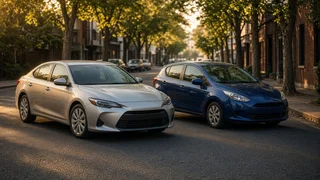
Body style and size class are separate ideas. Sedan, hatchback and coupe describe the shape of the car, while subcompact, compact and midsize describe its interior volume. A compact car can be a sedan, a hatchback or occasionally a coupe.
Compact sedans: a separate trunk and four doors; they commonly fall in the compact class and are a mainstream choice for commuting and small households. Hatchbacks: a rear liftgate opens into a cargo area connected to the cabin, which often gives more usable cargo flexibility than a sedan of similar length. Coupes: typically two doors and a sloping roofline that trades rear-seat headroom and access for style, so coupes often land in smaller classes than their sedan counterparts or in the two-seater or minicompact categories.
How SUVs, trucks and vans are classified
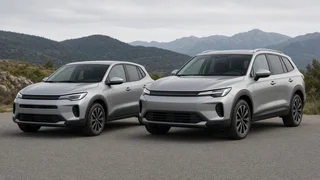
The EPA does not use interior volume for light trucks. Instead it groups them by type, such as small and standard SUVs, small and standard pickup trucks, minivans and vans, with weight rating and drive configuration playing a role. Everyday terms like subcompact SUV, compact crossover or three-row SUV are industry and marketing labels rather than official EPA classes, so they vary more from source to source.
Other sizing systems you may encounter
European segments: an informal lettered scheme, from A for city cars through B for small cars, C for medium or compact cars, D for large family cars, E for executive cars and F for luxury cars. It is based on positioning and rough size rather than fixed measurements. Rental car categories: rental companies use their own groupings, such as economy, compact, intermediate, standard and full-size, which describe a range of interchangeable vehicles rather than an exact size. Safety testing groups: crash-test organizations may compare vehicles within size and weight groups, because results are most meaningful when similar-sized vehicles are compared with each other.
What to compare instead of the label
A class name is a useful starting point, but it compresses a lot of information into one word. When choosing between cars, the underlying measurements usually matter more than the category.
Passenger volume, plus front and rear headroom and legroom, if you regularly carry adults in the back seat. Cargo volume, and for hatchbacks the space with the rear seats folded, if you haul luggage, gear or strollers. Exterior length, width and turning circle, if you park on the street or use a tight garage. Curb weight and powertrain, which affect efficiency and driving feel more directly than size class alone. The model year and body style of any figures you compare, since specifications can change between generations and variants.
Bottom line
In the US, official car size classes are defined by interior volume, running from minicompact to large, with separate categories for two-seaters, wagons and light trucks. Marketing terms like compact or midsize describe the competitive segment and may not match the official class. For a sound comparison, check which system a label comes from and look at the actual interior and exterior measurements for the specific model year and body style you are considering.