Car audio amplifier classes
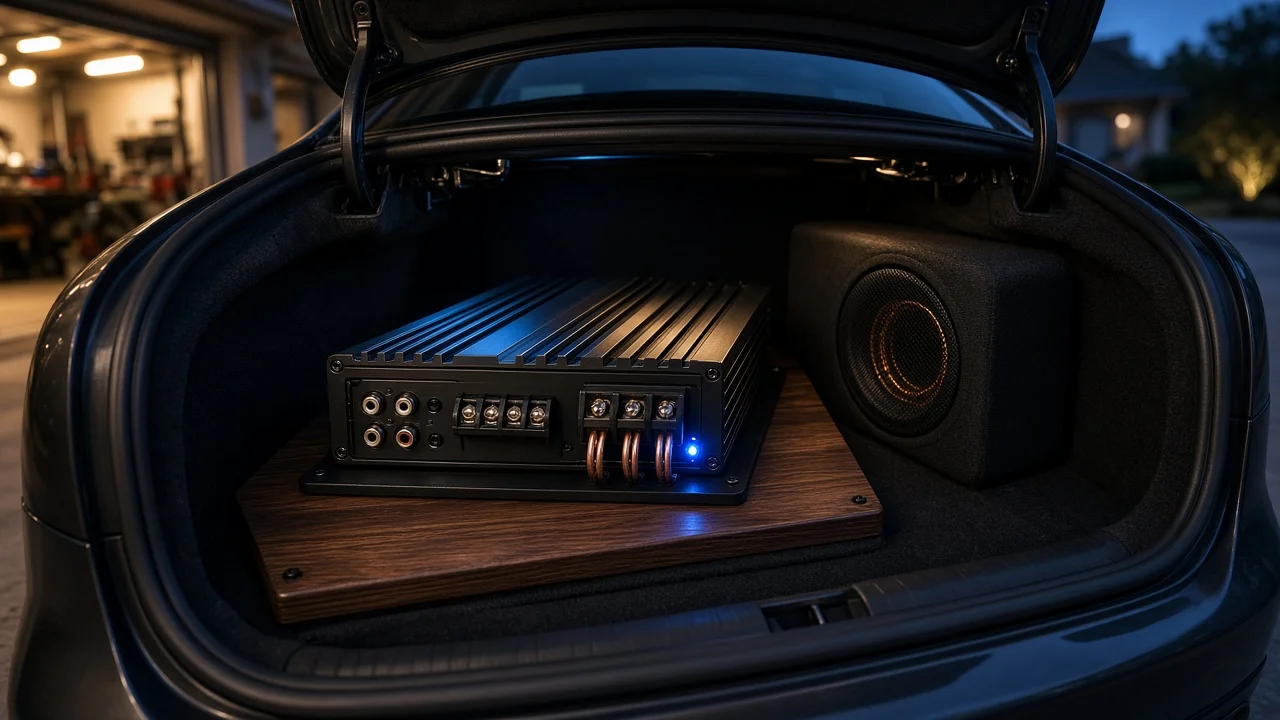
Choosing a car audio amplifier involves more than matching wattage to speakers. The amplifier class describes how the output stage manages current, which directly affects heat, efficiency, and sound character. Readers comparing car audio amplifier classes explained quickly encounter terms like Class A, Class AB, and Class D that describe different engineering trade-offs. A head unit sends an audio source signal, and the amplifier increases that low-level voltage enough to move speaker cones. Understanding these class differences helps a buyer judge why one design runs cooler, draws less current, or suits a particular speaker wiring layout before purchasing.
Essential answer
Car audio amplifier classes are categories that define how the amplifier’s output transistors conduct during each cycle of the audio signal. The main distinction is between analog designs such as Class A, Class B, and Class AB, and switch-mode designs such as Class D. That classification shapes the relationship between usable power, heat production, and current demand from the vehicle’s electrical system. The best class amplifier for car audio therefore depends on the listener’s priorities, because no single class is automatically superior for every installation.
A Class A output stage remains fully on and reproduces a linear signal with minimal crossover distortion, but it wastes significant energy as heat and is uncommon in modern vehicle amplifiers. Class AB reduces that waste by alternating conduction between two transistor sets, offering a balance of sound quality and efficiency that many listeners prefer for component speakers. Class D switches the output devices rapidly and filters the result, producing high efficiency and compact chassis sizes for subwoofer duty, although modern designs can also serve full-range speaker wiring acceptably.