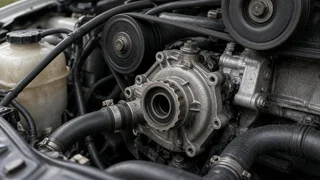
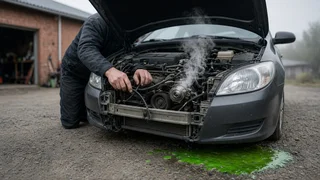
Car Overheating After Water Pump Replacement
A cooling system that was stable before a water pump replacement and overheats immediately afterward usually points to an installation issue rather than a sudden unrelated failure. The most common causes are trapped air pockets, a thermostat that is not opening, insufficient coolant, or a leak in the cooling circuit. Because the repair disturbs seals, hoses, and the coolant specification, the new symptom should be traced through the components touched during the job before assuming the replacement pump itself is defective.
Direct answer
After a water pump replacement, overheating is frequently caused by air trapped inside the cooling circuit. When coolant is refilled, pockets can remain in the engine block, heater core, or hoses. These voids prevent liquid from contacting temperature sensors and moving heat to the radiator, so the gauge may climb even though the system has enough fluid. Bleeding the cooling circuit according to the vehicle-specific procedure is usually the first corrective step because air compresses and expands in ways that disrupt normal circulation.
A second direct cause is a thermostat that is stuck closed or was disturbed during the repair. If the thermostat does not open, hot coolant cannot reach the radiator, and the engine temperature rises quickly. The thermostat is often located near the water pump inlet or outlet, so it can be affected by the same cooling system service. Low coolant concentration, an incorrect pressure cap, or a hose clamp that is not sealing can also reduce system pressure and lower the boiling point, producing overheating that was not present before the repair.