Car battery sizzling
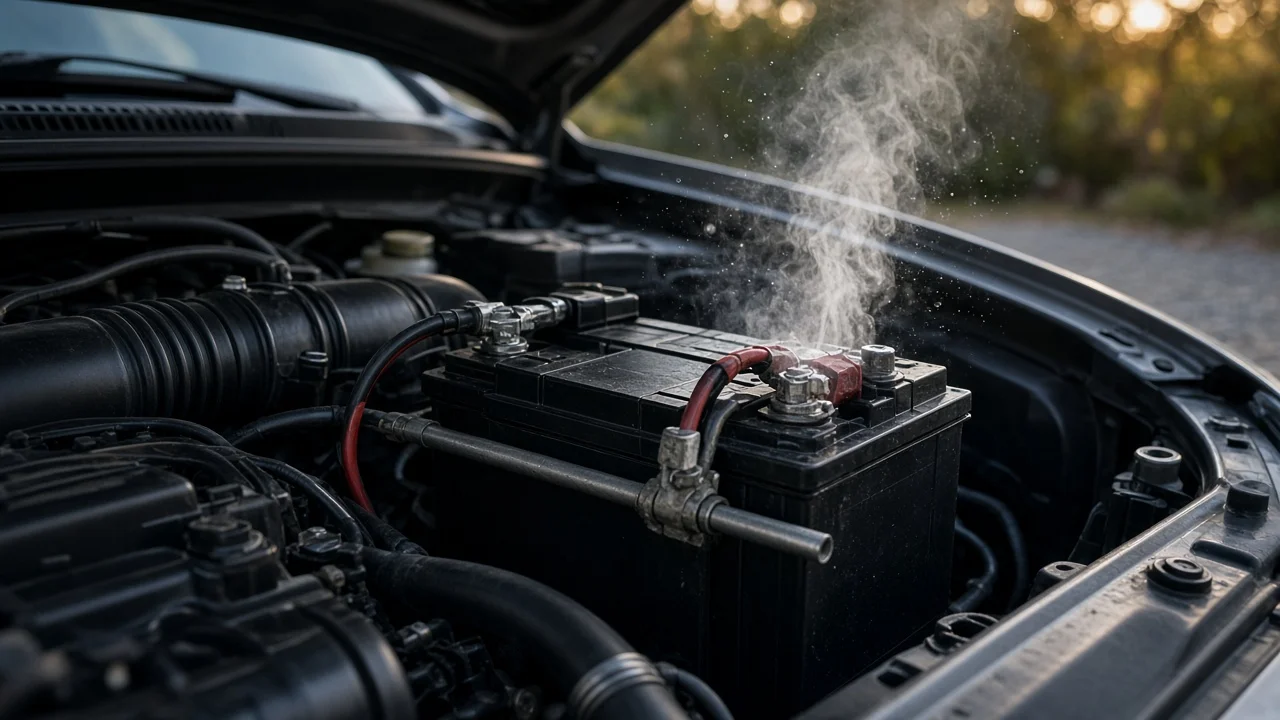
A car battery that makes a sizzling sound is signaling an urgent electrical condition, not a harmless noise. The hissing or bubbling typically comes from rapid gas release inside the case, often linked to excessive charging output, high resistance at the battery terminals, or an internal short. Because the vapor is flammable and the electrolyte is corrosive, this symptom deserves immediate attention and careful interpretation before the vehicle is used again. Understanding why system voltage rises or where heat concentrates can help a driver separate a battery fault from a charging-system problem and decide on a safe next step.
Essential answer
The essential answer is that a sizzling battery usually indicates overheating and rapid production of hydrogen gas from the electrolyte. In normal operation, a small amount of gassing can occur near the end of a controlled charge, but an audible sizzle suggests the reaction is too fast. This often means excessive charging output is forcing current through the battery after it is already full. A faulty voltage regulator can raise system voltage beyond the intended level, cooking the electrolyte and drying out the plates. In that situation, the noise is not proof that the battery alone has failed; it is evidence that the charging loop needs inspection.
A separate common cause is high resistance at a loose or corroded connection. When current crosses a poor junction at the battery terminals, it produces concentrated heat that can make nearby moisture or venting gas hiss. The same sound may therefore come from the terminal area rather than from inside the cells. An internal shorted plate can also generate heat while the alternator keeps pushing current into the pack. Because the exact source affects the repair, the first practical step is to stop charging, let the area cool, and inspect for swelling, wetness, tight terminal clamps, and a voltage reading that appears abnormally high with the engine running.