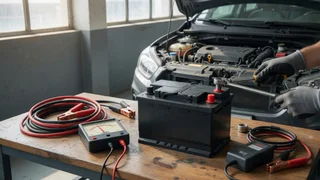
Best car battery brand
Choosing what battery brand is the best depends less on marketing rank and more on matching construction, electrical capacity, and physical size to your vehicle. The same label can include conventional flooded, absorbed glass mat, and enhanced flooded designs with different reserve behavior, cold-cranking ability, and longevity. Because the battery is the stable reference point for the whole electrical system, small differences in terminal placement, venting, and charging requirements matter. This guide explains how to compare brands, interpret ratings, and narrow choices without relying on unsupported model-specific claims or a single universal answer.
Relevant entries
A realistic brand selection starts with fitment and electrical specification, not with a manufacturer scoreboard. The correct group size holds the battery securely and places the battery terminals where the cables reach without strain. The cold-cranking amp rating must meet the engine’s starting demand in your climate, while the reserve capacity matters if you ever need limited operation after the charging output stops. Brands that consistently offer the required case dimensions, vent position, and rated performance for your application are more relevant than brands with a strong reputation in a different vehicle category.
Construction type is another useful way to define relevant entries. Traditional flooded batteries are widely available and cost-conscious, while absorbed glass mat designs tolerate repeated discharge and suit vehicles with elevated electrical loads. Enhanced flooded batteries fall between them in cycle behavior and charging tolerance. A brand may be strong in one category but ordinary in another, so the best choice is a brand whose design family, warranty coverage, and local availability align with how the vehicle is used rather than a brand chosen from an unranked marketing list.
How it works
A starting battery stores chemical energy and converts it into the high current needed to rotate the engine during cranking. Once the engine runs, the charging system restores the charge and supplies the vehicle’s electrical loads. At the same time, the battery acts as a buffer that smooths system voltage and absorbs demand changes before the alternator can respond. That is why a battery with the correct system voltage and ampere-hour capacity is not simply a larger fuel tank; its internal resistance and plate design determine how cleanly it delivers current.
The ratings printed on a battery describe different jobs. Cold-cranking amps measure short, high-current output at low temperature, while reserve capacity estimates how long the battery can support essential loads if charging output stops. Neither number is a direct promise of lifespan, because heat, deep cycling, and parasitic draw change aging behavior. A voltage drop at the battery terminals during cranking can reveal internal resistance or connection loss, which is why the best brand decision should also include clean, tight cable contact and a charging output that suits the battery’s design.
Practical steps
Before replacing a battery, confirm the vehicle’s group size, terminal type, and minimum performance rating from a fitment reference or the information supplied by the manufacturer. Inspect the current battery location, vent tube if present, and cable condition so the new unit is not blamed for an existing connection or charging fault. Measuring resting voltage and observing how far voltage drops during cranking can help distinguish a tired battery from excessive resistance in the circuit. A new battery of any brand cannot correct a wiring problem or a charging system that undercharges after installation.
After installation, verify that the hold-down secures the case without crushing it, the terminals are clean and tight without excessive force, and the vehicle starts with a normal cranking sound. A short drive is not a battery test; the charging system may mask an underlying issue. If a fuse rating or wiring diagram reference is needed for an accessory circuit, check the applicable guide before adding a load. Batteries produce explosive gas and can deliver dangerous current, so cover the positive terminal and avoid creating sparks near the case during any hands-on work.
Symptoms and checks
Slow cranking is not automatic proof that a battery brand or part has failed. The symptom can come from a discharged battery, loose or corroded terminals, a weak charging output, or a parasitic draw that slowly empties the battery when the vehicle is parked. Begin by checking terminal voltage after the vehicle has rested, then watch the reading during cranking. A battery that is charged but drops far below the normal cranking threshold may be undersized, deeply aged, or unable to deliver current because of high internal resistance.
A vehicle that starts normally after a recharge but fails again after sitting suggests the issue may not be the battery itself. Measuring current flow after shutdown can expose a parasitic draw, while observing charging output at the battery posts can identify undercharging that shortens service life. No diagnostic code or single voltage reading is enough to brand a unit defective. Treat the symptom as a reason to test the battery, its connections, and the charging system together, and seek vehicle-specific confirmation when a manufacturer-dependent code points to the electrical system.