Can a Transmission Shift Solenoid Be Reset?
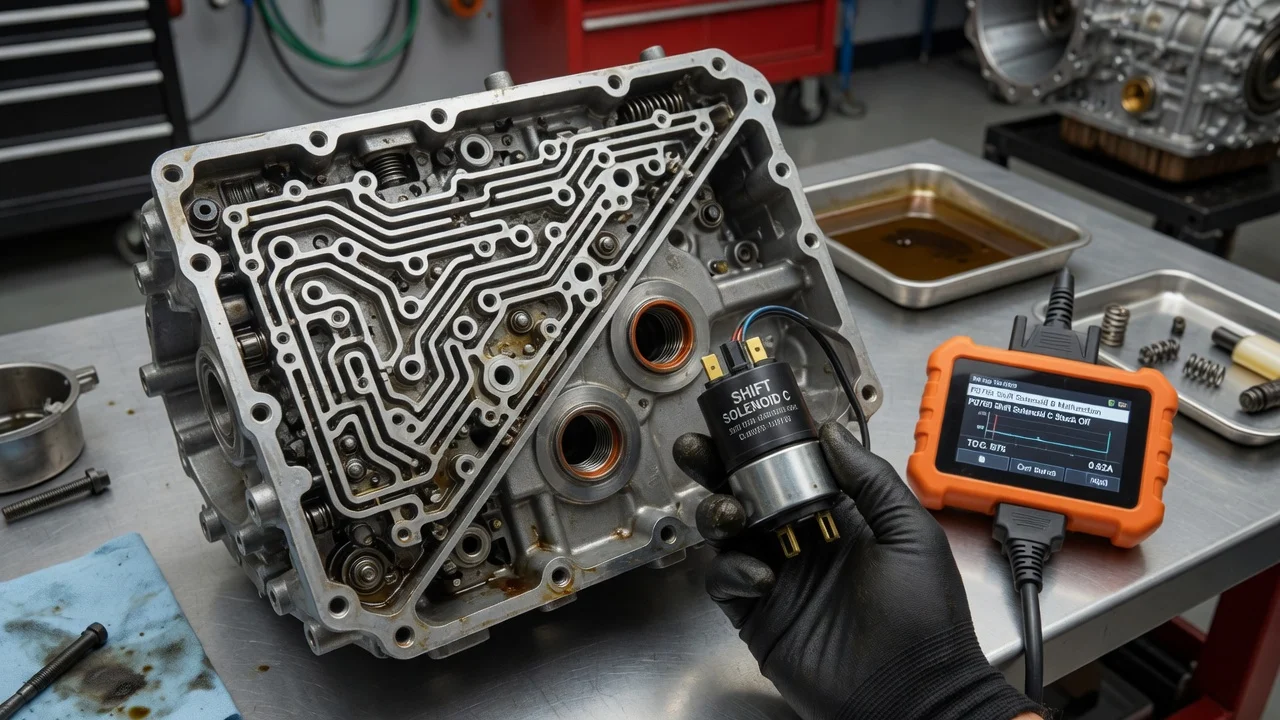
A shift solenoid code or a transmission stuck in one gear often leads owners to look for a way to reset the solenoid. The solenoid itself has nothing to reset. The transmission control module that commands it does store fault codes and learned shift data, and those can be cleared or relearned. Whether that helps depends on your transmission type and on what actually caused the fault.
The Short Answer
No, a shift solenoid cannot be reset in the sense of restoring it to working order. It is an electrically operated valve, so it either responds correctly to commands from the control module or it does not. When owners talk about a reset, they usually mean one of three things: clearing stored diagnostic codes, getting the transmission out of failsafe or limp mode, or resetting the adaptive values the module has learned about shift timing and pressure. All three are possible on many vehicles, and each can be useful. None of them repairs a solenoid with an open winding, a sticking valve, a damaged connector or contaminated fluid. If the underlying condition is still there, the code and the symptom will come back, sometimes within the same drive.
How Shift Solenoids and the Control Module Work
In an electronically controlled automatic, the transmission or powertrain control module decides when to shift. It bases that decision on vehicle speed, throttle position, engine load and fluid temperature. It carries out the shift by energizing or de-energizing solenoids in the valve body. Each solenoid opens, closes or regulates pressure in a fluid passage, and that pressure applies or releases a clutch or band. Some solenoids are simple on-off units. Others are pulse-width or current-controlled and meter pressure precisely for smooth engagement.
The module checks solenoid circuits electrically. It also compares the gear it commanded with the actual input and output shaft speeds. If a circuit reads out of range, or the gear ratio does not match the command, the module stores a diagnostic code. Generic codes in the P0750 to P0770 range point to shift solenoids A through E, and many manufacturers also use their own more specific codes. If the fault could damage the transmission, the module may switch to a failsafe mode. In that mode it holds a fixed gear, often second or third, and engagement may be firm or delayed. Separately, the module keeps adjusting shift pressure and timing as clutches wear, and it stores these learned corrections as adaptive values.
Clearing Codes Versus Resetting Adaptive Learning
Clearing codes with a scan tool erases the stored fault record and usually turns off the warning light. On many vehicles it also lets the transmission leave failsafe mode. Some systems instead exit failsafe on the next key cycle if the fault is no longer detected. Clearing codes also resets the emissions readiness monitors, so the vehicle may not pass an inspection until it has completed its drive cycles.
Resetting adaptive values is a different operation. It returns learned shift pressures and timing to base settings so the module can learn them again. This is typically done after a fluid service, a valve body or solenoid replacement, or a module update. It can help with harsh or erratic shifts caused by outdated learned data, but it will not fix an electrical fault. After an adaptation reset, shifts may feel rough until the relearn is complete. Some transmissions need a specific driving procedure or a scan-tool routine to relearn properly.
What Changes the Answer
The transmission type and its configuration decide which reset options exist and how they are done. On older units with simpler controls, removing battery power for a while may clear codes and some learned data. Many newer transmissions keep their adaptations in memory that survives a battery disconnect. On those, codes and adaptive values can only be cleared or reset with a scan tool that supports manufacturer-level functions. Disconnecting the battery can also erase radio presets, power window settings and other learned values. On some vehicles it creates new problems instead of solving the original one.
Replacement parts add another variable. On some designs the solenoid body or valve body carries calibration data that must be loaded into the module after installation. If that data is missing or mismatched, the transmission can shift poorly or set new codes even with good parts. Fitment matters too, because solenoids and solenoid packs often differ between model years, engine options and drivetrain layouts. Dual-clutch and continuously variable transmissions use different control hardware and procedures, so advice for a conventional automatic may not apply to them. Operating conditions also play a part. Cold fluid, overheated fluid or a low fluid level can all trigger solenoid-related codes that disappear once conditions change.
What You Can Do as an Owner
Read the codes before clearing anything. A basic code reader shows generic codes, but manufacturer-specific codes and live data usually require a more capable scan tool. Write down every code and, if available, the freeze frame data. Freeze frame shows the speed, temperature and other conditions at the moment the fault set. That record is valuable to whoever diagnoses the vehicle, and it is lost once the codes are cleared.
Next, check the fluid level and condition using the method specified for your transmission. Some units have a dipstick, while others are checked through a fill plug at a specific fluid temperature. Use only fluid that meets the fluid specification in the owner's manual, because the wrong fluid can affect solenoid operation and shift quality. Inspect the wiring harness and connectors you can safely reach for damage, corrosion or loose terminals. Then clear the codes, drive normally and watch the shift behavior. If the code returns right away or the transmission drops back into a fixed gear, treat it as a real fault rather than a glitch. Do not keep clearing codes and driving in failsafe mode, because slipping or harsh engagement can damage the clutches.
Limitations and When to Get Professional Help
A shift solenoid code tells you which circuit or function the module flagged, not which part failed. The same code can come from several sources: the solenoid itself, its wiring or connector, a pass-through harness inside the case, a sticking valve in the valve body, low or degraded fluid, or the control module. Replacing a solenoid based on a code alone often costs money without fixing the problem. Proper diagnosis usually involves checking circuit resistance and voltage and watching live data. Some cases also need a pressure test.
Get vehicle-specific information before attempting an adaptation reset, solenoid replacement or calibration step, because procedures vary widely by manufacturer and transmission. A shop with the right scan tool can also check for software updates and known issues for your model. If the vehicle is stuck in failsafe mode, slips, flares between gears or has burnt-smelling fluid, have it inspected before driving further. Share the transmission's service history, including fluid changes and earlier repairs, so the technician can narrow down the repair options faster.