Can a Bad Transmission Mount Cause Jerking
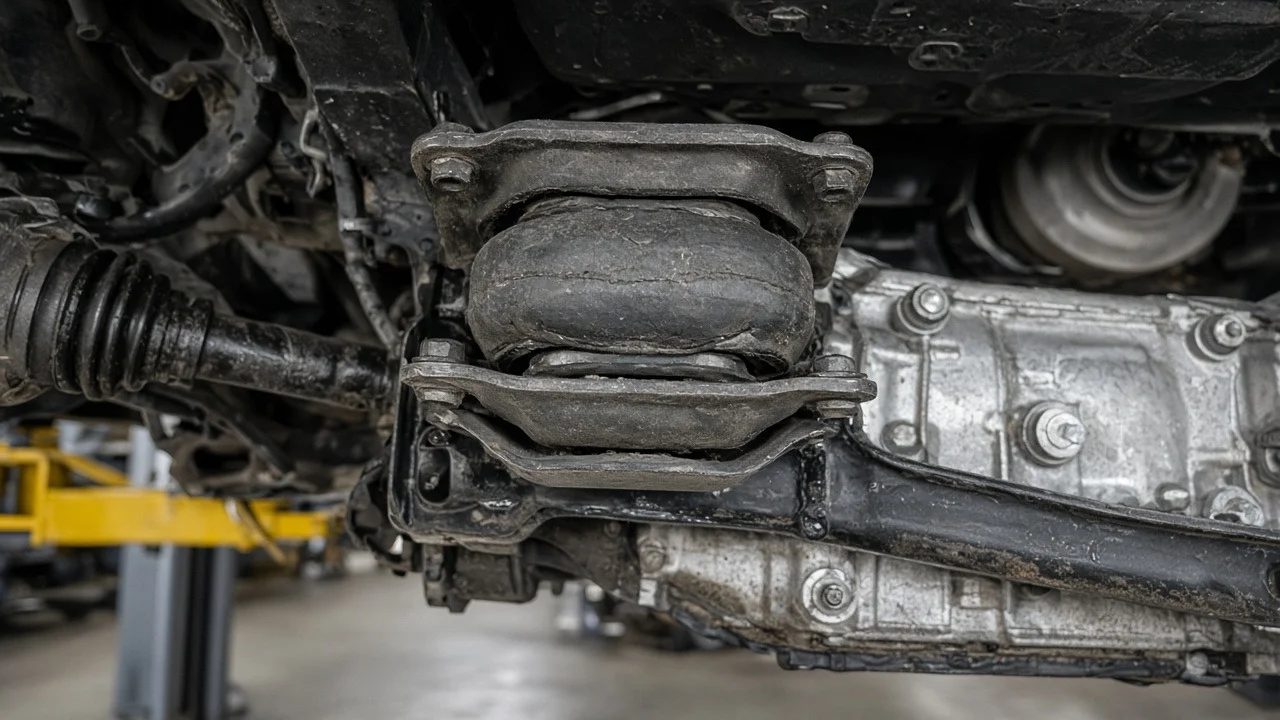
A sharp jerk or lurch from the driveline can feel alarming, and the cause is not always inside the transmission itself. The mounts that hold the transmission in place work as calibrated isolators, and when one fails, the drivetrain’s normal movement can turn into a harsh shove. Because the symptoms overlap with shift behavior faults, fluid issues, and diagnostic codes, checking the mount is a practical early step before assuming an expensive internal repair.
Essential answer
Yes, a bad transmission mount can cause the car to jerk, but the jerk is usually a mechanical reaction rather than an internal gear-engagement fault. The mount is a steel-and-rubber assembly that controls drivetrain rotation and absorbs torque pulses. When its rubber tears, collapses, or separates from the metal bracket, the transmission can lift and slam against its stops during acceleration, deceleration, or abrupt throttle changes, producing a sharp bucking sensation that drivers often mistake for a slipping clutch or harsh shift behavior.
The mount’s job depends heavily on transmission type and fitment, so the character of the jerk changes with the driveline layout. A worn mount may allow excess movement before the slack is taken up, creating a single hard thump, while repeated clunking can occur during stop-and-go traffic. Before concluding the mount is the sole cause, it is worth reviewing service history and fluid specification, because low or degraded fluid can create similar engagement harshness. A visual inspection of the mount’s rubber condition is the most direct way to separate a failed isolator from an internal control or clutch concern.