What Does an Engine Mount Do?
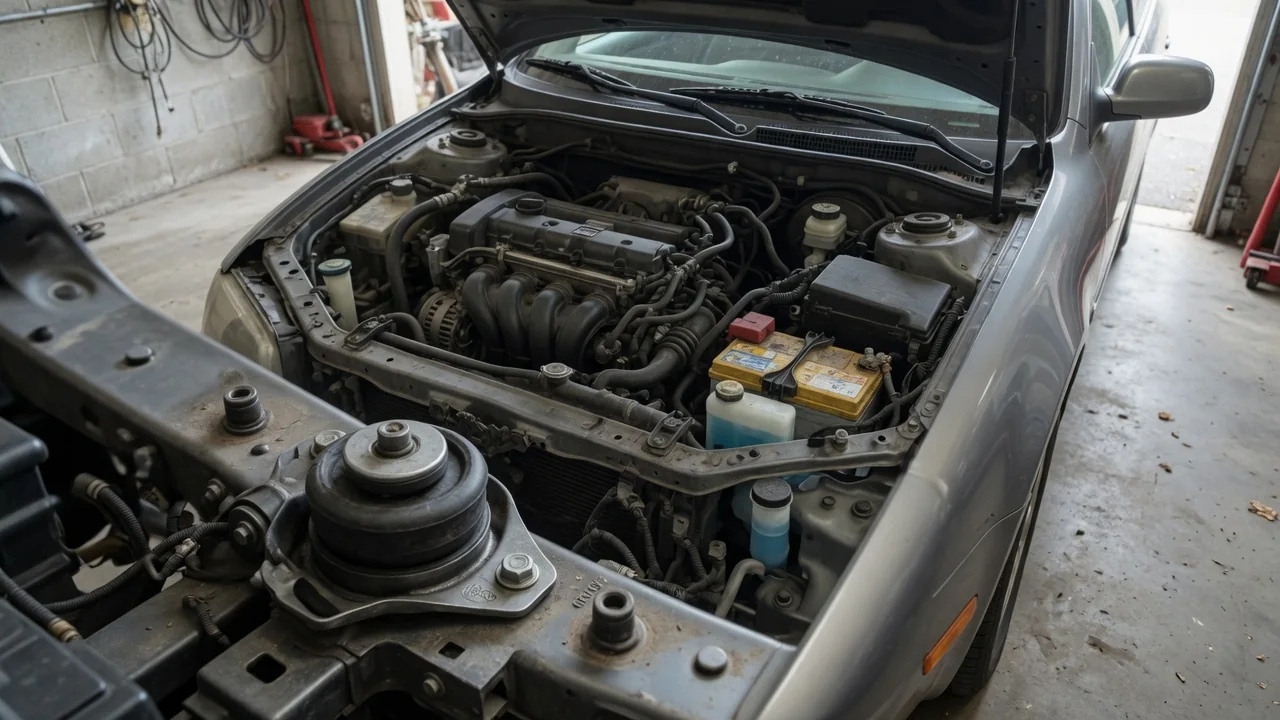
Drivers who wonder what does an engine mount do are really asking how a heavy, vibrating powertrain stays put inside a body built for comfort. An engine mount holds the engine in position, carries its weight, resists its twisting force, and keeps much of its shaking from reaching the cabin. Understanding that dual role makes it easier to recognize when something has changed.
Mount structure
A typical engine mount is a sandwich of metal and rubber. One metal bracket bolts to the engine or transmission, another bolts to the frame, subframe, or body structure, and a block of rubber bonded between them carries the load. The metal gives the assembly its strength and a fixed attachment point, while the rubber allows a small, controlled amount of movement. Most vehicles use several mounts working together, so the powertrain is supported at multiple points rather than hanging from one.
Designs vary considerably between vehicles. Some mounts are solid rubber, others are hollow and filled with fluid to add damping, and certain models use electronically or vacuum controlled mounts that change stiffness with operating conditions. Transverse engines in front-wheel-drive cars often add a lower torque strut, sometimes called a dog bone, to limit rocking. Looking under the hood, the upper mounts are frequently visible near the strut towers or along the engine side, though layout and count depend on the specific vehicle.
Vibration control
Every combustion engine produces vibration as its pistons fire and its rotating parts spin. If the engine were bolted rigidly to the chassis, those pulses would travel straight into the steering wheel, floor, and seats as buzz and noise. The rubber element in a mount flexes with each pulse and absorbs part of that energy, so the body receives a much weaker version of what the engine is actually doing. Isolation matters most at idle, when firing pulses are slow and easy to feel.
Mounts also control larger movements. When the driver accelerates, the engine tries to twist in the opposite direction of the crankshaft's torque, and the mounts resist that roll. Engineers tune rubber stiffness as a compromise: softer material isolates better but lets the engine move more, while firmer material holds position at the cost of added harshness. Fluid-filled designs help by damping big motions while staying compliant for small ones, which is why they are common on vehicles tuned for a quiet ride.
Wear signs
Rubber ages with heat, time, and repeated flexing, and oil or other fluid leaks can soften it faster. As a mount deteriorates, the rubber may crack, separate from its metal plates, or sag under the engine's weight. A fluid-filled mount can leak, leaving dark, oily residue on the mount body or the structure below it. Once the rubber no longer holds its shape, the mount stops isolating effectively and may let metal parts come closer together than intended.
Symptoms often show up as changes in feel and sound. Increased vibration at idle, particularly in gear with the brake applied, is a common complaint. A clunk or thud when shifting between drive and reverse, pulling away from a stop, or lifting off the throttle can indicate excessive engine movement. These signs are not exclusive to mounts, however. Misfires, worn suspension bushings, exhaust contact, and driveline problems can produce similar sensations, so the symptom alone does not identify the cause.
Everyday Use and Observations
In normal driving, healthy mounts go unnoticed. The engine starts with a brief shudder that settles quickly, idle feels smooth through the steering wheel, and gear changes pass without a jolt. A useful habit is to note how the car feels when everything is working, because mount wear usually develops gradually. A slow increase in idle roughness or a new knock over throttle transitions is easier to recognize when the driver remembers the baseline.
Simple observation can add context without tools. With the hood open and the vehicle safely parked, visible mounts can be checked for cracked or separated rubber, fluid staining, or a bracket sitting noticeably off center. Some engines also rock visibly at startup and shutdown, and a small amount of movement is normal by design. How much is acceptable differs between vehicles, and many mounts sit low or behind other components where they cannot be seen from above.
Limits and Next Steps
What a driver can judge from the seat or a glance under the hood is limited. Rubber can look intact while having lost its stiffness, and a mount hidden beneath the engine may be the one that has failed. Vibration that changes with engine speed rather than load, or that comes with a warning light, may point toward a running problem instead. Any stored fault code is a lead to investigate rather than confirmation that a particular part is defective.
When symptoms persist, a professional inspection is the sensible next step. A technician can raise the vehicle, examine each mount under load, and compare movement against what is expected for that model. Continuing to drive with a badly failed mount can place extra strain on the remaining mounts, hoses, wiring, exhaust joints, and axles as the powertrain shifts. Replacement parts, labor, and the number of mounts involved depend on the vehicle, so guidance should come from model-specific service information.