Buy a car body repair tool kit
What to buy first
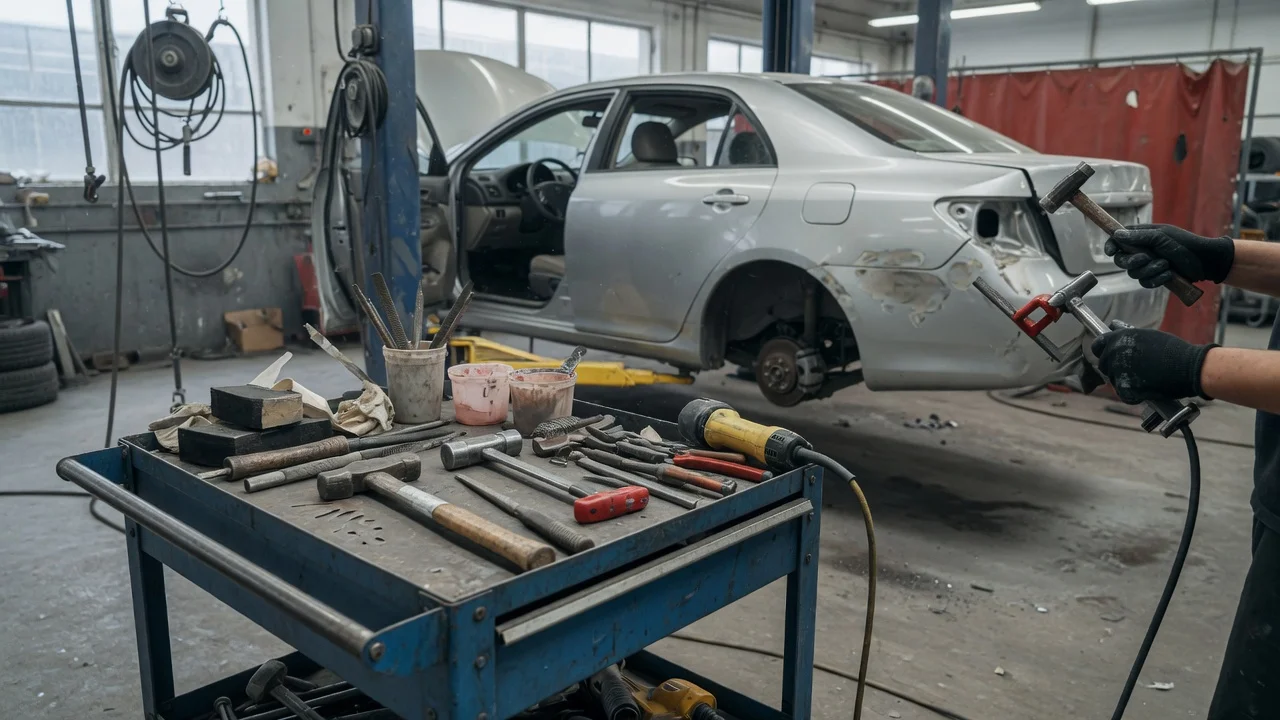
Buy a car body repair tool kit that matches the damage you actually have, not a catch-all set sold as a complete body shop. For most home repairs the useful core is a hammer-and-dolly set, body hammers, a few clamps, filler mixing and spreading tools, sanding blocks, and a way to apply and finish paint or primer. That combination covers small dents, light rust patches, and cosmetic panel work. Structural collision damage, a bent unibody, broken glass, or airbag deployment is outside what a consumer kit can restore, and those jobs belong with a body shop.
Match the kit to the job
Start from the panel and the type of damage. A shallow dent in an accessible steel panel is a hammer, dolly, and finishing job. A crease, a high-crown dent, or damage behind a double-skin section needs more access, and often a slide hammer, glue-pull tabs, or panel removal before any kit is useful. Surface rust that has not eaten through the metal can be treated with abrasion, rust converter, filler, and paint. Perforation needs cutting, a patch panel, welding or bonding, and corrosion protection. Plastic bumper covers use plastic-repair methods and adhesives, not steel hammers. Aluminum panels dent and work-harden differently from mild steel, so a kit sold only for steel can leave stretch marks or cracks if you treat aluminum the same way.
What a typical kit should contain
A practical starter kit is a small set of body hammers (pick, bumping, and finishing faces), matching dollies (heel, toe, and a general-purpose block), locking pliers or panel clamps, a mixing board and spreaders for body filler, sanding blocks in several grits, and masking supplies. Add a slide hammer or glue-pull kit only if you will work dents you cannot reach from behind. Add a stud welder only if you will pull steel panels and you already know how to control heat. Paint guns, welders, and frame equipment are separate purchases; bundling them into a “complete” kit usually means weak versions of each tool rather than a usable set of bodyworking tools.
Body hammers and dollies for steel panel work; Clamps or locking pliers to hold panels and patches; Filler mixing board, spreaders, and sanding blocks; Slide hammer or glue-pull tabs for limited-access dents; Masking, primer, and finishing supplies matched to the repair area
Quality, fit, and compatibility
Hammer faces and dolly contours matter more than the number of pieces in the case. Poorly shaped or soft faces mark the metal and force extra filler. Check that hammer heads are securely fitted, dollies have smooth working surfaces, and any pull attachments match the method you will use: glue tabs for painted panels you want to keep, welded studs only on steel you will refinish. Confirm the vehicle’s panel material before you buy. Many late-model cars mix mild steel, high-strength steel, aluminum, and plastic on the same body. High-strength steel is not meant to be hammered back into shape the way older mild-steel panels were. If the repair area is a structural member, a crush zone, or a bonded aluminum panel, a kit will not make that repair legitimate.
New kits versus used marketplace tools
New kits are easier to inspect for matching hammers and dollies and for unused faces. Used body tools sold through classified listings and online marketplaces can be a good source of heavier hammers and dollies, which often outlast consumer kits, but you need to inspect them. Look for mushroomed faces, cracked handles, bent slide-hammer shafts, and missing anvils or adapters. A used set is only a bargain if the working surfaces are still true. Avoid mixed lots that cannot be identified as a matched hammer-and-dolly pair. Do not rely on a listing photo alone for welders, stud guns, or hydraulic rams; those need proven function, not just a case and a few attachments.
What a kit will not do
A body kit restores local panel shape. It does not pull a twisted unibody, reset suspension geometry, or certify a collision repair. If door gaps have changed, the hood will not latch, a wheel sits in the arch at a new angle, or the vehicle has been in a recorded collision, stop cosmetic hammering and have the structure measured. Filler is for low spots after metal work, not for bridging holes or hiding a crease that still shows through paint. Over-filling a panel that was never returned to shape will crack and telegraph later.
A sensible next step
Decide the repair before you decide the kit. Identify the panel, the material, and whether the damage is cosmetic or structural. For a small steel dent or a surface-rust patch, a hammer-and-dolly set plus filler and sanding tools is enough to start. For limited-access dents on a panel you want to keep, add a glue-pull kit. If the metal is torn, the structure is shifted, or the panel is aluminum or high-strength steel in a crash-managed area, skip the consumer kit and get a professional estimate. When you do buy, choose fewer well-shaped hammers and dollies over a large case of unused specialty pieces, and inspect used tools for true faces before you commit.